
Understanding Repeat Breakouts
Recurrent Acne: Why Pimples Keep Coming Back and How to Prevent Flares
Acne often improves and then returns because the tendency to form clogged, inflamed follicles can continue even after visible pimples settle. Hormonal patterns, inconsistent treatment, unsuitable products and other triggers may contribute to repeated flares.
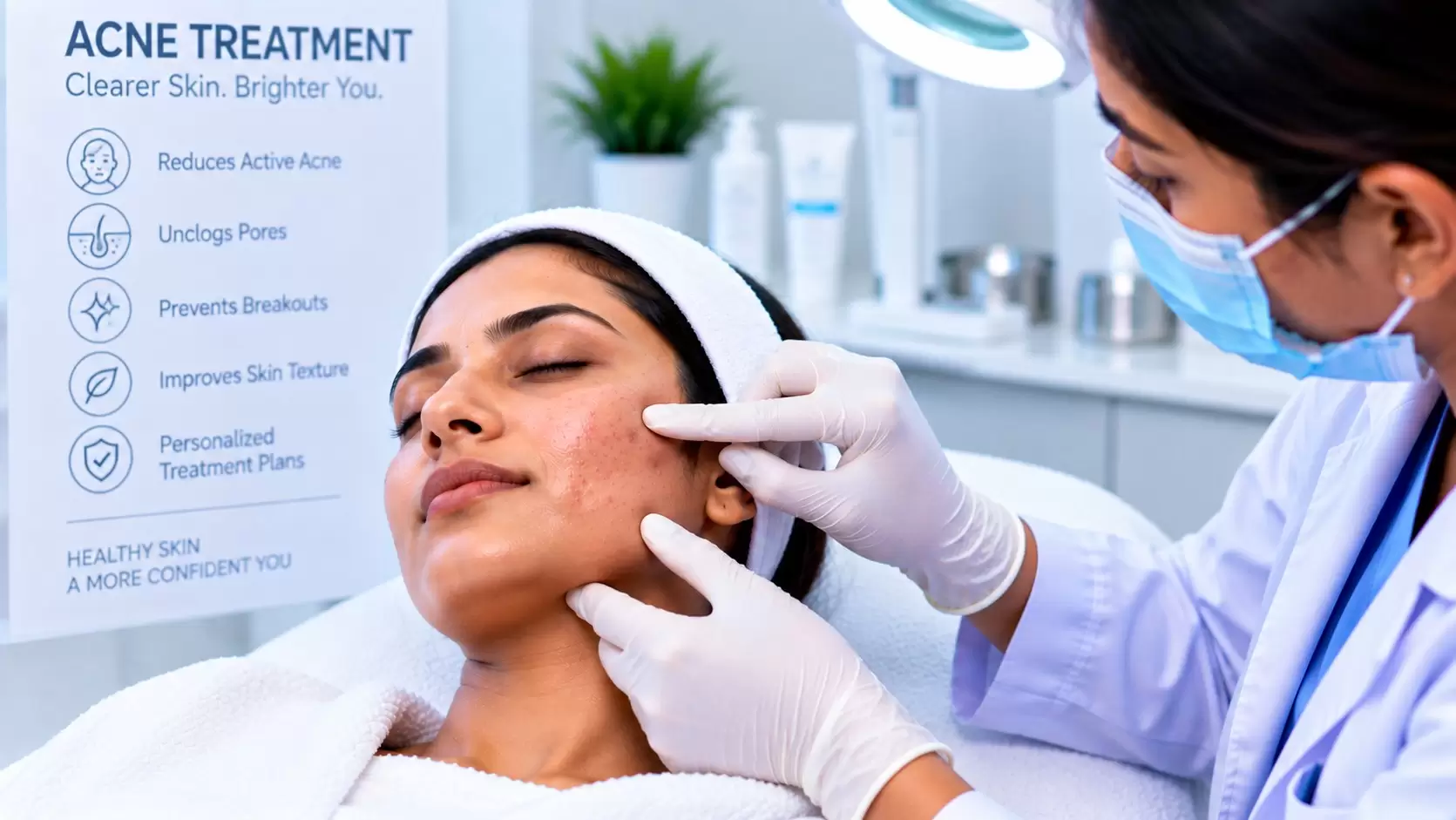
Why does acne keep coming back?
Visible pimples are only one stage of acne. Microscopic follicular plugging can begin before a lesion is obvious. If the underlying tendency remains active, new blackheads, whiteheads or inflammatory lesions can continue to develop.
Learn about the mechanisms in What Causes Acne?.
Stopping treatment as soon as skin clears
One common reason for recurrence is stopping an effective regimen immediately after the visible flare settles. Depending on the patient and treatment, maintenance therapy may be recommended to reduce formation of new lesions.
Hormonal patterns and repeated flares
Some women notice acne recurring around the menstrual cycle. Hormonal influences can affect sebum production and follicular biology, but acne location or recurrence alone does not diagnose a hormonal disorder.
Irregular periods, excess facial/body hair or scalp hair thinning may justify broader assessment. See Hormonal Acne in Women.
Adult acne can be naturally persistent
For some people, acne that started in adolescence continues into the 20s, 30s or beyond. Others develop acne for the first time as adults. The pattern may change over time, including more lower-face or inflammatory lesions.
Are your skincare products contributing?
Occlusive cosmetics, heavy hair products and some skincare formulations can aggravate follicular blockage in susceptible people. Repeatedly adding strong acids, scrubs and active ingredients can also cause irritation that complicates acne treatment.
A simple routine is easier to tolerate and assess. See our Skincare Routine for Acne-Prone Skin.
Picking and squeezing can create a cycle
Squeezing does not prevent the next follicle from becoming blocked. Instead, repeated manipulation can increase inflammation, post-acne pigmentation and scar risk.
Deep lesions should not be repeatedly pressed or punctured at home.
Sweat, friction and occlusion
Helmets, tight straps, masks, collars, sports gear and repeated friction can aggravate acne in affected areas. Sweat itself is not the sole cause, but prolonged occlusion and friction can contribute to breakouts in susceptible skin.
Cleaning equipment that repeatedly contacts the skin and changing out of sweaty clothing can be useful practical measures.
Can diet contribute to recurrent acne?
Diet may influence acne in some people, but it should not become the automatic explanation for every flare. Research has explored high-glycemic dietary patterns, dairy and other factors, with variable individual responses.
Read Diet and Acne before making broad food restrictions.
Could it be something other than acne?
If bumps repeatedly return despite appropriate acne treatment, reconsidering the diagnosis can be important. Folliculitis, rosacea, perioral dermatitis and acneiform drug eruptions can resemble acne.
Very itchy or unusually uniform bumps may suggest another diagnosis. See Folliculitis vs Acne.
Does recurrent acne mean you need antibiotics?
Not automatically. Acne treatment depends on lesion type, severity, distribution, scarring risk and previous response. Antibiotics are not intended as indefinite standalone maintenance treatment, partly because antimicrobial resistance must be considered.
Maintenance strategies often rely on non-antibiotic topical therapies selected for the individual patient.
What about isotretinoin and recurrence?
Isotretinoin can be highly effective for selected severe, scarring or treatment-resistant acne, but recurrence can still occur in some patients. Whether further topical maintenance or another treatment course is appropriate requires clinical assessment.
Isotretinoin is prescription treatment requiring medical supervision and strict pregnancy precautions where relevant.
How dermatologists approach recurrent acne
Confirm the diagnosis
Make sure recurrent bumps are acne rather than a mimic such as folliculitis.
Identify the dominant lesions
Comedones, inflammatory papules, pustules and nodules may require different treatment emphasis.
Review triggers and adherence
Products, medicines, menstrual patterns, supplements and how consistently treatment is used all matter.
Plan maintenance
Once controlled, an appropriate maintenance regimen may help reduce future flares.
See Types of Acne and Acne Treatment Options.
Why preventing recurrence matters for scars
Every new inflammatory lesion creates another opportunity for pigmentation or permanent structural scarring. Repeated deep nodules are particularly concerning.
If marks or scars are already present, read Acne Marks vs Acne Scars.
When recurrent acne needs assessment
See a dermatologist when breakouts repeatedly return despite a consistent regimen, when acne is painful or nodular, when scars are developing, when the chest/back is extensively involved or when possible hormonal symptoms are present.
Visit Acne Treatment in Chennai for clinic information.
Frequently asked questions
Why does my acne come back after treatment?
Acne can be a relapsing condition. The tendency to form clogged and inflamed follicles may continue after visible lesions improve, so some patients need maintenance treatment.
Why do I get pimples in the same areas repeatedly?
Local friction or products may contribute, while some facial patterns can also reflect ordinary or hormonally influenced acne. Location alone does not determine the cause.
Does recurrent acne mean my hormones are abnormal?
No. Hormones can influence acne, but recurrence alone does not prove a hormonal disorder.
Can acne return after isotretinoin?
Yes, recurrence can occur in some patients. Further treatment should be based on severity and clinical assessment.
How can I prevent acne from coming back?
Use treatment consistently, follow an appropriate maintenance plan when recommended, avoid unnecessary irritation and address identifiable triggers or contributing conditions.
Acne treatment in OMR, Chennai
When acne keeps returning, focus on long-term control.
Book a consultation at Ram Skin Clinic in Thoraipakkam, Chennai.
#48, Second Floor, Flat E, Best Towers,Okkiampet, Thoraipakkam, OMR,
Chennai – 600097. Above Domino’s Pizza.