
Post-Acne Pigmentation & Scarring
Acne Marks vs Acne Scars: How to Tell the Difference
A flat dark spot left after a pimple is often called an “acne scar,” but medically it may be post-inflammatory hyperpigmentation rather than a true scar. The distinction matters because colour changes and structural scars need different treatments.
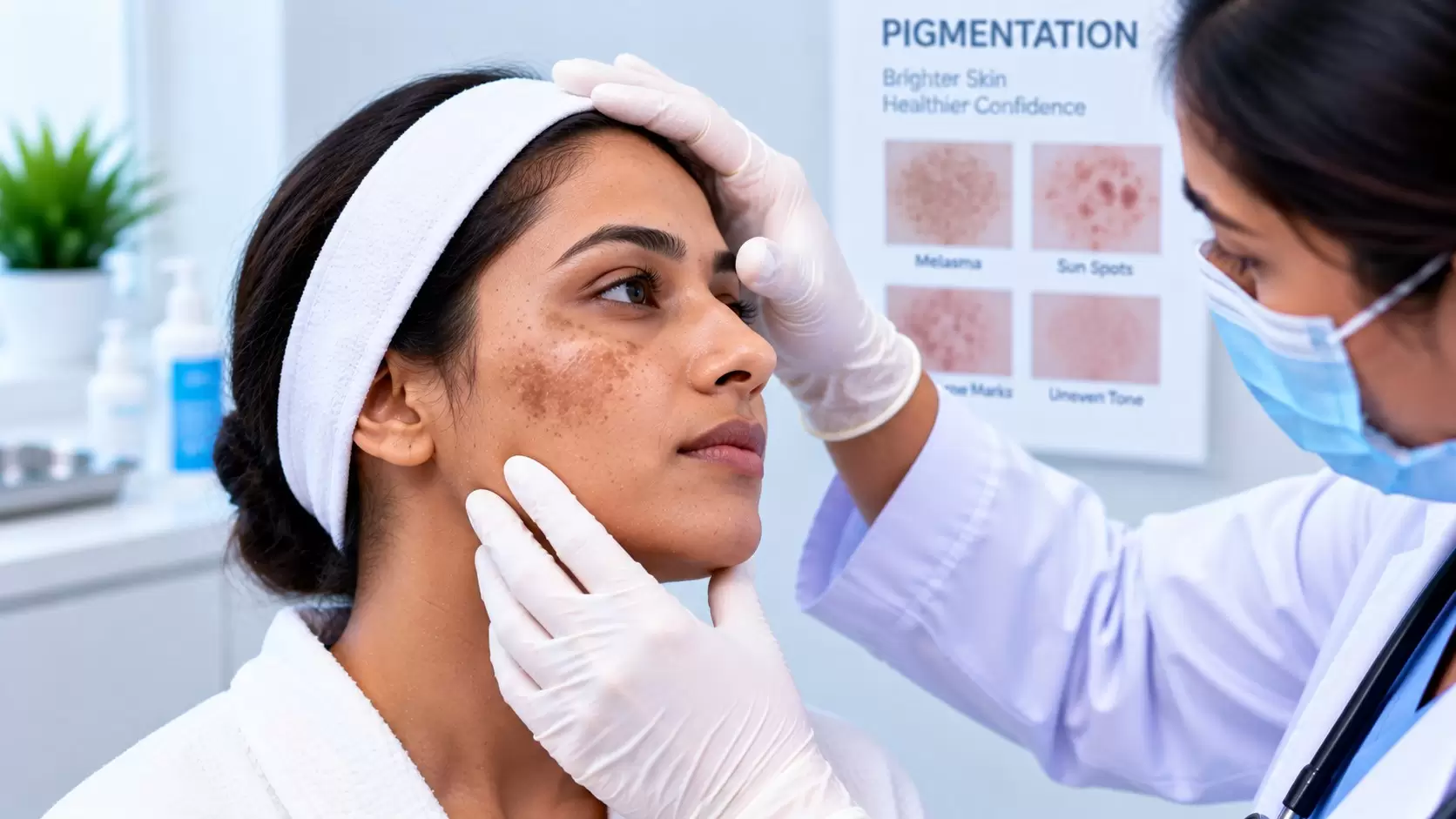
What are post-acne marks?
After an inflamed acne lesion clears, it can leave a flat area of altered colour. In medium to darker skin tones this is commonly post-inflammatory hyperpigmentation, or PIH, which may appear brown, dark brown, grey-brown or black.
In lighter skin, post-inflammatory erythema can leave pink, red or purple colour. These are colour changes rather than loss or excess of skin tissue.
What are true acne scars?
True scars form when inflammation damages the deeper skin and healing alters collagen. The result is a structural change in the skin surface.
Most facial acne scars are atrophic, meaning depressed below the surrounding skin. Some people develop raised hypertrophic or keloid scars, particularly on the jawline, chest, shoulders or upper back.
Acne marks vs scars: quick comparison
Flat dark mark
Usually PIH. The colour changes, but the skin surface remains essentially level.
Flat red or purple mark
Often post-inflammatory erythema rather than a permanent structural scar.
Indented skin
Ice-pick, boxcar and rolling scars are atrophic scars caused by tissue and collagen changes.
Raised firm scar
Hypertrophic scars and keloids represent excess scar tissue and require a different treatment approach.
Why acne leaves dark marks
Inflammation from acne can stimulate melanocytes to produce additional melanin. The acne lesion heals, but pigment remains visible in the skin.
PIH is particularly common and persistent in skin of colour. Picking and squeezing can add inflammation and increase the likelihood of both pigmentation and scarring.
Do acne marks fade?
Many post-inflammatory colour changes gradually fade, but clearing can take months or longer. Deeper pigment generally persists longer than superficial epidermal pigment.
Continued acne creates fresh marks, while ultraviolet exposure can darken existing PIH. Treating active acne and using appropriate photoprotection are therefore important.
Do true acne scars fade on their own?
Depressed acne scars are structural changes and generally do not disappear spontaneously. They may become less noticeable with time, but treatment is usually required for meaningful improvement.
Raised hypertrophic and keloid scars also behave differently from flat pigmentation and may continue to evolve after the original acne lesion has healed.
Ice-pick acne scars
Ice-pick scars are narrow, deep depressions that extend into the skin. They can look like small punctures and may cast distinct shadows under directional lighting.
Because they are deep and narrow, they often require treatments different from those used for broad rolling scars.
Boxcar acne scars
Boxcar scars are depressed scars with more clearly defined edges. They can be shallow or deep and vary in width.
Treatment choice depends partly on depth and scar distribution, which is why simply labelling all depressions “acne scars” is not enough for procedural planning.
Rolling acne scars
Rolling scars are broader depressions with sloping edges that create an undulating or wave-like skin surface. They may be tethered to deeper tissue.
Procedures that release tethering may be considered in selected patients, often in combination with treatments that stimulate collagen remodelling.
Raised and keloid acne scars
Hypertrophic scars are raised but generally remain within the boundary of the original acne lesion. Keloids extend beyond the original area and can continue growing.
They occur more often on sites such as the jawline, chest, shoulders and upper back. Treatment is different from the approach used for depressed scars.
Can you have marks and scars at the same time?
Yes. A depressed scar can also have brown pigmentation or redness around it. DermNet describes these mixed changes as part of the spectrum seen after inflammatory acne.
This means a treatment plan may need to address both skin colour and texture rather than expecting one procedure to correct everything.
Treating acne marks
The first step is controlling active acne. Depending on the pigmentation pattern and skin type, treatment may include photoprotection and topical agents such as retinoids, azelaic acid or other dermatologist-directed pigment treatments.
For persistent pigmentation, selected chemical peels or other procedures may be considered carefully. See Pigmentation Treatment Options.
Treating depressed acne scars
Scar treatment is tailored to scar type. Options can include microneedling, radiofrequency microneedling, chemical peels, laser resurfacing, fillers and minor scar procedures such as subcision or excision in selected cases.
Combination treatment is common because one person may have several scar types. For microneedling-based treatment, see Dermaroller Treatment in Chennai and MNRF Treatment in Chennai.
Why active acne should be controlled first
New inflammatory acne can create additional marks and scars while older ones are being treated. Dermatologists therefore commonly begin scar management by bringing active breakouts under control.
Early acne treatment also reduces the amount of ongoing inflammation and may lower the risk of additional scarring. Visit Acne Treatment in Chennai.
Can picking pimples cause scars?
Picking, squeezing and scratching add mechanical trauma and inflammation. This can delay healing and increase the risk of both post-inflammatory pigmentation and permanent scarring.
Avoid home extraction of deep or inflamed lesions, particularly when they are painful or repeatedly leave marks.
When should you see a dermatologist?
Consider assessment if acne is leaving repeated dark marks, pits or raised scars; if active acne continues despite treatment; or if you are considering procedures for established scarring.
A dermatologist can separate pigmentation from scar texture, identify the scar types present and build a staged plan that treats active acne before or alongside the residual changes.
Frequently asked questions
Are dark acne marks the same as acne scars?
No. A flat brown, black, red or purple mark after acne is usually a post-inflammatory colour change. A true acne scar changes the skin’s texture and may be depressed or raised.
Do acne marks fade on their own?
Many post-inflammatory colour changes gradually fade, although this can take months or longer. Sun exposure and continuing acne can prolong the problem.
Do depressed acne scars go away on their own?
Depressed acne scars are structural changes in the skin and generally do not disappear on their own, although treatment can make them less noticeable.
What are the main types of depressed acne scars?
Common atrophic acne scar patterns include ice-pick, boxcar and rolling scars. A person may have more than one scar type.
Why should active acne be treated before scars?
Controlling active acne reduces inflammation and helps prevent new dark marks and scars from forming while existing marks or scars are being treated.
Visit us in OMR
Dark acne marks or true scars? Start with the right distinction.
Book a dermatologist consultation at Ram Skin Clinic in Thoraipakkam, Chennai.
#48, Second Floor, Flat E, Best Towers,Okkiampet, Thoraipakkam, OMR,
Chennai – 600097. Above Domino’s Pizza.