
Rough, flaky or tight skin
The surface may look dull or scaly and can feel uncomfortable, especially after washing.
Dry, rough & itchy skin · OMR
Find the cause. Repair the skin barrier. Build a routine you can maintain.
Persistent dryness, scaling, tightness, itching or painful cracks may need more than a cosmetic moisturiser. At Ram Skin Clinic in Thoraipakkam, OMR, a dermatologist can assess whether the problem is simple xerosis or is linked to eczema, psoriasis, irritation, medicines or another underlying condition.
The condition explained
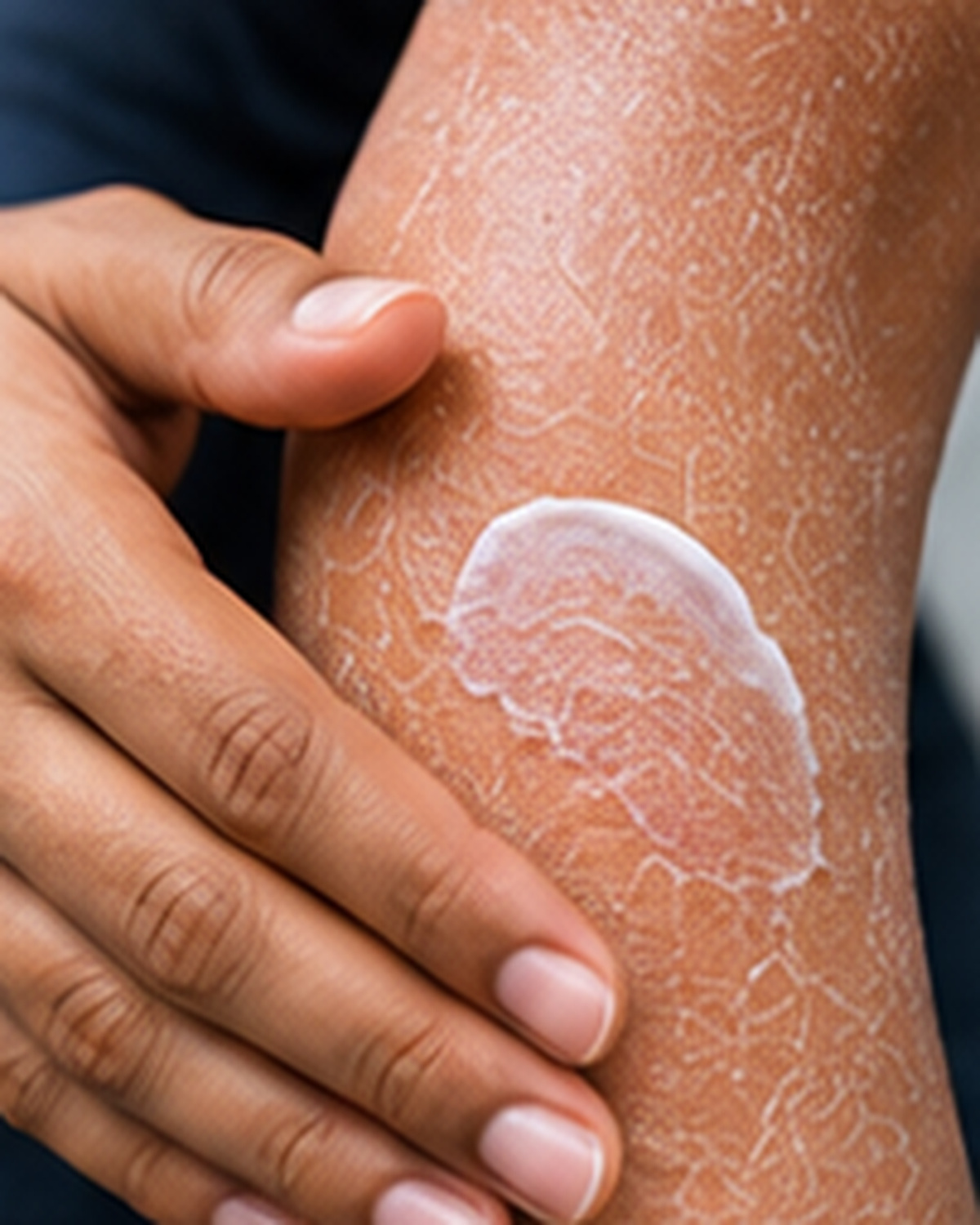
Dry skin, also called xerosis or xeroderma, occurs when the outer layer of skin does not retain enough moisture. The skin may feel rough, tight or itchy and can develop visible flakes or cracks.
Dryness can occur on its own or alongside conditions such as eczema and psoriasis.
Recognising symptoms
Dry skin can range from mild roughness to painful fissures. Persistent symptoms, widespread dryness or repeated flare-ups should be assessed rather than repeatedly covered with different over-the-counter products.
The surface may look dull or scaly and can feel uncomfortable, especially after washing.
Dryness can trigger itch. Repeated scratching can further damage the barrier and make inflammation worse.
Severe dryness can lead to painful fissures, especially on hands, feet or heels. Deep cracks may bleed or become infected.
Why it happens
Common contributors include frequent washing, long hot showers, harsh soaps or cleaning products, repeated wet work, age-related changes and low-humidity environments. Air-conditioned settings can also make some people notice more dryness.
Dry skin can also accompany inflammatory skin disease or, less commonly, systemic illness. The American Academy of Dermatology’s dry-skin guidance notes that medicines and conditions including eczema, psoriasis, thyroid disease, diabetes and kidney disease may contribute in some patients.
Was there a new cleanser, job exposure, medication, travel, change in bathing habits or new rash? These details help distinguish simple xerosis from dermatitis or another skin condition.
For more general prevention advice, see our skin care tips.
Assessment & treatment
Treatment depends on severity and cause. A dermatologist may recommend barrier repair, changes to washing habits, protection from irritants and treatment of any underlying dermatitis or other condition.
Regular use of an appropriate moisturiser can reduce water loss and improve barrier function. Ingredients and texture should be chosen for the body area, severity and tolerance.
Shorter lukewarm showers, gentler cleansers and protecting hands from repeated water or chemical exposure can reduce ongoing barrier damage.
If eczema, psoriasis, contact dermatitis or another problem is driving the dryness, that condition may need specific treatment rather than moisturiser alone.
The AAD and DermNet both describe moisturisers/emollients and correction of aggravating factors as core parts of dry-skin care. Treatment should still be individualised.
Everyday care
Use lukewarm rather than very hot water, avoid unnecessarily harsh cleansers, pat rather than aggressively rub the skin dry, and apply moisturiser consistently. Thick creams or ointments may suit very dry areas better than light lotions.
In Chennai, frequent bathing after sweating, repeated handwashing and spending long periods in air-conditioned environments can all influence how dry your skin feels. The goal is not to avoid hygiene, but to reduce unnecessary barrier damage.
If possible, bring photographs or names of your cleanser, moisturiser, body wash and any medicated creams. This makes the consultation more specific.
If moisturisers sting or burn, mention it. That may suggest inflamed or cracked skin, sensitivity to an ingredient, or a need to change formulation.
When to seek help
Arrange a dermatology review if dryness is severe, keeps returning, spreads widely, disturbs sleep, causes significant itching or does not improve despite sensible skin care.
Seek earlier medical attention for deep painful cracks, bleeding, increasing redness, warmth, swelling, discharge or fever because broken skin can become infected.
If dryness is associated with recurrent itchy inflamed patches, review our eczema treatment in Chennai page.
Thicker, sharply defined or persistent scaly plaques may need assessment for psoriasis or another diagnosis.
Follow-up
At follow-up, discuss whether itching, tightness, scaling and cracking have improved and whether the routine is realistic enough to continue.
If symptoms do not respond as expected, the diagnosis or contributing factors may need to be reconsidered.
Cost depends on the consultation, recommended skin-care products, medicines if required, investigations and follow-up needs.
Most patients do not need extensive testing for ordinary dry skin. Your dermatologist will advise if further evaluation is appropriate.
Common questions
Simple measures help many people, but persistent or severe xerosis may need diagnosis and a more targeted plan.
No. Dry skin can occur by itself, while eczema is an inflammatory skin condition. However, eczema commonly includes significant dryness.
The product may not suit the severity of dryness, it may not be applied often enough, or an underlying condition or ongoing irritant exposure may be contributing.
Low-humidity indoor environments can increase moisture loss from the skin in some people. Regular barrier care may help.
Seek assessment when dryness is persistent, severe, widespread, very itchy, painful, cracked, bleeding or not improving with appropriate self-care.
Your appointment in OMR
Ram Skin Clinic is in Best Towers, above Domino’s Pizza, in Okkiampet, Thoraipakkam, Chennai. Bring details of your current skin-care products, prescription medicines and any photographs showing previous flare-ups.
Write down when the dryness began, where it is worst, what makes it better or worse, and whether itching interrupts sleep.
Visit us in OMR
Book a consultation at Ram Skin Clinic in Thoraipakkam, Chennai.
#48, Second Floor, Flat E, Best Towers,
General patient information. Your dermatologist determines individual diagnosis and treatment.