
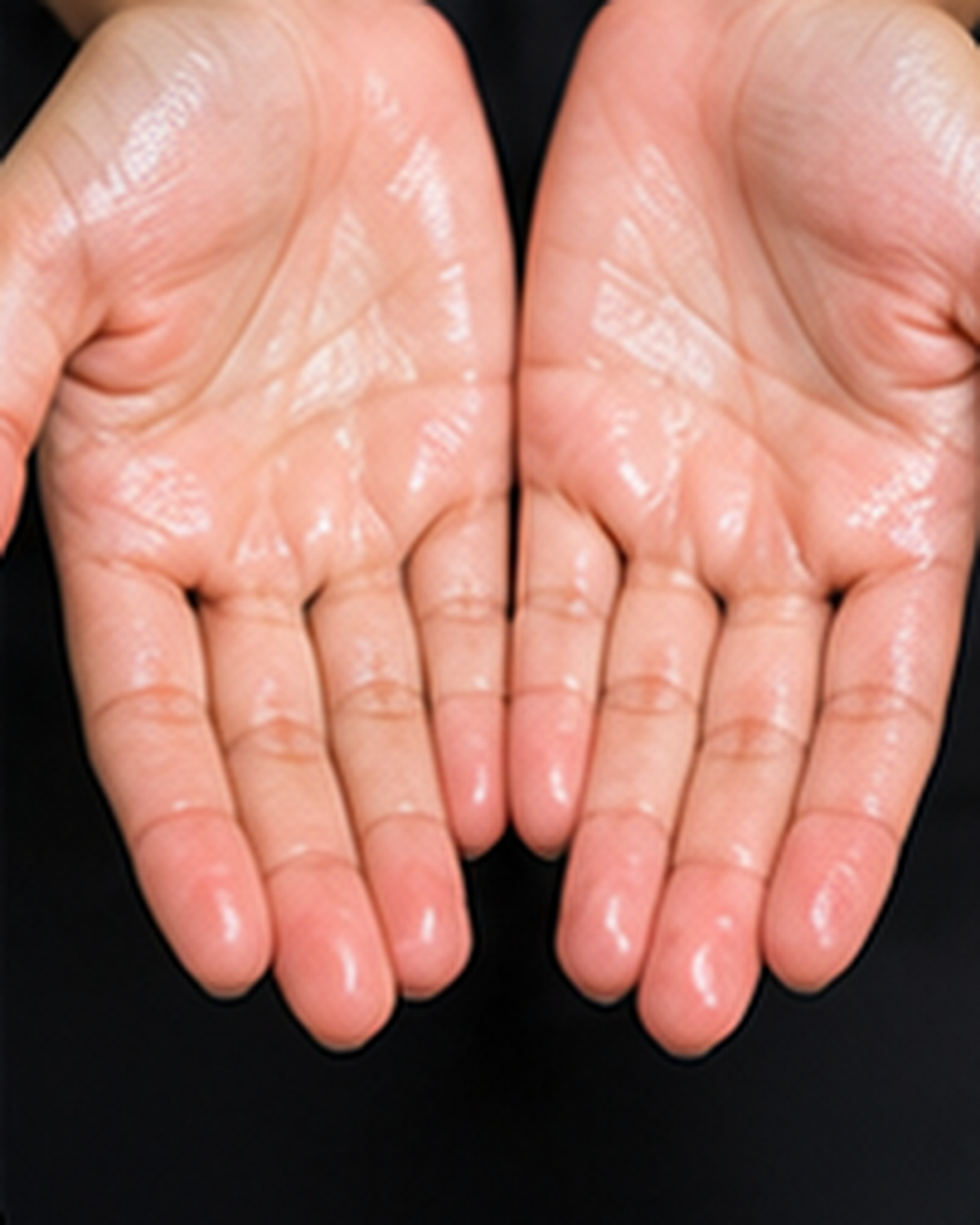
Palms & soles
Palmar and plantar hyperhidrosis can make writing, gripping objects, using electronics or wearing shoes uncomfortable.
Excessive sweating care · OMR
Excessive sweating can affect comfort, confidence, work, footwear, handwriting and everyday social situations. The first step is identifying whether the sweating is primary hyperhidrosis or secondary to another condition or medication.
At Ram Skin Clinic in Thoraipakkam, OMR, consultation focuses on where the sweating occurs, when it started, how often it happens, associated symptoms and possible triggers before treatment is planned.
Diagnosis first
Hyperhidrosis means sweating that is greater than the body needs for temperature regulation. It may mainly affect the palms, soles, underarms, face or several areas.
The American Academy of Dermatology notes that accurate diagnosis helps distinguish primary hyperhidrosis from secondary sweating caused by a medical condition or medication. A physical examination and, when appropriate, medical testing may be needed.
Common patterns
The location, symmetry and timing of sweating provide useful diagnostic clues.
Palmar and plantar hyperhidrosis can make writing, gripping objects, using electronics or wearing shoes uncomfortable.
Axillary hyperhidrosis can soak clothing and create visible sweat marks even when environmental temperature is comfortable.
Facial or more generalised sweating needs careful assessment, especially when it starts suddenly or is accompanied by other symptoms.
Primary vs secondary
Primary focal hyperhidrosis usually affects specific body areas and may run in families. Secondary hyperhidrosis can occur because of medicines or underlying health conditions.
DermNet also distinguishes focal and generalised hyperhidrosis and notes that management depends on the pattern and cause.
Treatment planning
There is no single best treatment for every patient. The goal is to reduce sweating enough that it no longer interferes with everyday life.
Topical antiperspirants are often considered for mild or localised sweating. Prescription-strength products may be discussed when over-the-counter products are insufficient.
For excessive sweating of the hands and feet, iontophoresis treatment may be considered. It uses a mild electrical current through water to reduce sweat production in treated areas.
Depending on the diagnosis, area treated, response and medical history, a dermatologist may discuss topical medicines, oral medicines or procedure-based treatments. Suitability and side effects should be reviewed individually.
Everyday management
Practical measures do not replace medical treatment, but they can help reduce irritation, odour and secondary skin problems.
Persistent moisture can soften the skin and increase the risk of irritation, odour and infections such as athlete’s foot. If there is redness, scaling, pain or recurrent infection, the skin itself may need treatment as well.
Related information: skin infection treatment and skin care tips.
Follow-up
Many treatments reduce sweating rather than permanently eliminating the tendency to sweat excessively. Follow-up helps assess response, skin irritation, treatment frequency and whether a different option is needed.
The AAD notes that treatment plans are personalised according to the type of hyperhidrosis, the affected area, symptoms and patient preferences.
Cost depends on the body area involved, the treatment selected, number of sessions or follow-ups required and whether investigations are needed to look for a secondary cause.
A treatment plan and expected follow-up can be discussed after examination.
Frequently asked questions
Normal sweating helps regulate body temperature. Hyperhidrosis refers to sweating that is excessive for the situation and may interfere with daily activities, clothing, work or social comfort.
Stress and anxiety can increase sweating, but persistent focal sweating may still represent primary hyperhidrosis. A dermatologist can help determine whether sweating is mainly situational or part of an underlying sweating disorder.
Iontophoresis is a recognised treatment option for excessive sweating of the hands and feet. Treatment frequency varies, and maintenance sessions are commonly required.
Not everyone needs testing. Tests may be considered when sweating is new, generalised, occurs at night, is associated with other symptoms or when an underlying medical cause is suspected.
Many treatments can significantly reduce sweating, but hyperhidrosis commonly requires ongoing or repeated management. The best approach depends on the type, body area and severity.
Book an assessment
Bring a list of medicines and supplements and note where, when and how often excessive sweating occurs. This can help distinguish primary hyperhidrosis from secondary causes.

This page provides general educational information and is not a substitute for diagnosis or personalised medical advice.