
Dry, itchy skin
Dryness, scaling and intense itching are common. Repeated scratching can thicken the skin and further damage the barrier.
Itchy, dry & inflamed skin · OMR
Understand the cause. Calm flare-ups. Build a practical skin-care routine.
Persistent itching, dryness, redness or recurring rashes can interfere with sleep, work and daily comfort. At Ram Skin Clinic in Thoraipakkam, OMR, consult a dermatologist to assess the pattern, identify possible aggravating factors and plan appropriate eczema care.
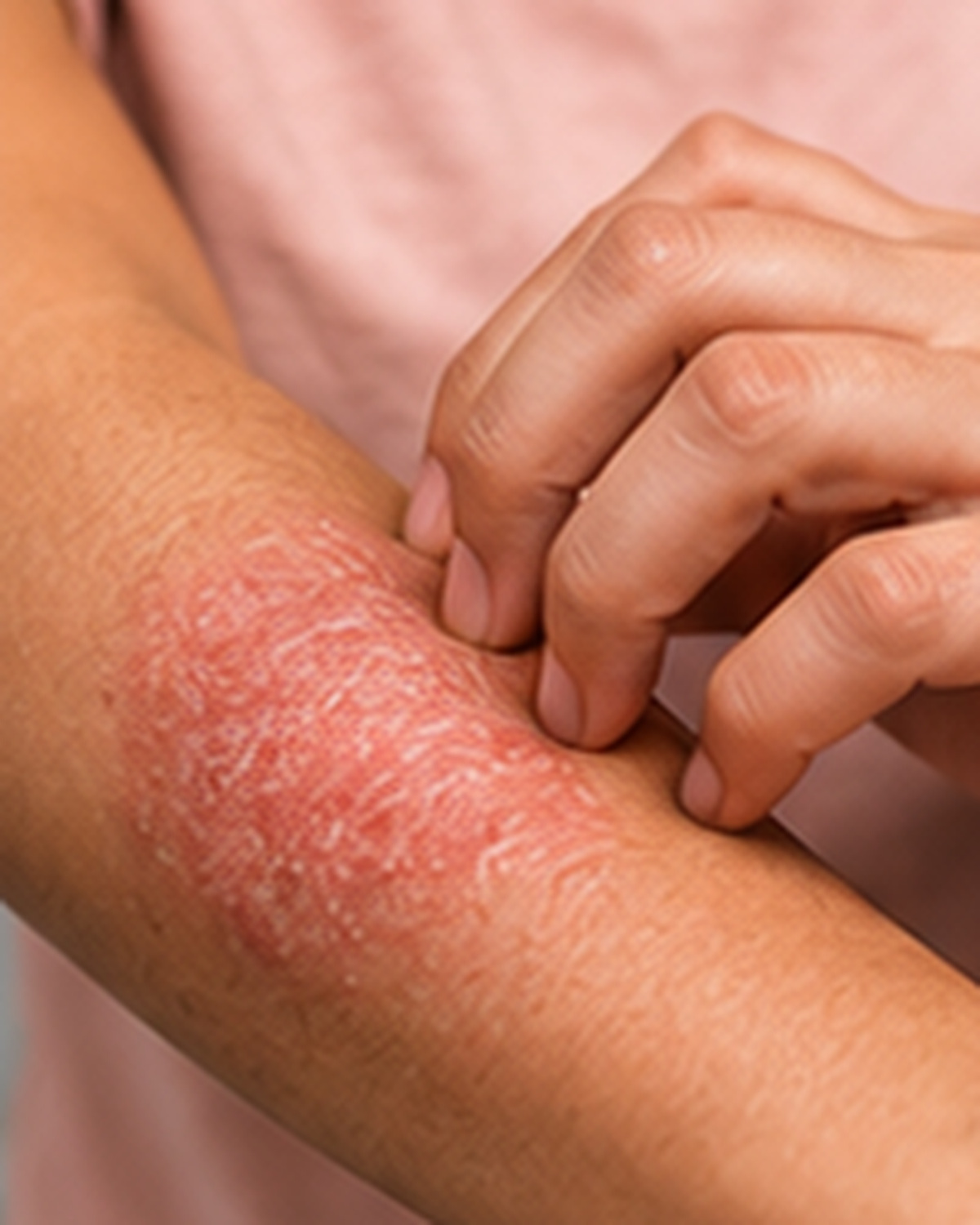
The condition explained
Eczema describes inflammatory skin conditions in which the skin barrier becomes irritated and the skin may become dry, itchy and inflamed. Atopic dermatitis is one common form, while contact dermatitis and hand eczema can have similar features.
Eczema may settle and flare again. It is not contagious and cannot be caught through touch.
Recognising symptoms
Symptoms vary by age, skin type, body site and eczema subtype. Persistent or recurrent symptoms deserve assessment because several conditions can resemble eczema.
Dryness, scaling and intense itching are common. Repeated scratching can thicken the skin and further damage the barrier.
Inflamed areas may appear red, brown, purple or grey depending on skin tone and the stage of inflammation.
Some flare-ups cause fissures, weeping or crusting. Increasing pain, warmth or swelling needs medical review.
Diagnosis
No. Fungal infection, psoriasis, contact reactions and other skin conditions can resemble eczema. A history and skin examination usually guide diagnosis.
A skin biopsy may occasionally help when findings are uncertain; it is not necessary for everyone.
Tell the dermatologist when the rash started, whether it comes and goes, which areas are affected, what products touch the skin and whether itching interrupts sleep.
Bring details of creams or medicines already tried and how long they were used.
Treatment options
Treatment depends on the eczema subtype, severity, body site, age, medical history and previous response. The aim is to calm inflammation, support the skin barrier and reduce repeated flare-ups.
Regular moisturising can reduce dryness and support the skin barrier. Product choice and frequency vary between patients.
Prescription topical corticosteroids or non-steroid anti-inflammatory medicines may be used when appropriate. Strength, body site and duration matter.
Selected patients with persistent or extensive eczema may need specialist assessment for phototherapy or systemic treatment options.
Do not start, stop or change prescription treatment without medical advice.
Triggers and everyday care
Dryness, harsh cleansers, fragrances, detergents, heat, sweating, scratching and contact with certain substances can aggravate eczema in some people. Triggers differ between individuals.
Gentle cleansing, regular moisturising and following the prescribed plan consistently can help reduce repeated irritation.
Ask which product goes on which area, how much to use, how often to apply it and when to review.
If a cream stings, feels too greasy or is difficult to use consistently, mention this during review.
When to seek help
Arrange review when itching or rashes persist, keep returning, spread to new areas, affect sleep or fail to improve with routine skin care.
Seek prompt medical attention if skin becomes increasingly painful, warm or swollen, develops extensive oozing or crusting, or is accompanied by fever.
Heat and perspiration may worsen itching in some people. Others are affected more by dryness, products, occupation or contact exposure.
Scratched or broken skin can become infected and may need specific treatment after assessment.
Follow-up
Agree on goals such as less itching, better sleep or fewer cracked areas. Ask when improvement should be reviewed and which changes need earlier contact.
Photographs taken during a flare can be useful if the skin looks different by the appointment.
Costs depend on consultation, prescribed medicines, investigations and follow-up needs. Ask about the expected initial plan and ongoing care.
If additional testing or specialist treatment is recommended, discuss access and alternatives during consultation.
Common questions
Eczema often needs both active-flare treatment and a maintenance skin-care plan.
No. Eczema is an inflammatory skin condition and does not spread through normal contact.
Eczema often behaves as a recurring condition. Treatment aims to control symptoms and reduce flare-ups.
No. Treatment depends on the individual condition. When corticosteroids are appropriate, strength and duration should be medically guided.
Heat and sweating can aggravate itching in some people, but triggers vary.
Your appointment in OMR
Ram Skin Clinic is in Best Towers, above Domino’s Pizza, in Okkiampet, Thoraipakkam, Chennai. Bring previous prescriptions, reports and photographs of earlier flare-ups if available.
Write down the questions you most want answered: whether the diagnosis is certain, which products to use, what to do during a flare and when follow-up is needed.
Visit us in OMR
Book a consultation at Ram Skin Clinic in Thoraipakkam, Chennai.
#48, Second Floor, Flat E, Best Towers,
General patient information. Your dermatologist determines individual diagnosis and treatment.