
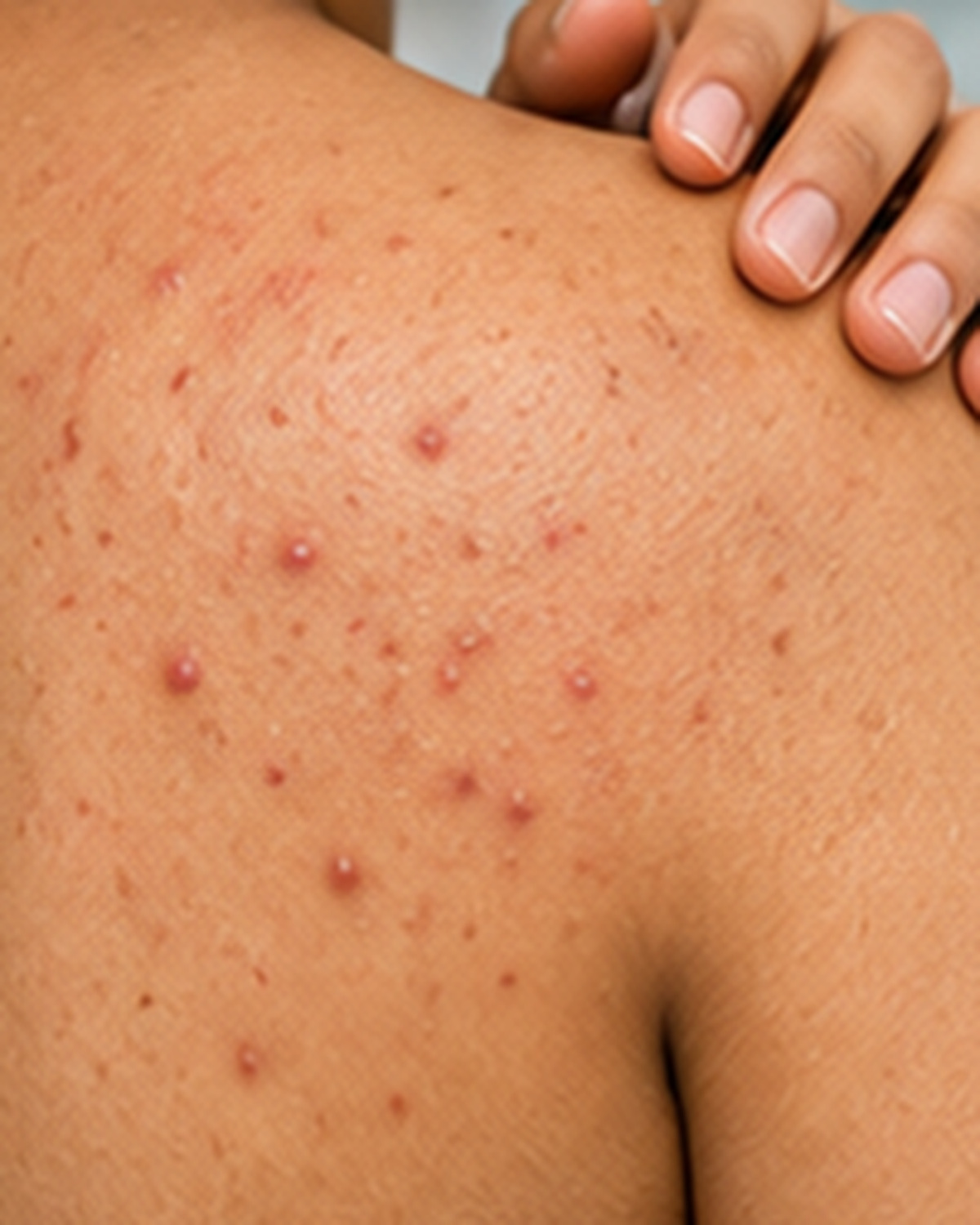
Small follicular bumps
Red or skin-coloured bumps may form around individual hairs, sometimes with a visible pustule at the centre.
Hair-follicle bumps & pustules · OMR
Identify the type. Reduce inflammation. Treat the underlying cause.
Folliculitis can appear as clusters of small red bumps, pus-filled spots or tender lesions around hair follicles. At Ram Skin Clinic in Thoraipakkam, OMR, a dermatologist can assess whether the eruption is bacterial, yeast-related, shaving-associated, irritation-related or another condition that resembles folliculitis.
The condition explained
Folliculitis means inflammation of one or more hair follicles. It may be caused by infection, friction, shaving, occlusion or other inflammatory processes. The affected skin can look acne-like because the bumps often sit directly around hairs.
The American Academy of Dermatology notes that folliculitis commonly follows damage to hair follicles, after which organisms such as Staphylococcus aureus can enter more easily.
Recognising symptoms
Appearance varies with the cause, body site and severity. Acne, fungal conditions, insect bites and other inflammatory disorders can sometimes look similar, so persistent or recurrent outbreaks deserve proper assessment.
Red or skin-coloured bumps may form around individual hairs, sometimes with a visible pustule at the centre.
Some outbreaks are mainly itchy, while others feel sore, burning or tender when clothing rubs the area.
More inflamed lesions can crust or become painful. Deep boils or abscess-like lumps need medical assessment rather than squeezing.
Why it happens
Shaving, waxing, tight clothing, repeated friction, sweating and occlusive equipment can irritate follicles. Hot and humid conditions can make friction and moisture more relevant for some people.
Improperly maintained hot tubs can cause a specific form of folliculitis. Some medicines and underlying skin conditions may also contribute. If the rash keeps returning, the pattern matters more than assuming every outbreak has the same cause.
Some eruptions involve yeast or other organisms, while pseudofolliculitis from ingrown hairs can mimic infection. This is why repeated self-treatment with antibiotics is not appropriate without a diagnosis.
If your skin is also very dry or eczematous, see our eczema treatment in Chennai and dry skin treatment pages.
Diagnosis & treatment
Treatment depends on the likely cause, depth, severity, location and whether episodes are recurrent. Mild cases can sometimes settle after the aggravating factor is removed, while persistent or extensive disease may require prescription treatment.
Temporary changes to shaving, waxing, tight clothing or occlusive equipment can be important when mechanical irritation is contributing.
When infection is suspected, treatment may involve an antiseptic, antibacterial or antifungal approach depending on the diagnosis. Prescription choices should be guided by the dermatologist.
Repeated or unusual folliculitis may need a swab, culture or other evaluation. A skin biopsy is only occasionally required when the diagnosis remains uncertain.
DermNet’s bacterial folliculitis guidance describes warm compresses, antiseptic measures and targeted antimicrobial treatment among options, with more extensive disease requiring medical review. Antibiotics should not be used casually because resistance matters.
Everyday care
Do not squeeze or pick lesions. Change out of sweaty clothing promptly, wash workout clothing regularly and avoid prolonged friction over active areas. If shaving seems to trigger outbreaks, discuss technique and whether a temporary break is appropriate.
For general skin-barrier care, review our skin care tips.
Tell the dermatologist whether the eruption started after shaving, waxing, travel, a hot tub, a new medicine, gym activity or repeated sweating. Photographs from the beginning of the outbreak can be useful.
If you have used antibiotic, antifungal or steroid creams already, bring the names and duration of use.
When to seek help
Arrange a dermatology review when outbreaks keep returning, spread over a large area, are very painful, leave marks or scars, or fail to improve after avoiding obvious triggers.
Seek prompt care for rapidly increasing redness, warmth, swelling, fever, severe pain or a large fluctuant lump, because a deeper infection or abscess may require different management.
Both can produce pustules and bumps, but the pattern and relationship to hair follicles can differ. A dermatologist can help distinguish them.
Scaly or recurrent inflammatory patches may point to another diagnosis. See our psoriasis treatment and eczema pages for related information.
Follow-up
At follow-up, note whether new lesions have stopped appearing, tenderness has reduced and the suspected trigger has been controlled. Recurrent cases may need a different diagnostic approach rather than repeating the same treatment indefinitely.
Cost depends on the consultation, medicines, any swab or laboratory testing and follow-up requirements. Most uncomplicated cases do not need extensive investigations.
If additional testing is suggested, ask what question the test is intended to answer.
Common questions
The correct treatment depends on the cause, so recurring follicular bumps should not automatically be treated as acne or with leftover antibiotics.
Some infectious forms can spread through shared razors, towels or close skin contact, but many cases are related to irritation or overgrowth of organisms already present on the skin. The cause determines the risk.
Yes. Shaving can injure follicles and can also cause pseudofolliculitis from ingrown hairs. Technique, equipment and whether to pause shaving depend on the pattern.
Mild folliculitis may settle after the trigger is removed, but persistent, recurrent, painful or spreading disease should be assessed.
Not always. Treatment depends on the cause and severity. Bacterial, yeast-related and irritation-driven folliculitis are managed differently.
Repeated friction, shaving, sweating, occlusion, persistent colonisation or an incorrect diagnosis can all contribute. Recurrent disease may need examination and sometimes swab or culture testing.
Your appointment in OMR
Ram Skin Clinic is in Best Towers, above Domino’s Pizza, in Okkiampet, Thoraipakkam, Chennai. Bring previous prescriptions, names of creams or antibiotics used, and photos showing how the eruption started.
Write down whether outbreaks follow shaving, gym sessions, sweating, tight clothing, hot-tub use or a particular product.
Visit us in OMR
Book a consultation at Ram Skin Clinic in Thoraipakkam, Chennai.
#48, Second Floor, Flat E, Best Towers,
General patient information. Your dermatologist determines individual diagnosis and treatment.