Raised or enlarging scar
The scar may remain elevated or continue to extend beyond the area of the original cut, acne spot, piercing, burn or other injury.
Raised scar assessment · OMR
Assess the scar, reduce symptoms and choose a plan that accounts for recurrence risk.
Keloids are raised scars that can continue growing beyond the edges of the original injury. They may itch, feel tender or painful, become cosmetically prominent, and sometimes recur after treatment. At Ram Skin Clinic in Thoraipakkam, OMR, a dermatologist can assess whether a raised scar is a keloid, a hypertrophic scar or another skin growth before discussing treatment.
The condition explained
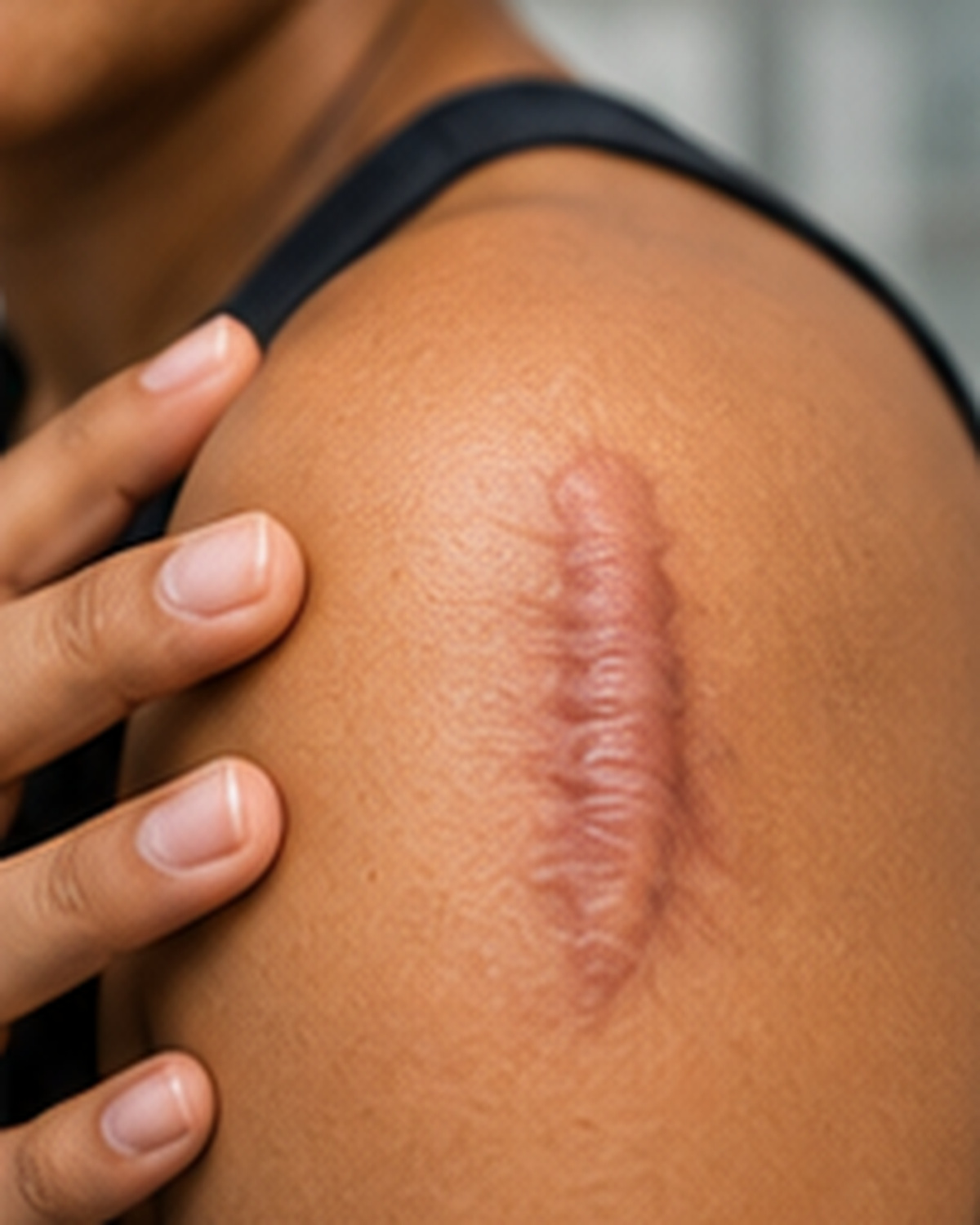
A keloid is an overgrowth of scar tissue that develops after skin injury. Unlike a hypertrophic scar, which generally stays within the boundaries of the original wound, a keloid can extend beyond them.
DermNet notes that keloids are usually firm, raised and smooth, may itch or feel uncomfortable, and commonly occur on areas such as the chest, shoulders, upper arms and earlobes.
Common presentations
Keloids can behave differently from one person to another. Treatment goals may include symptom relief, flattening, reducing colour contrast or limiting further growth.
The scar may remain elevated or continue to extend beyond the area of the original cut, acne spot, piercing, burn or other injury.
Some keloids are mainly a cosmetic concern, while others cause persistent itch, sensitivity, tightness or discomfort.
Keloids have a tendency to return. A dermatologist may therefore plan combination or staged treatment rather than relying on a single procedure.
Assessment first
Clinical examination is usually the starting point. The dermatologist looks at the original injury, the time course, the scar margin, symptoms, location, skin type and any previous treatment.
Some skin tumours and other conditions can resemble a keloid. If the appearance is unusual or the diagnosis is uncertain, a skin biopsy may sometimes be considered.
Previous steroid injections, surgery, laser, cryotherapy, piercings or scar treatments can influence the next step. If you have photographs showing how the scar changed over time, bring them to the consultation.
If your raised scar followed acne, infection or another inflammatory problem, the underlying skin condition should also be controlled to reduce new injury and additional scarring.
Treatment planning
No single method is best for every keloid. Size, location, symptoms, skin tone, age of the scar and recurrence history all matter.
Corticosteroid injections are commonly used to soften and flatten keloids and reduce symptoms. They are usually given as a series rather than a single injection.
Silicone gel or sheets and, in selected locations such as the ear, pressure devices may be used as part of prevention or recurrence-control strategies.
Depending on suitability, a dermatologist may discuss cryotherapy, laser or surgical approaches. Surgery alone has a significant recurrence risk, so additional treatment may be needed.
The American Academy of Dermatology describes corticosteroid injections, pressure therapy, silicone sheets, cryosurgery, laser and surgery among treatment options, often in combination because keloids can recur.
What to expect
Many keloids require repeated treatment over weeks or months. Improvement may be gradual and complete flattening is not always possible. The aim is usually to reduce symptoms and prominence while balancing side effects and recurrence risk.
Darker skin tones can be more prone to pigment changes after some procedures, including freezing treatment. The expected benefit and risk should be discussed before treatment.
Home removal attempts can injure the skin and may trigger more scar formation or infection. If a scar is changing rapidly, bleeding without reason, ulcerating or looks unusual, arrange an in-person assessment rather than self-treating.
Follow-up & cost
Cost depends on the number, size and location of keloids and the treatment selected. Some patients need a course of injections or a combination approach, so the total cost can only be estimated after examination.
Frequently asked questions
Keloids usually persist rather than disappearing completely on their own. Some may become less symptomatic over time, but persistent, growing, itchy or painful scars can be assessed for treatment.
A hypertrophic scar stays within the boundary of the original wound and may flatten with time. A keloid can grow beyond the original wound edge and is more likely to persist or recur.
Yes. Intralesional corticosteroid injections are commonly used to soften and flatten raised keloid tissue and reduce symptoms. Several sessions may be required.
Yes. Recurrence after surgical removal is a major concern, which is why surgery is often paired with another treatment or a recurrence-prevention strategy.
If you are prone to keloids, tell doctors before elective procedures, piercings or surgery. Depending on the situation, early scar care, silicone, pressure or other preventive measures may be discussed.
Before your appointment
For broader skin assessment, see our dermatology treatments, skin biopsy information and skin care tips.
Book a dermatologist consultation
Schedule an assessment at Ram Skin Clinic in OMR to confirm whether it is a keloid or another type of scar and discuss suitable treatment options.
Medical information on this page is educational and does not replace an in-person diagnosis. Treatment suitability and availability are determined after clinical assessment.