Managing Raised Scars
Keloid Treatment Options
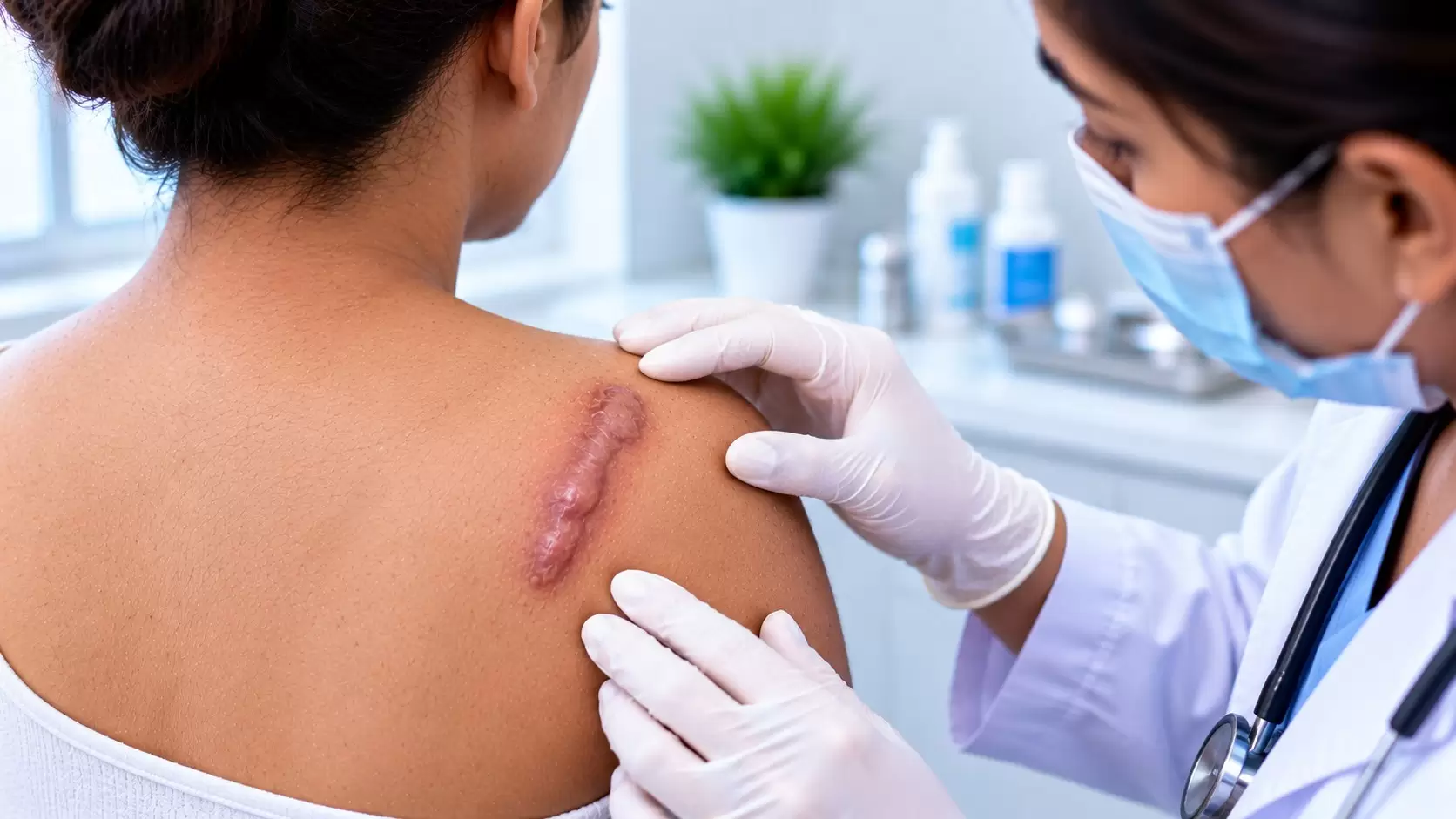
Keloids can be challenging because they may continue growing and can recur after treatment. The best approach depends on the scar’s size, location, symptoms, skin type and previous treatments.
What are the goals of keloid treatment?
Treatment does not always make a keloid disappear completely. Practical goals include flattening and softening the scar, reducing itch or pain, improving appearance, restoring movement when a scar restricts it, and limiting further growth.
Because recurrence is possible, the treatment plan should also consider what happens after the scar improves.
Common keloid treatment options
Corticosteroid injections
Medication injected directly into the keloid can reduce inflammation and collagen activity, helping the scar become softer and flatter.
Silicone gel or sheets
Silicone products can be used over healed skin to support scar flattening and are often part of longer-term scar management.
Cryotherapy
Controlled freezing can reduce selected keloids and may be particularly useful for smaller lesions or in combination with injections.
Pressure therapy
Special pressure earrings or garments can help selected scars, especially after treatment of ear keloids.
Corticosteroid injections
Intralesional corticosteroids are among the most established treatments for keloids. They are injected directly into the scar at intervals determined by the treating clinician.
Repeated sessions may gradually reduce thickness, firmness, itch and discomfort. Possible local side effects include skin thinning, visible small blood vessels and changes in pigmentation, so dosing and injection technique matter.
Silicone gel and silicone sheets
Silicone can be applied once a wound has fully closed. Regular use over time may help flatten and soften raised scars and can also be used after other procedures as part of recurrence prevention.
Silicone treatment requires consistency. It is generally not a one-time application, and results are assessed over weeks to months.
Cryotherapy for keloids
Cryotherapy freezes scar tissue using a controlled cold source. It can reduce the size and firmness of selected keloids and is sometimes combined with corticosteroid injections.
Changes in skin pigmentation can occur after freezing, particularly in darker skin tones, so the expected benefit and pigment risk should be discussed before treatment.
Laser treatment for keloids
Selected laser and light-based treatments may help reduce redness, vascularity, thickness or symptoms. Laser therapy is often used as one component of a multimodal plan rather than as a guaranteed standalone cure.
The laser type and treatment goal matter. A dermatologist should select the approach based on scar characteristics and skin type.
Can a keloid be surgically removed?
Yes. Surgery can physically remove a keloid, particularly when the scar is bulky or difficult to manage with nonsurgical treatment. The limitation is that surgery creates another wound in skin already prone to excessive scarring.
Read Can Keloids Grow Back After Treatment? for more about recurrence.
Other specialist treatments
For resistant keloids, dermatologists may consider additional intralesional medicines or combinations of therapies. Options reported in specialist practice include agents such as 5-fluorouracil, often used in combination with corticosteroids, depending on the scar and patient.
Radiotherapy can also be used after surgical excision in carefully selected recurrent or difficult keloids, but it is a specialist option and is not appropriate for every patient or anatomical site.
Why combination treatment often works better
Keloids involve persistent abnormal scar biology, so a single method may not adequately control every component. A combination can address scar bulk, inflammation and recurrence risk at different stages.
For example, a dermatologist might use injections to soften a scar, cryotherapy for selected areas, or surgery followed by preventive treatment. The sequence is individualised.
How many treatment sessions are needed?
There is no fixed number. Some small keloids improve after a limited series of treatments, while large, longstanding or previously recurrent scars may require repeated sessions and longer follow-up.
Progress is judged by changes in thickness, firmness, symptoms and growth rather than by expecting immediate disappearance.
Which treatment is right for you?
The choice depends on whether the scar is truly a keloid, where it is located, how long it has been present, whether it is still growing, symptoms, pigmentation, previous treatment and whether recurrence has occurred.
A hypertrophic scar behaves differently and may need a different strategy. See Keloid vs Hypertrophic Scar.
When should you see a dermatologist?
Seek assessment if a raised scar is enlarging beyond the original injury, is painful or very itchy, restricts movement, repeatedly becomes irritated, or has returned after previous treatment.
For an individual treatment plan, visit Keloid Treatment in Chennai.
Frequently asked questions
What is the most common treatment for keloids?
Intralesional corticosteroid injections are a commonly used first-line treatment for many keloids. The best treatment depends on scar size, site, symptoms and previous treatment.
Can silicone gel help a keloid?
Silicone gel or sheets may help flatten and soften raised scars and are often used as part of scar management.
Can keloids be removed surgically?
Yes, but excision alone has a substantial recurrence risk and is commonly combined with additional treatment.
Does cryotherapy work for keloids?
It can help selected small or moderately sized keloids and may be combined with corticosteroid injections.
Can keloids come back after treatment?
Yes. Recurrence is possible, which is why prevention and follow-up are important parts of treatment planning.
Medical guidance checked against current American Academy of Dermatology and DermNet guidance.
Visit us in OMR
Want to know which keloid treatment fits your scar? Get it assessed.
Book a dermatologist consultation at Ram Skin Clinic in Thoraipakkam, Chennai.
#48, Second Floor, Flat E, Best Towers,Okkiampet, Thoraipakkam, OMR,
Chennai – 600097. Above Domino’s Pizza.