Understanding Keloid Recurrence
Can Keloids Grow Back?
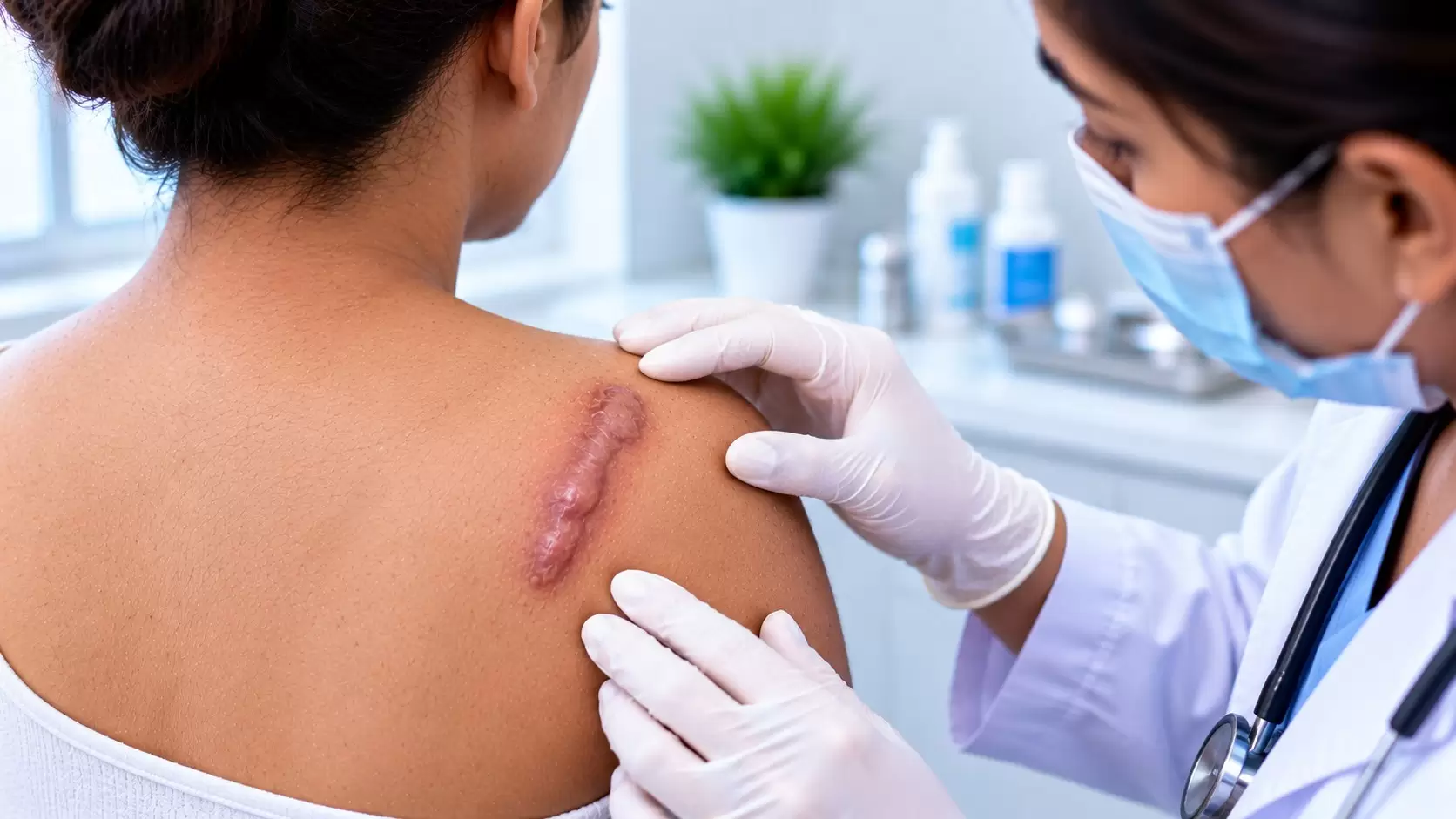
Yes. Keloids can recur after treatment because removing or flattening the scar does not eliminate the skin’s underlying tendency to produce excessive scar tissue.
Why can a keloid come back?
A keloid forms because wound healing produces excessive scar tissue that extends beyond the original injury. Treatment can reduce the existing scar, but the biological tendency toward abnormal scarring may remain.
Any procedure that physically removes a keloid also creates a new wound. In susceptible skin, that new injury can stimulate another excessive healing response.
For more on why these scars develop, read What Causes Keloids?.
Can keloids grow back after surgery?
Yes. Excision removes the visible scar but does not change the patient’s tendency to form keloids. Surgery used by itself therefore has a substantial recurrence risk.
For selected keloids, surgery may still be useful, but dermatologists often combine it with additional treatment intended to suppress excessive scar formation during healing.
What treatments may help reduce recurrence?
Corticosteroid injections
Intralesional corticosteroids can soften and flatten keloids and are commonly used as a primary treatment or around the time of surgery.
Silicone therapy
Silicone gel or sheets may be used after the wound has healed to support scar management, particularly as part of a broader plan.
Pressure therapy
Pressure earrings or garments can be useful in selected locations, especially after treatment of ear keloids.
Cryotherapy
Freezing treatment can reduce selected smaller keloids and may be combined with intralesional therapy.
Why combination treatment is often used
No single keloid treatment works equally well for every scar. Combining approaches can target different aspects of the abnormal healing response and may improve control compared with a single treatment in selected patients.
The combination depends on scar size, thickness, location, skin type, symptoms, previous treatments and whether the keloid has already recurred.
Can steroid injections prevent a keloid from returning?
Corticosteroid injections are one of the most established treatments for keloids. They can reduce inflammation and collagen activity, helping a scar become flatter, softer and less symptomatic.
They are also commonly used after surgical removal to reduce the chance of regrowth. However, they cannot guarantee permanent prevention, and multiple treatment sessions may be needed.
Can a keloid return after it has flattened?
Yes. A treated keloid can become active again, particularly if it remains biologically active or the area is repeatedly irritated or injured. This is why follow-up matters even after a good initial response.
New thickening, itching, tenderness or extension beyond the scar edge can be early signs of renewed activity.
How soon can a keloid grow back?
There is no single recurrence timeline. Some scars begin thickening again within months, while others remain stable for much longer. The treatment used, anatomical site and individual scar biology all influence the course.
Follow-up allows early regrowth to be recognised before the scar becomes substantially larger.
Does recurrence mean treatment failed?
Not necessarily. Keloids are a chronic scar tendency, and treatment goals can include flattening the scar, reducing pain or itching, improving appearance and controlling progressive growth. Some patients require repeated or maintenance treatment.
Expectations should therefore be realistic: successful management does not always mean the scar disappears permanently.
Are some keloids more likely to recur?
Recurrence risk varies with the individual and the scar. Larger longstanding keloids, scars under mechanical tension and keloids that have already returned after previous treatment can be more challenging.
Location also matters. Ear, chest and shoulder keloids may require different treatment strategies because wound tension and practical options for pressure therapy vary.
Keloid recurrence vs hypertrophic scarring
Keloids have a stronger tendency to persist, expand and recur than hypertrophic scars. Hypertrophic scars remain within the original wound boundaries and may gradually flatten as the scar matures.
For a detailed comparison, read Keloid vs Hypertrophic Scar.
When should a recurring keloid be reviewed?
Arrange an assessment if a treated scar begins growing again, becomes increasingly itchy or painful, extends beyond its previous borders, interferes with movement, or repeatedly becomes inflamed or irritated.
For an individual plan including recurrence prevention, visit Keloid Treatment in Chennai.
Frequently asked questions
Can a keloid grow back after treatment?
Yes. Keloids can recur because the underlying tendency to form excessive scar tissue remains.
Can a keloid come back after surgery?
Yes. Surgical removal alone has a substantial recurrence risk, so surgery is often combined with additional preventive treatment.
How quickly can a keloid return?
Timing varies. Regrowth may become noticeable within months, but scar behaviour differs between individuals.
Can steroid injections stop a keloid from returning?
They can reduce recurrence risk and are commonly used as part of treatment, but no treatment guarantees that a keloid will never recur.
Does removing a keloid permanently cure it?
Not necessarily. Removal does not eliminate the biological tendency to form keloids.
Medical guidance checked against current American Academy of Dermatology and DermNet guidance.
Visit us in OMR
Has your keloid started growing again? Get it assessed.
Book a dermatologist consultation at Ram Skin Clinic in Thoraipakkam, Chennai.
#48, Second Floor, Flat E, Best Towers,Okkiampet, Thoraipakkam, OMR,
Chennai – 600097. Above Domino’s Pizza.