
Understanding Keloid Scars
What Causes Keloids?
Keloids develop when scar tissue continues growing beyond the boundaries of the original skin injury. Genetics, skin type, wound location and the nature of the injury can all influence risk.
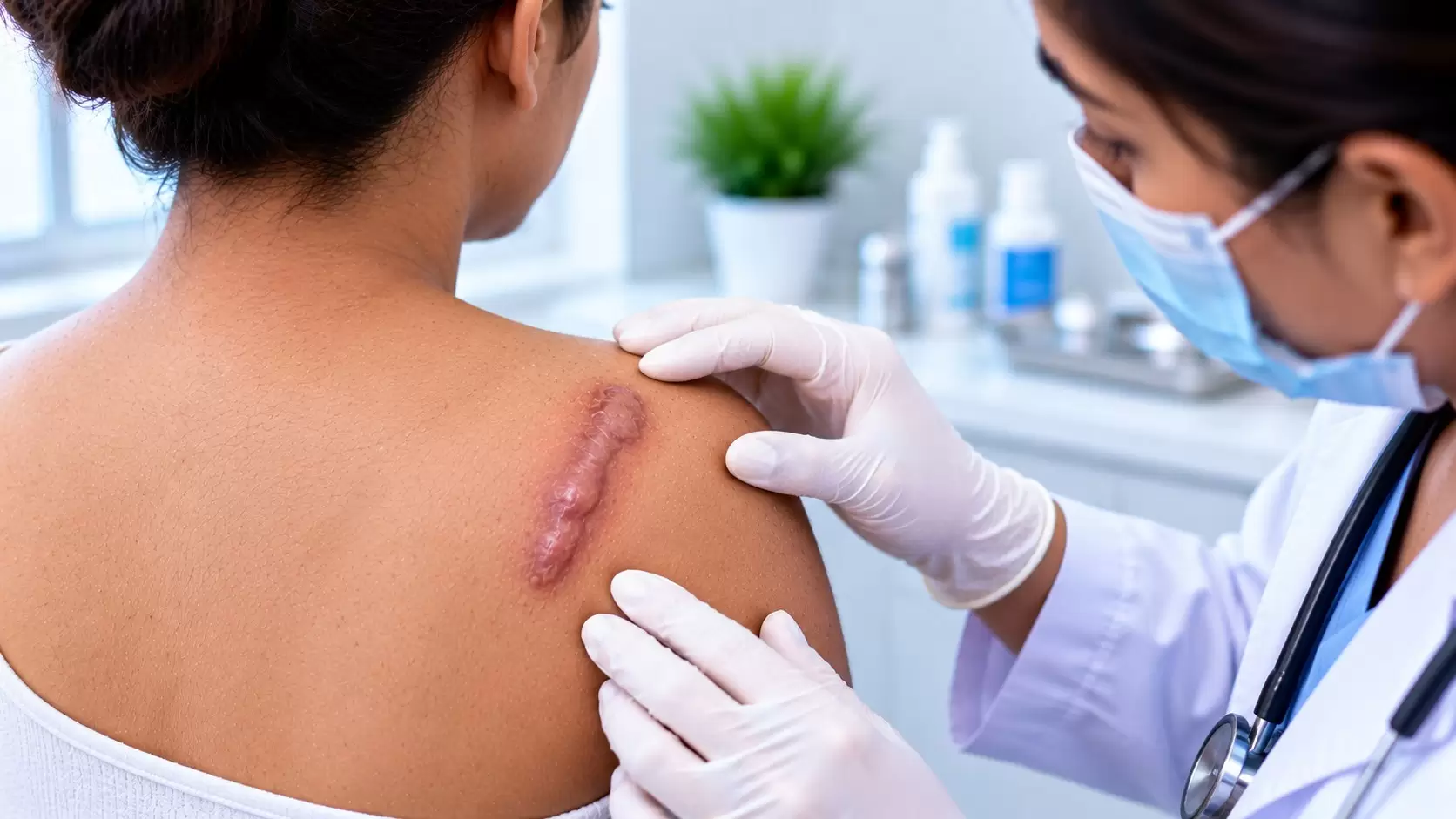
How does a keloid form?
Normal wound healing involves inflammation followed by production and remodelling of collagen and other connective tissue. In a keloid, this repair process becomes excessive and scar tissue keeps expanding beyond the edges of the original wound.
The precise biological reason this happens is not completely understood. Research points to abnormal regulation of fibroblasts, collagen production, inflammatory signalling and growth factors in genetically susceptible skin.
Common triggers for keloids
Piercings
Ear and body piercings are common triggers in people prone to keloid formation, especially when the wound becomes inflamed.
Acne
Inflammatory acne can leave keloids, particularly on the chest, shoulders, jawline and upper back.
Surgery and cuts
Surgical incisions, traumatic wounds and even relatively small cuts can trigger excessive scar growth.
Burns and inflammation
Burns, infections, insect bites and other inflammatory skin injuries can occasionally lead to keloid formation.
Why do some people get keloids more easily?
Keloid formation reflects individual susceptibility as well as the injury itself. Two people can experience similar wounds and heal very differently.
Family history
Keloids can run in families, supporting an important genetic contribution to risk.
Skin pigmentation
They occur more frequently in people with darker skin pigmentation, although anyone can develop a keloid.
Age
Keloids are particularly common from adolescence through young adulthood, but they can occur at other ages.
Previous keloids
A person who has already formed one keloid has a greater reason to consider scar-prevention strategies before elective skin procedures.
Where do keloids commonly develop?
Some body sites are particularly prone to keloid formation. Common locations include the chest, shoulders, upper back, earlobes, cheeks and jawline.
Scar behaviour varies by location because skin tension, movement and local wound-healing biology differ across the body.
Can acne cause keloids?
Yes. Deep inflammatory acne can damage the dermis and initiate an excessive scar response. Keloidal acne scars are more likely on areas such as the chest, shoulders, back and jawline than on some other facial areas.
Controlling active acne is therefore important for people who are prone to raised scars, because preventing new inflammatory lesions also reduces opportunities for new scars to form.
Can piercings cause keloids?
Yes. Ear piercing is a well-recognised trigger. A keloid may begin as a small firm thickening around the piercing and progressively enlarge beyond the original hole.
If you have previously developed keloids, discuss the risk before elective piercings, tattoos or cosmetic procedures that intentionally injure the skin.
Are keloids genetic?
Genetics contributes to susceptibility. Keloids sometimes cluster within families, and researchers have identified multiple genetic pathways that may influence abnormal scar formation. There is no single gene test routinely used to predict whether an individual will form a keloid.
A family history is therefore useful clinical information but does not mean that every wound will become a keloid.
Can keloids form without an obvious injury?
Most keloids follow some form of skin injury or inflammation. Occasionally the triggering event is so minor that it is forgotten, such as a small insect bite, folliculitis or unnoticed scratch.
Apparently spontaneous raised scars should be examined because other skin conditions can sometimes resemble keloids.
Keloid or hypertrophic scar?
The key distinction is growth pattern. A hypertrophic scar stays within the boundaries of the original wound and may flatten with time. A keloid extends beyond the original injury and can continue enlarging.
This distinction matters because treatment strategy and recurrence behaviour differ. Our next supporting article will compare keloids vs hypertrophic scars in detail.
Can keloids be prevented?
Not every keloid can be prevented, but risk can sometimes be reduced. People with known susceptibility may benefit from avoiding unnecessary piercings or other elective skin trauma, treating acne early and discussing scar prevention before surgery.
After a wound closes, dermatologist-directed strategies such as silicone gel or silicone sheets, pressure therapy in selected sites and other preventive treatments may be considered based on risk.
When should you see a dermatologist?
Seek assessment if a scar continues growing beyond the original wound, becomes painful or very itchy, restricts movement, repeatedly becomes irritated, or causes significant cosmetic concern. Early evaluation is also useful if you have a history of keloids and are planning a procedure that may injure the skin.
For diagnosis, prevention strategies and treatment options, visit Keloid Treatment in Chennai.
Frequently asked questions
What causes a keloid to form?
A keloid forms when the wound-healing response produces excessive scar tissue that grows beyond the boundaries of the original injury.
Can a small injury cause a keloid?
Yes. Keloids can develop after acne, insect bites, injections, piercings or small cuts in susceptible people.
Are keloids genetic?
Genetic susceptibility contributes to risk, and a family history can increase the likelihood of developing keloids.
Who is more likely to develop keloids?
They are more common in people with darker skin pigmentation and often develop between adolescence and early adulthood, although anyone can develop them.
Can keloids form without an obvious injury?
Most follow skin injury or inflammation, but sometimes the triggering injury is too minor to be remembered.
Medical guidance checked against current American Academy of Dermatology and DermNet guidance.
Visit us in OMR
Is a scar continuing to grow? Get it assessed.
Book a dermatologist consultation at Ram Skin Clinic in Thoraipakkam, Chennai.
#48, Second Floor, Flat E, Best Towers,Okkiampet, Thoraipakkam, OMR,
Chennai – 600097. Above Domino’s Pizza.