
Common warts
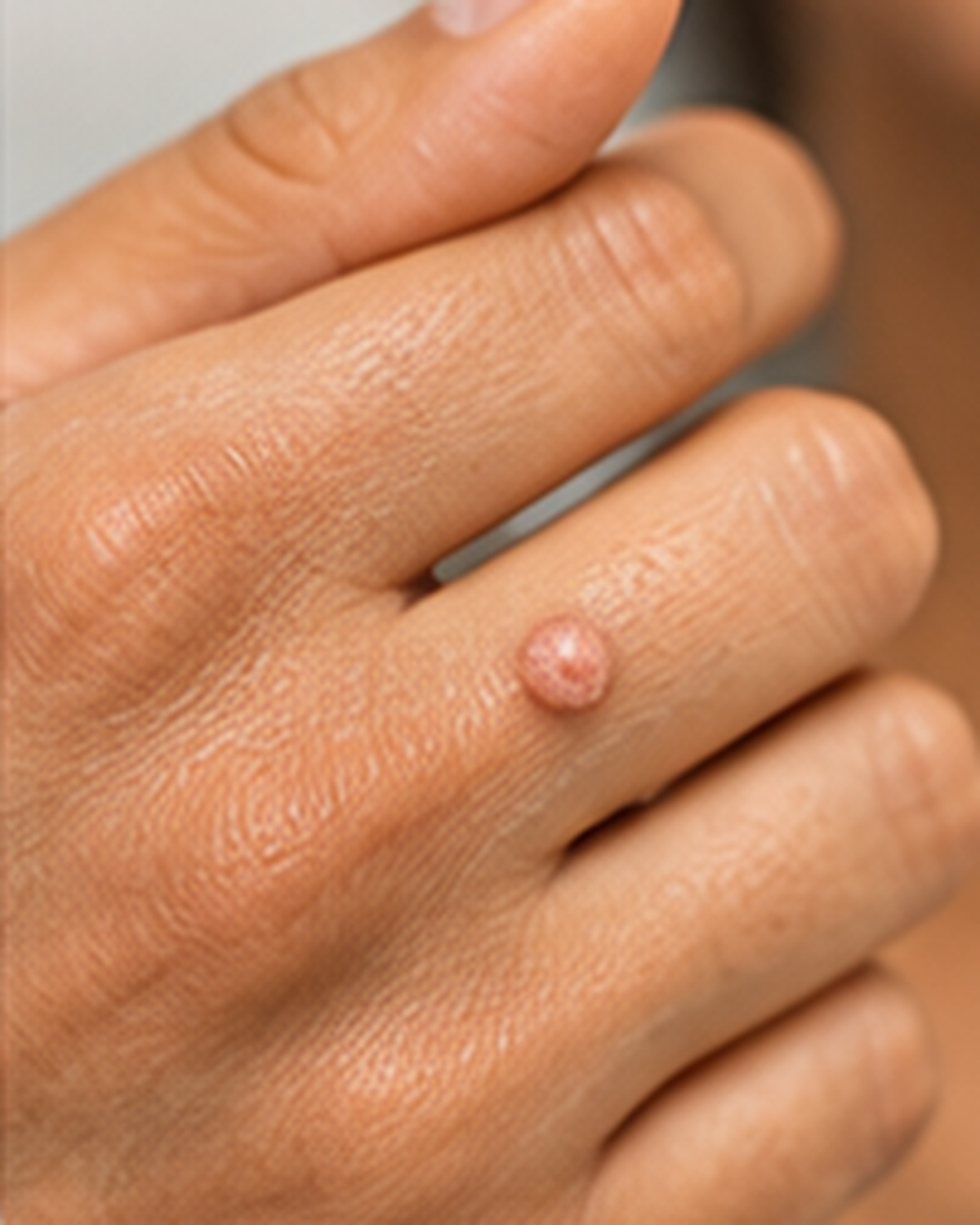
Often rough and raised, commonly affecting fingers, hands, knees or areas exposed to repeated minor trauma.
Common, plantar & recurrent warts · OMR
Confirm the diagnosis. Choose the right treatment. Reduce recurrence and spread.
Warts are common skin growths caused by human papillomavirus (HPV). They can occur on the hands, feet, face and other areas, and may be rough, flat, painful or persistent. At Ram Skin Clinic in Thoraipakkam, OMR, a dermatologist can assess the type of wart and recommend treatment based on its location, size, number and duration.
The condition explained
Warts are benign growths caused by infection of the skin with certain types of HPV. They may look rough and raised, flat and smooth, or thickened on pressure-bearing areas such as the soles.
The American Academy of Dermatology notes that dermatologists can usually diagnose a wart by examining it, while rapidly growing, unusual or treatment-resistant lesions may sometimes need a biopsy.
Recognising different types
Location and appearance help guide diagnosis. Some lesions that resemble warts are actually corns, skin tags, molluscum or other growths, so persistent or changing lesions should be examined.
Often rough and raised, commonly affecting fingers, hands, knees or areas exposed to repeated minor trauma.
Occur on the soles and can become painful because body weight pushes the lesion inward. They may be confused with corns.
Usually smoother and flatter than common warts and may occur in larger numbers. Facial lesions should not be self-treated with strong wart-removal products.
Spread & recurrence
HPV can spread through direct contact or through tiny breaks in the skin. Picking, shaving over a wart or sharing personal items may help spread the virus to nearby skin.
Warts can also recur after apparently successful treatment because treatment removes infected tissue but does not always eliminate every virus-infected cell immediately. DermNet notes that persistence and patience are often required because recurrence can occur.
Home cutting, needles, acids not intended for skin or improvised burning can cause infection, scarring and pigment change. If a lesion is painful, bleeding, rapidly changing or in an unusual location, get it examined before treating it yourself.
For lesions that are uncertain, a skin biopsy may occasionally be recommended.
Diagnosis & treatment
Treatment depends on wart type, location, thickness, number, symptoms and previous treatment response. Some warts can resolve without treatment, while painful, spreading or persistent lesions may benefit from active treatment.
Selected common, plantar or flat warts may be treated with salicylic-acid preparations. Correct application and persistence matter, and surrounding skin should be protected from excessive irritation.
Liquid-nitrogen freezing is commonly used for suitable warts. More than one session may be required, and temporary blistering, soreness or pigment change can occur.
Selected thicker, troublesome or resistant warts may be treated with electrosurgery/cautery, curettage or other dermatologist-directed procedures depending on the site and diagnosis.
AAD guidance lists salicylic acid, cryosurgery and electrosurgery/curettage among established approaches for non-genital warts, while DermNet also describes topical keratolytics, cryotherapy and electrosurgery as common options. Treatment choice should be individualised.
Aftercare
Follow wound-care instructions after freezing, cautery or other procedures. Avoid picking scabs or blisters, and do not share razors, nail tools, pumice stones or towels used directly on wart-affected skin.
If shaving passes over an affected area, discuss whether you should temporarily avoid shaving there because minor trauma may spread lesions.
Tell the dermatologist which products or procedures you have tried, how long you used them and whether the wart became smaller, more painful or irritated.
For general skin-care advice, see our skin care tips.
When to seek help
Arrange a dermatology review if you are unsure whether a growth is a wart, if it is on the face, if there are many lesions, if treatment keeps failing, or if the lesion changes, bleeds, hurts, itches or grows rapidly.
People with diabetes, reduced immunity or poor circulation should avoid aggressive self-treatment and seek medical advice before using wart-removal products.
If the area is red, warm, painful, crusted or producing pus rather than simply wart-like, review our skin infection treatment in Chennai page.
Do not use ordinary over-the-counter wart removers on genital skin. Genital or intimate-area lesions require separate medical assessment and a different treatment approach.
Follow-up
At follow-up, the dermatologist may assess whether the wart is thinning, shrinking or no longer showing active wart tissue. Some treatments are repeated at intervals until the lesion clears.
If there is no response, the diagnosis and treatment method may need to be reconsidered rather than simply repeating the same treatment indefinitely.
Cost depends on the consultation, number and location of warts, treatment method, number of sessions and whether any biopsy or additional procedure is needed.
A single small wart and multiple recurrent plantar warts may therefore require very different treatment plans and costs.
Common questions
Warts are common, but the right approach depends on the site, type and whether the diagnosis is certain.
Yes. Warts are caused by HPV and can spread through direct contact or to nearby skin, especially when the surface is damaged by picking or shaving.
Yes. Some warts resolve spontaneously, particularly in children, but this can take months or years. Painful, spreading, persistent or bothersome warts may be treated.
It varies. Some warts respond after one session, while others need repeated treatments. AAD guidance notes that cryotherapy is often repeated every few weeks when required.
Yes. Recurrence can happen because HPV-infected skin may remain even after visible wart tissue is removed.
No. Most warts are diagnosed clinically. Biopsy is generally reserved for lesions that look unusual, grow rapidly, resemble an open sore or fail to respond as expected.
Your appointment in OMR
Ram Skin Clinic is in Best Towers, above Domino’s Pizza, in Okkiampet, Thoraipakkam, Chennai. Note when the wart first appeared, whether it has spread, and any previous treatment you have tried.
If the lesion changes in size, colour, shape or bleeding pattern, mention those changes during the consultation.
Visit us in OMR
Book a consultation at Ram Skin Clinic in Thoraipakkam, Chennai.
#48, Second Floor, Flat E, Best Towers,
General patient information. Your dermatologist determines individual diagnosis and treatment.