
GFC Hair Treatment in Chennai.
GFC hair treatment is an autologous, injection-based approach that uses growth-factor-rich material prepared from a patient’s own blood. At Ram Skin Clinic in Thoraipakkam, OMR, suitability is considered only after assessing the pattern and possible cause of hair loss.
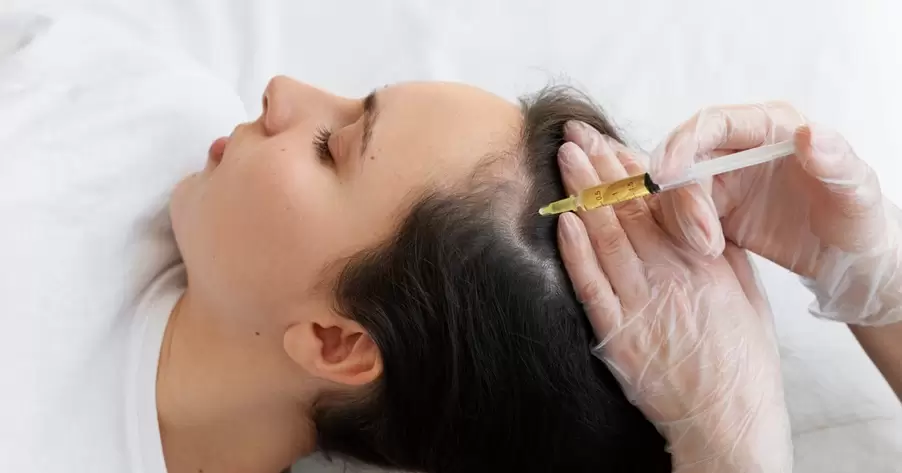
Quick answer: GFC (Growth Factor Concentrate) is one of several autologous platelet-derived approaches being studied and used for pattern hair loss. Early clinical evidence is encouraging, but protocols are not fully standardized and results vary. A dermatologist should first identify the type of hair loss and decide whether GFC, established medical treatment, another procedure, or a combination is appropriate.
What is GFC hair treatment?
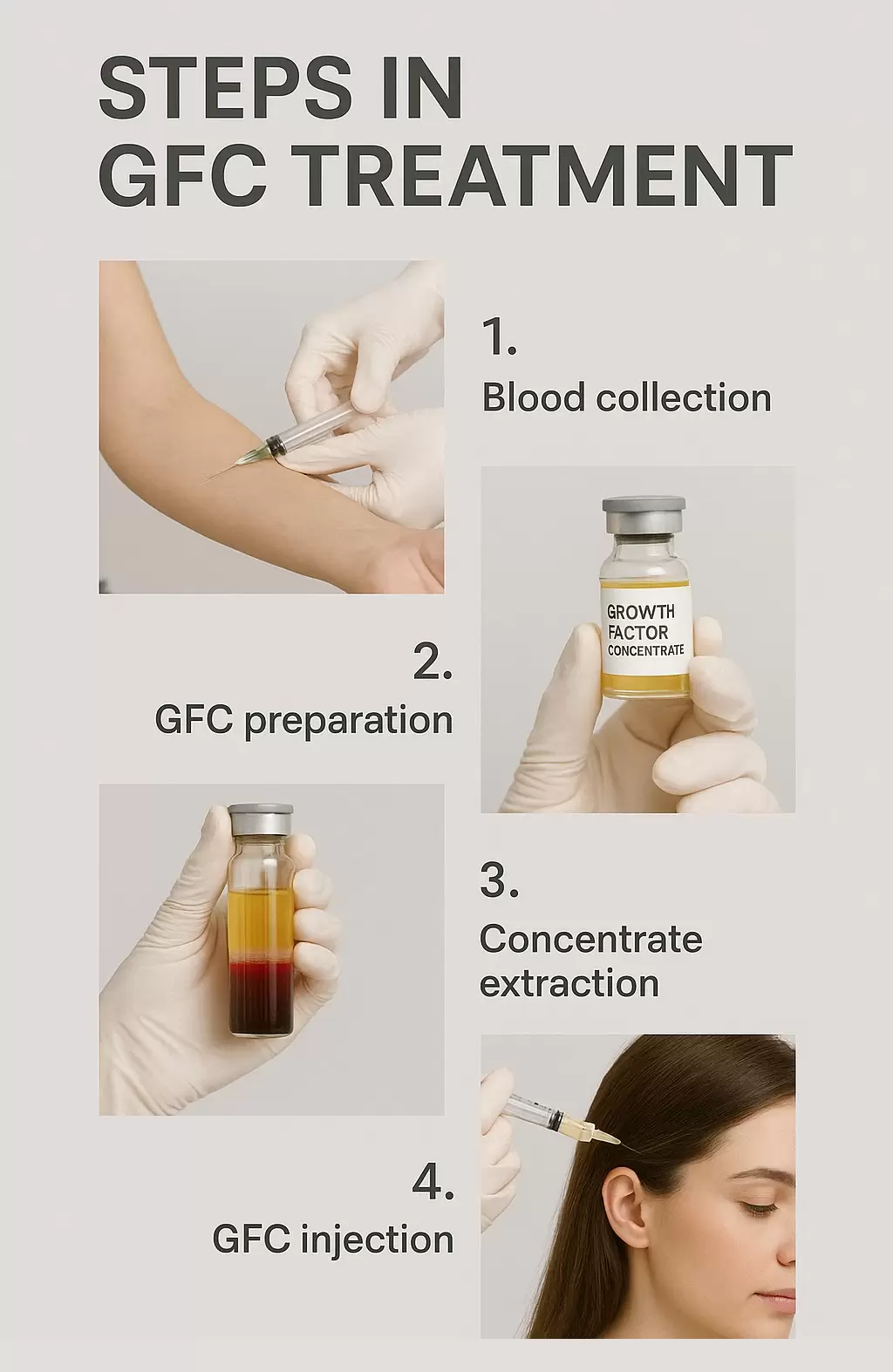
Growth Factor Concentrate treatment begins with a small blood sample. The sample is processed using a dedicated preparation system to obtain an autologous concentrate containing platelet-derived signalling proteins and growth factors. The prepared material is then administered into selected areas of the scalp.
The aim is to support the biological environment around existing hair follicles. This is different from a hair transplant: GFC does not move follicles from one part of the scalp to another and it should not be described as creating new follicles in completely bald areas.
Published research on platelet-derived growth-factor therapies for androgenetic alopecia reports potential improvements in measures such as hair density and thickness, but the evidence for GFC specifically is still developing. Recent reviews also highlight differences in preparation methods and the need for larger, standardized trials.

Hair loss is not one condition.
Searching for GFC hair treatment in Chennai often starts with visible thinning, increased shedding or a widening part. The important first step is determining why it is happening. Pattern hair loss is only one possible diagnosis, and a procedure should not replace an appropriate medical assessment.
Pattern hair loss
Androgenetic alopecia can affect both men and women. The pattern, stage and amount of miniaturization influence treatment planning.
Diffuse shedding
Telogen effluvium and other causes of diffuse shedding may require investigation of triggers rather than immediately choosing an injection procedure.
Scalp disease
Dandruff, inflammation, infection and some inflammatory or scarring disorders can contribute to hair concerns and may need separate treatment.
How a GFC session is typically planned.
Hair and scalp assessment
The dermatologist reviews the distribution of thinning, scalp condition, medical history, medications and other factors relevant to hair loss.
Blood collection
A small amount of the patient’s own blood is collected using sterile technique.
Preparation
The blood is processed according to the specific GFC preparation system to obtain the autologous concentrate used for the procedure.
Scalp administration
The prepared concentrate is administered to selected areas of the scalp. Patients can experience temporary injection-site discomfort, tenderness, redness or swelling.
Follow-up
Response is reviewed over time. The number and spacing of sessions should be individualized rather than promised as a fixed universal course.
What can GFC realistically do?
Current studies of autologous growth-factor injections suggest that some people with androgenetic or pattern hair loss may experience improvement in hair density or thickness. However, outcomes are variable and the evidence base is not strong enough to guarantee regrowth for an individual patient.
A 2026 systematic review and meta-analysis of growth-factor injections found encouraging improvements but also reported substantial heterogeneity, non-standardized protocols and significant risk of bias in the available studies. That is why photographs, scalp examination and realistic expectations matter more than fixed claims such as “visible regrowth after two sessions.”
GFC may be considered as part of a broader hair-loss plan. Depending on diagnosis, that plan may also involve evidence-based medical therapy, scalp treatment, correction of contributing factors or other procedures.
Is GFC better than PRP?
GFC and PRP are both autologous blood-derived approaches, but preparation systems and the resulting products differ. It is tempting to label one as universally superior, but that conclusion is too broad. Comparative studies are emerging, and some have reported favorable outcomes with concentrated growth-factor preparations; other studies show benefits from PRP, and protocols vary considerably between clinics and studies.
The practical question is not simply “GFC or PRP?” but whether a platelet-derived procedure is appropriate for your diagnosis, what evidence supports the proposed protocol, what other treatment is needed, and how response will be measured.
Autologous
Both approaches use material derived from the patient’s own blood.
Protocol matters
Preparation, concentration, injection technique, session schedule and patient selection can differ.
No universal winner
Current evidence does not justify promising that one procedure will outperform every alternative for every patient.
Who may be considered for GFC?
People with early or moderate pattern hair thinning and follicles that are still present may be evaluated for GFC as part of a dermatologist-led treatment plan. Suitability cannot be determined from photographs or a keyword search alone.
GFC may not be the right first step when hair loss is sudden, unexplained, patchy, associated with significant scalp inflammation, or caused by a condition requiring a different treatment. Medical history, current medicines and relevant contraindications also need to be reviewed before an injection-based procedure.
For a broader assessment of thinning and shedding, see our Hair Loss Treatment in Chennai page and learn more about Dr. Anuj Singh, M.B.B.S., D.D.V.L.
GFC hair treatment cost in Chennai.
The cost of GFC hair treatment can vary with the preparation system used, the number of sessions advised, the extent of treatment and the clinical plan. Rather than publishing a price range that may become inaccurate or imply that every patient needs the same protocol, Ram Skin Clinic can discuss the expected treatment plan and applicable charges after assessment.
When comparing costs between clinics, ask what the quoted fee includes, how the diagnosis was established, who performs the procedure, which preparation protocol is being used and how progress will be reviewed. Choosing a hair-loss treatment solely on a per-session price can overlook the more important question of whether that treatment is appropriate.
GFC hair treatment FAQs.
How many GFC sessions are needed for hair loss?
There is no single schedule suitable for everyone. Published protocols vary, and the dermatologist may individualize the number and spacing of sessions according to diagnosis, severity, response and the preparation system used.
When will I see results after GFC treatment?
Hair growth changes occur gradually because follicles follow a biological growth cycle. Response and timing vary. Progress is better judged over follow-up using clinical examination and, where appropriate, standardized photographs rather than promising a fixed result after a specific session.
Is GFC hair treatment permanent?
It should not be described as a permanent cure for progressive conditions such as androgenetic alopecia. Maintenance of improvement may depend on the underlying diagnosis and the rest of the treatment plan.
Does GFC work for completely bald areas?
GFC is intended to support existing follicles; it does not transplant new follicles. Areas with advanced follicular loss may respond differently, so examination is important before setting expectations.
Is GFC the same as PRP?
No. Both are autologous blood-derived treatments, but the preparation methods and resulting concentrates differ. Comparative evidence is still developing.
Is there downtime after GFC?
It is generally an outpatient procedure, but temporary tenderness, redness, swelling or injection-site discomfort can occur. Individual after-care advice should be followed.
Can women undergo GFC treatment?
Women with pattern hair loss may be evaluated for platelet-derived treatments, but female hair loss has multiple possible causes. Diagnosis and appropriate investigation should come first.
Should I stop my existing hair-loss medicines before GFC?
Do not stop prescribed treatment on your own. Bring your current medication list to the consultation so the dermatologist can advise how GFC, if appropriate, fits with your existing plan.
Related hair & scalp resources.
Medical references: For evidence context, see peer-reviewed research indexed by the U.S. National Library of Medicine on growth-factor injections for androgenetic alopecia and a clinical comparison of PRP and GFC for pattern hair loss.
Let’s talk about
your hair concerns.
Book a consultation at Ram Skin Clinic in Thoraipakkam, Chennai for assessment of hair loss, scalp concerns and appropriate treatment options.
Okkiampet, Thoraipakkam, OMR,
Chennai – 600097. Above Domino’s Pizza.
78258 33355 · 78259 33355