
Hair Growth Takes Time
GFC Hair Treatment Results: When to Expect Changes and What Is Realistic
GFC hair treatment does not produce instant new hair. Because follicles move through a biological growth cycle, changes in shedding, thickness or density—when they occur—are assessed over months rather than days.
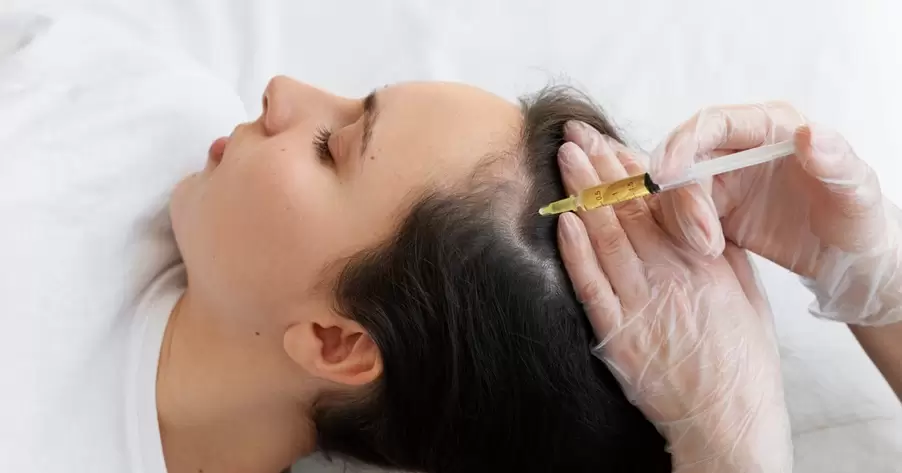
Why GFC results are not immediate
Hair does not grow continuously at the same rate from every follicle. Follicles cycle through active growth, transition and resting phases. A biological treatment aimed at supporting follicular activity therefore needs time before a change can become visible above the scalp.
This is why judging GFC a few days or weeks after treatment is usually not meaningful. Learn more about the mechanism in How Does GFC Treatment Work for Hair Loss?.
A realistic GFC treatment timeline
Early weeks
The scalp recovers from the injections. Visible density changes should not be expected immediately.
First few months
Some patients may notice changes in shedding or hair quality, but response is variable and photographs are more useful than daily observation.
Several months
If follicles respond, changes in thickness or density become more appropriate to assess as hair has had time to grow.
Long-term follow-up
Pattern hair loss remains progressive, so maintenance or additional dermatologist-directed treatment may be discussed.
What kind of improvement can GFC produce?
Clinical goals may include reducing excessive shedding, supporting miniaturised follicles and improving measurable hair density or shaft characteristics in selected patients. Published studies of concentrated growth-factor approaches report encouraging changes in some of these outcomes.
However, response is not uniform. A treatment that produces a useful improvement for one patient may have a smaller effect in another.
What determines your response?
Diagnosis
Pattern hair loss is biologically different from telogen effluvium, alopecia areata, infection or scarring alopecia.
Follicle viability
Miniaturised follicles may still be active; permanently lost follicles cannot reliably be recreated by GFC.
Stage of hair loss
Earlier thinning may offer a different treatment opportunity from advanced longstanding baldness.
Other treatments
Medical treatment and correction of contributing conditions may influence the overall result.
Can GFC make hair thicker?
Improving the performance of miniaturised follicles is one rationale for platelet-derived treatments. Some clinical studies have reported increases in hair density or thickness-related measures after treatment.
That does not mean every thin hair will become permanently thick. The underlying genetic process in androgenetic alopecia continues, so longer-term management remains important.
Can GFC stop hair fall completely?
No treatment should promise complete elimination of normal hair shedding. People naturally lose hairs as part of the hair cycle, and abnormal shedding can have multiple causes.
If ongoing shedding is caused by iron deficiency, thyroid dysfunction, illness, major weight loss, medication or another trigger, addressing that cause may be more important than repeating a procedural treatment.
Can GFC regrow a completely bald area?
GFC relies on viable follicles. It cannot reliably create new follicles in an area where they have been permanently lost. Longstanding smooth bald areas therefore have different expectations from regions where fine miniaturised hairs are still visible.
A dermatologist can assess follicle viability clinically and, when appropriate, with magnification or trichoscopy.
How many sessions before judging the result?
GFC protocols commonly use a short initial series rather than a single session. The exact number and spacing vary between systems and studies, so there is no universal schedule that applies to every patient.
Assessment should be timed to the hair-growth cycle and the treatment plan. Comparing standardised baseline and follow-up photographs is more useful than relying on memory.
How should GFC results be measured?
Lighting, hairstyle, wet versus dry hair, camera distance and angle can dramatically alter the appearance of scalp coverage. Reliable follow-up therefore benefits from consistent photography.
Where available, trichoscopy can provide additional information about hair density, shaft diameter variation and miniaturisation. Patient-reported changes such as shedding are useful but should be interpreted alongside objective findings.
Why online before-and-after photos can be misleading
Before-and-after images can be affected by lighting, styling, fibre products, hair length, camera angle and whether other treatments were used at the same time. They cannot predict an individual patient’s response.
For medical decision-making, the relevant comparison is your own documented baseline versus follow-up under similar conditions.
Does GFC give permanent results?
GFC does not remove the underlying genetic susceptibility responsible for androgenetic alopecia. Even if density or hair calibre improves, pattern hair loss can continue over time.
Depending on the diagnosis and response, a dermatologist may discuss maintenance procedures or established medical treatments. See Hair Loss Treatment Options.
GFC results versus PRP results
Both are platelet-derived approaches and both have studies reporting improvement in selected patients with androgenetic alopecia. Direct comparisons are difficult because preparation protocols, treatment schedules and outcome measurements vary.
For a detailed comparison, read GFC vs PRP for Hair Loss.
When should you reconsider the treatment plan?
If shedding continues, thinning progresses or the expected response is not seen after an appropriate follow-up period, reassessment is more useful than automatically adding more sessions.
The dermatologist may reconsider the diagnosis, look for contributing medical factors, assess adherence to other treatments and determine whether the follicles remain suitable for procedural therapy.
For clinic-specific treatment information, visit GFC Hair Treatment in Chennai.
Frequently asked questions
How long does GFC take to show results?
Visible hair changes generally need to be assessed over several months because hair follicles cycle and new hair takes time to grow. The timing varies between patients.
How many GFC sessions are needed for hair growth?
Protocols often use multiple initial sessions, but there is no universal number suitable for everyone. The schedule should depend on the diagnosis, preparation system and clinical response.
Does GFC permanently stop hair loss?
No. GFC does not remove the genetic tendency responsible for androgenetic alopecia, so maintenance or other ongoing treatment may be required.
Can GFC regrow hair on a bald scalp?
GFC requires viable follicles and cannot reliably recreate follicles that have been permanently lost. Areas containing miniaturised hairs are different from longstanding smooth bald areas.
Why am I not seeing results after one GFC session?
One session cannot be judged immediately because hair growth occurs over months. Lack of response may also relate to the diagnosis, stage of follicle loss or other contributing factors and should be reviewed with the treating dermatologist.
GFC hair treatment in OMR, Chennai
Want realistic GFC expectations? Start with a scalp assessment.
Book a dermatologist consultation at Ram Skin Clinic in Thoraipakkam, Chennai.
#48, Second Floor, Flat E, Best Towers,Okkiampet, Thoraipakkam, OMR,
Chennai – 600097. Above Domino’s Pizza.