
Skin and scalp
Scaly patches may itch, crack or feel sore. Scalp scaling is not always simple dandruff. Mention the hairline, ears and any areas that are difficult to treat.
Skin, scalp & nail care · OMR
Understand your symptoms. Plan care that fits your life.
Living with recurring scaly patches, scalp irritation or nail changes? At Ram Skin Clinic in Thoraipakkam, OMR, consult a dermatologist to assess the diagnosis, discuss treatment options and plan follow-up. Psoriasis care aims to control symptoms and improve daily comfort.
The condition explained
Psoriasis is a long-term, immune-mediated inflammatory condition. Changes in skin-cell turnover lead to patches that may be thick, scaly, itchy or sore. Symptoms can settle and flare again. It is not contagious and is not caused by poor hygiene.
There is no established permanent cure, but treatment can improve control. The plan depends on the type, affected areas, severity and effect on your life. The NIAMS psoriasis overview provides general background.
Recognising symptoms
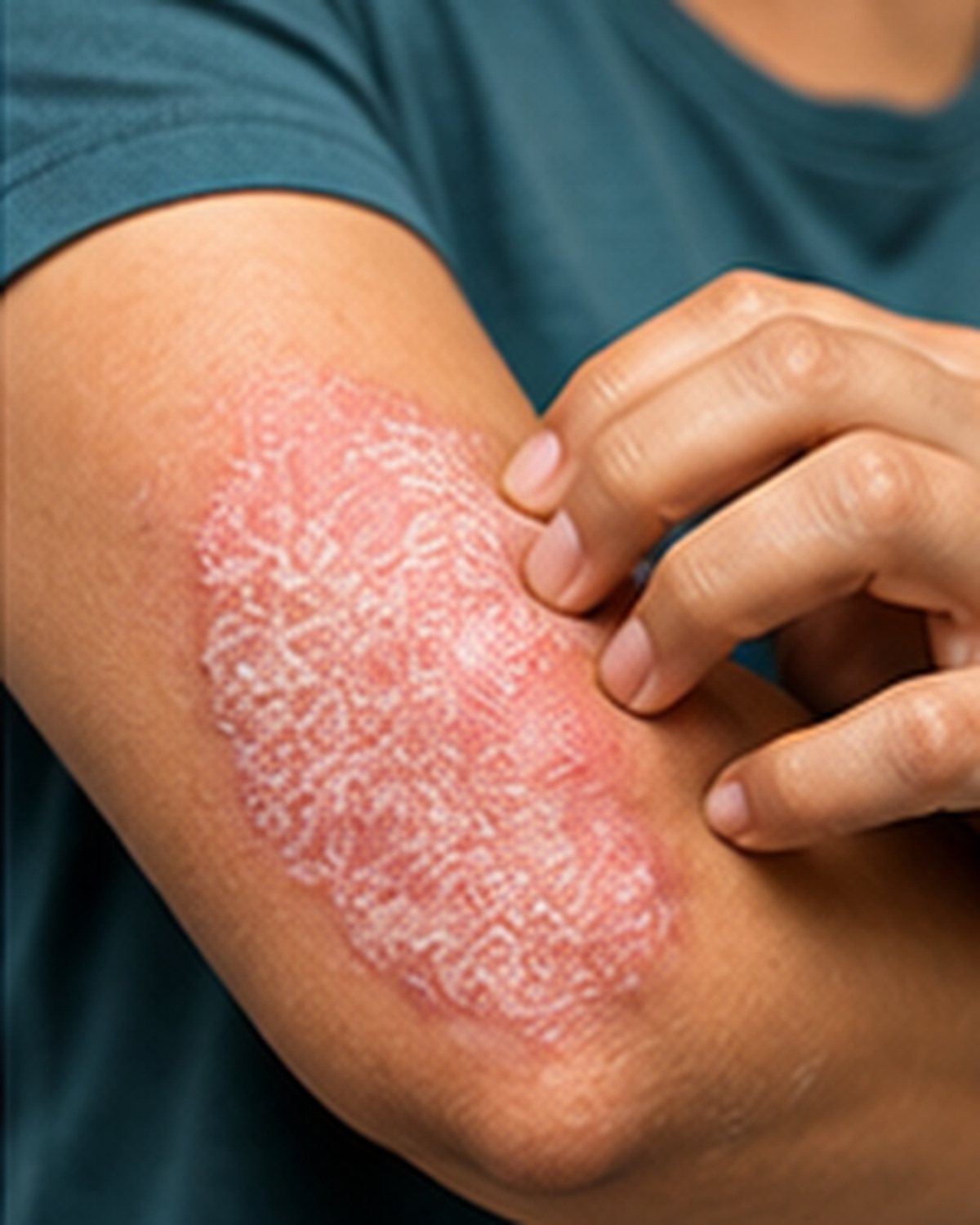
It commonly affects the scalp, elbows and knees, but can occur elsewhere. Patches may look red or pink on lighter skin and darker, violet or grey on deeper skin tones. Colour change may remain after inflammation settles. DermNet describes the different presentations.
Scaly patches may itch, crack or feel sore. Scalp scaling is not always simple dandruff. Mention the hairline, ears and any areas that are difficult to treat.
Nails can develop pits, thickening or separation. Palm and sole involvement may affect walking or manual work even when the overall area is small.
Psoriasis in folds can look smoother and less scaly. Sensitive sites need an individual treatment approach; do not apply the same strong cream everywhere.
Diagnosis
No. Eczema, fungal infection and other conditions can resemble it. A history and skin examination usually guide diagnosis. A skin biopsy may occasionally help when findings are uncertain; it is not necessary for everyone.
Our fungal infection information covers a different condition. Avoid choosing treatment from photographs or borrowing someone else’s prescription.
Tell the dermatologist if itching interrupts sleep, visible patches affect confidence or hand and foot symptoms interfere with work. Explain which area matters most to you. A small affected area can still create a substantial burden.
Bring a list of medicines, supplements and non-prescription creams. Record how long each was used and why it was stopped. This helps distinguish limited benefit from difficulty following the schedule.
Treatment options
Treatment may involve medicines applied to the skin, medically supervised light therapy or medicines that act throughout the body. This is an overview of recognised options, not a claim that every treatment or device is available at Ram Skin Clinic. Confirm arrangements during consultation.
Moisturisers and prescribed preparations, such as corticosteroids or vitamin D treatments, may be used. The product, body site and duration matter. Ask for clear instructions on application and maintenance.
Selected patients may be offered controlled ultraviolet treatment under medical supervision. It is not equivalent to sunbathing or using a tanning bed. Ask about suitability and practical access.
Tablets or injectable treatments, including biologics, may be considered for appropriate cases. They require assessment, discussion of risks and, depending on the medicine, screening and monitoring.
Read the NIAMS treatment guide. Do not start, stop or change prescription treatment without medical advice.
Flares and everyday care
Stress, infections, skin injury and certain medicines can trigger flares in some people. Triggers differ; keeping a brief record can help identify patterns without assuming every food or activity is responsible.
Discuss gentle cleansing and moisturising, avoid picking scales and seek support for smoking cessation or reducing alcohol where relevant. A balanced diet and physical activity support general health; restrictive diets should not replace treatment. See the NHS psoriasis guidance.
Ask which preparation goes on which area, how much to use, when to apply it and when to review. Mention if a product is too greasy for work, stings or is difficult to apply through hair.
If you cannot follow a plan consistently, explain why. A workable routine is more useful than a complicated one you cannot maintain. Ask what to do during improvement as well as during a flare.
Beyond the skin
Some people with psoriasis develop psoriatic arthritis. Recurring joint pain, swelling, morning stiffness, swollen fingers or toes, or heel pain should be discussed promptly. Mild skin symptoms do not exclude a joint problem.
Assessment and timely treatment can help protect joint function. Tell the dermatologist about these symptoms so further evaluation or rheumatology referral can be considered. The NHS psoriatic arthritis guide explains the condition.
Seek urgent medical attention for rapidly worsening widespread skin inflammation, extensive pustules or peeling, especially with fever, chills or feeling very unwell. Do not wait for a routine appointment or try to manage a severe flare only with over-the-counter products.
Tell your clinician if psoriasis affects sleep, relationships or mental health. These concerns belong in the treatment discussion and may need additional support.
Follow-up
Agree on goals such as less itch, fewer cracked areas or easier sleep. Ask when improvement should be reviewed and which side effects require earlier contact. Photos taken in similar conditions can support the discussion, but your comfort and function matter too.
Depending on treatment, blood tests or other checks may be required. Mention other health conditions, infections, vaccination plans and pregnancy or plans to conceive. Some medicines are unsuitable during pregnancy and need advance planning.
Costs depend on the consultation, chosen medicines, investigations and review needs. Ask for an estimate of both the initial plan and ongoing care rather than comparing only the price of one cream.
If specialised treatment or referral is recommended, ask about access, monitoring and alternatives. Explain budget or travel constraints so these can be considered in planning.
Common questions
Our skin, hair and nail treatment overview introduces other conditions. Psoriasis needs its own management plan; cosmetic procedures are not a substitute for controlling inflammation.
No. Psoriasis is not an infection passed through contact, shared meals or everyday interaction.
Current treatment aims for control and periods of clearer skin. Recurrence is possible. Be cautious about guaranteed permanent-cure claims.
Follow the agreed plan. Ask whether to reduce, pause or continue each medicine; do not make abrupt prescription changes on your own.
No. Treatment depends on severity, sites, quality of life, other health conditions and prior response. Many people are managed with other approaches.
Your appointment in OMR
Ram Skin Clinic is in Best Towers, above Domino’s Pizza, in Okkiampet, Thoraipakkam, Chennai. Confirm an appointment and bring previous prescriptions and reports. Check our contact and location details before travelling.
Write down the questions you most want answered: whether the diagnosis is certain, how to use your medicines, what to do during a flare and when follow-up is needed. Before leaving, confirm how to contact the clinic if symptoms change or treatment is difficult to tolerate.
Make each review useful
Between appointments, note which areas are improving, whether itch or soreness is changing and how often you use each prescribed product. Include missed applications and the reason, without feeling that you need to present a perfect record. Honest details help the clinician understand what is happening.
If your routine changes because of travel, work or a new prescription from another doctor, mention it at review. Ask how to coordinate care rather than assuming that each medicine can be considered separately.
Before leaving, check that you understand the purpose of each treatment and the planned review date. Ask what would count as enough improvement and what would lead to a change in approach.
Keep written instructions with your prescriptions. If you are unsure which product belongs on a particular area, contact the clinic for clarification rather than guessing or reusing an old treatment schedule.
Visit us in OMR
Book a consultation at Ram Skin Clinic in Thoraipakkam, Chennai.
#48, Second Floor, Flat E, Best Towers,
General patient information. Your dermatologist determines individual diagnosis and treatment.