
Understanding Psoriasis Care
Psoriasis Treatment Options
Psoriasis treatment is tailored to the type, severity and location of disease, its effect on daily life, previous treatment response and whether joints are involved.
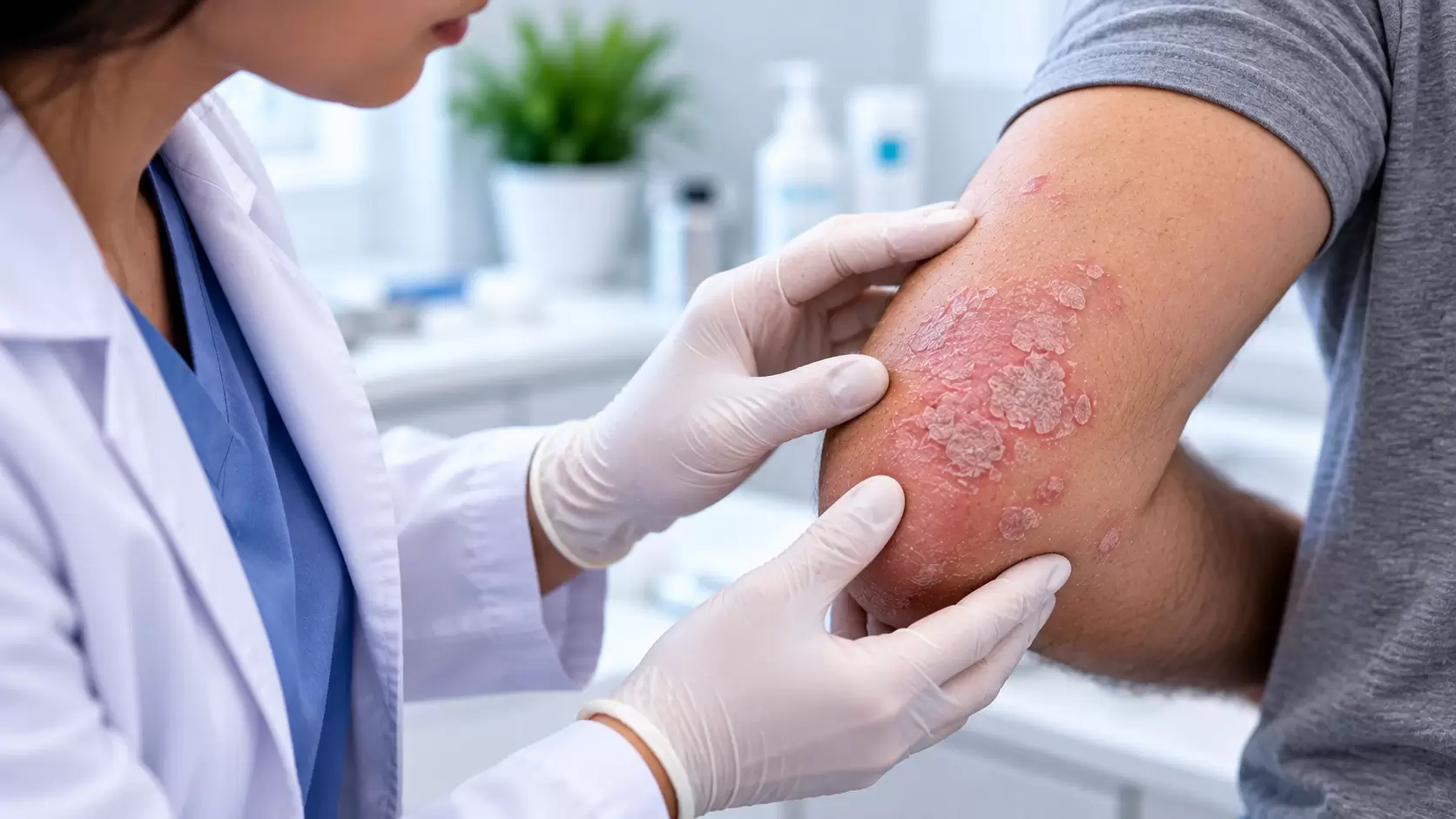
How is psoriasis treatment chosen?
Treatment is individualised. A dermatologist considers how much skin is affected, the body sites involved, the psoriasis subtype, symptom severity, impact on quality of life, medical history, other medicines and previous treatment response. Scalp, nail, palm, sole, facial and genital psoriasis may need different approaches even when the overall area involved is small.
Joint pain, swelling or stiffness is especially important to mention because psoriasis can be associated with psoriatic arthritis. Skin treatment alone may not be sufficient when inflammatory joint disease is present.
For an overview of the disease, see Psoriasis Causes, Symptoms & Types.
Main types of psoriasis treatment
Topical treatments
Medicines applied directly to the skin are commonly used for mild or localised psoriasis. Options include topical corticosteroids, vitamin D analogues and other prescription topical therapies. The formulation and strength depend on the body site and plaque characteristics.
Phototherapy
Controlled ultraviolet light treatment can be used for selected patients, particularly when psoriasis is more widespread or topical treatment is insufficient. Medical phototherapy uses a prescribed dose and schedule and is different from uncontrolled sun exposure.
Systemic medicines
Medicines that work throughout the body may be considered for moderate-to-severe psoriasis, difficult-to-treat disease or significant impact on quality of life. Conventional systemic options include medicines such as methotrexate and ciclosporin in appropriate patients.
Biologic and targeted therapies
Biologic medicines target specific immune pathways involved in psoriasis. Other targeted systemic treatments are also available. Choice depends on disease characteristics, medical history, safety considerations and access.
Topical treatment for mild or localised psoriasis
Topical corticosteroids can reduce inflammation and are widely used, but potency and duration need to match the body site. Stronger corticosteroids are not appropriate for every area, and prolonged unsupervised use can cause adverse effects.
Vitamin D analogues such as calcipotriol may be used alone or with topical corticosteroids. Other topical agents may be chosen for particular sites or circumstances. Regular emollients can reduce dryness and scaling and support the skin barrier, although moisturisers alone do not control the underlying inflammation in many patients.
What about scalp psoriasis?
Hair makes scalp treatment technically different because medication must reach the affected scalp. Solutions, foams, gels, shampoos and scale-softening preparations may be used depending on severity. Thick scale may need to be softened gently so prescribed medicine can penetrate effectively.
Read our detailed guide to Scalp Psoriasis: Symptoms & Treatment.
When is phototherapy considered?
Phototherapy exposes affected skin to carefully controlled ultraviolet light under medical supervision. Narrowband UVB is a commonly used form. It may be considered when psoriasis is widespread, when topical treatments are impractical or inadequate, or in other circumstances where the dermatologist considers it appropriate.
Phototherapy requires repeated sessions and dosing is adjusted to skin response. It should not be confused with tanning beds, which are not a substitute for medical phototherapy and expose users to uncontrolled ultraviolet radiation.
Systemic and biologic treatment
Moderate-to-severe psoriasis or disease that significantly affects daily life may require treatment that works throughout the body. Conventional systemic medicines include methotrexate, ciclosporin and other agents selected according to the patient’s circumstances. These medicines can require blood tests and ongoing monitoring.
Biologic therapies target specific parts of the immune system involved in psoriasis. Different biologics act on different inflammatory pathways. Before starting certain systemic or biologic treatments, screening for infections and assessment of medical history may be necessary.
These treatments are prescription therapies and require individual assessment; suitability cannot be determined from psoriasis appearance alone.
Does managing triggers help?
Recognising personal triggers can complement medical treatment. Stress, skin injury, infections, cold or dry weather, smoking, excessive alcohol use and some medicines are recognised triggers in susceptible people.
Trigger avoidance is not a cure and should not replace treatment. If you suspect a prescribed medicine is aggravating psoriasis, discuss it with the prescribing doctor rather than stopping it yourself. See Psoriasis Triggers & Flare-Ups for more detail.
What if treatment stops working?
Psoriasis can change over time. If a previously effective treatment is no longer controlling symptoms, the diagnosis, adherence, application technique, disease severity and treatment strategy may need review. Some therapies are used for limited periods, while others are suitable for longer-term maintenance under medical supervision.
Do not increase the strength or frequency of prescription treatment without advice. A dermatologist can decide whether to optimise the current regimen, combine therapies or move to another treatment class.
If you are uncertain whether your rash is psoriasis, our Psoriasis vs Eczema guide explains common differences.
When should you see a dermatologist?
Seek assessment if psoriasis is persistent, widespread, painful, affecting sensitive sites, disrupting sleep or daily activities, or not responding to treatment. Medical review is also important if you develop recurring joint pain, stiffness or swelling.
At Ram Skin Clinic, psoriasis care is planned after clinical assessment rather than using a one-size-fits-all regimen. For local consultation details, visit Psoriasis Treatment in Chennai.
Frequently asked questions
Can psoriasis be cured permanently?
There is currently no permanent cure for psoriasis, but treatment can substantially reduce or clear symptoms and help maintain periods of remission or good disease control.
What is the first treatment for psoriasis?
For limited plaque psoriasis, topical treatments are commonly used first. The appropriate treatment depends on severity, location, psoriasis type and individual medical factors.
When are biologics used for psoriasis?
Biologics may be considered for moderate-to-severe psoriasis or other clinically significant disease when systemic treatment is appropriate. Selection requires medical assessment and safety screening.
Does moisturiser treat psoriasis?
Moisturisers help reduce dryness, scaling and discomfort and support the skin barrier, but they may not adequately control the underlying inflammation when used alone.
Is sunlight a treatment for psoriasis?
Some ultraviolet wavelengths can improve psoriasis, but medical phototherapy uses controlled dosing. Uncontrolled sun exposure can cause sunburn and skin damage, and sunburn can itself trigger psoriasis.
Should I stop psoriasis treatment when my skin clears?
That depends on the medicine and treatment plan. Some therapies are reduced or stopped while others are used for maintenance. Follow the plan given by your clinician rather than stopping prescription treatment automatically.
For authoritative treatment information, see the American Academy of Dermatology, DermNet and NHS.
Visit us in OMR
Need a personalised psoriasis treatment plan?
Book a dermatologist consultation at Ram Skin Clinic in Thoraipakkam, Chennai.
#48, Second Floor, Flat E, Best Towers,Okkiampet, Thoraipakkam, OMR,
Chennai – 600097. Above Domino’s Pizza.