
Psoriasis & Scalp Health
Scalp Psoriasis: Symptoms & Treatment
Scalp psoriasis can cause persistent scaling, itching and well-defined plaques that may extend beyond the hairline. The right diagnosis matters because it can resemble dandruff and other scalp conditions.
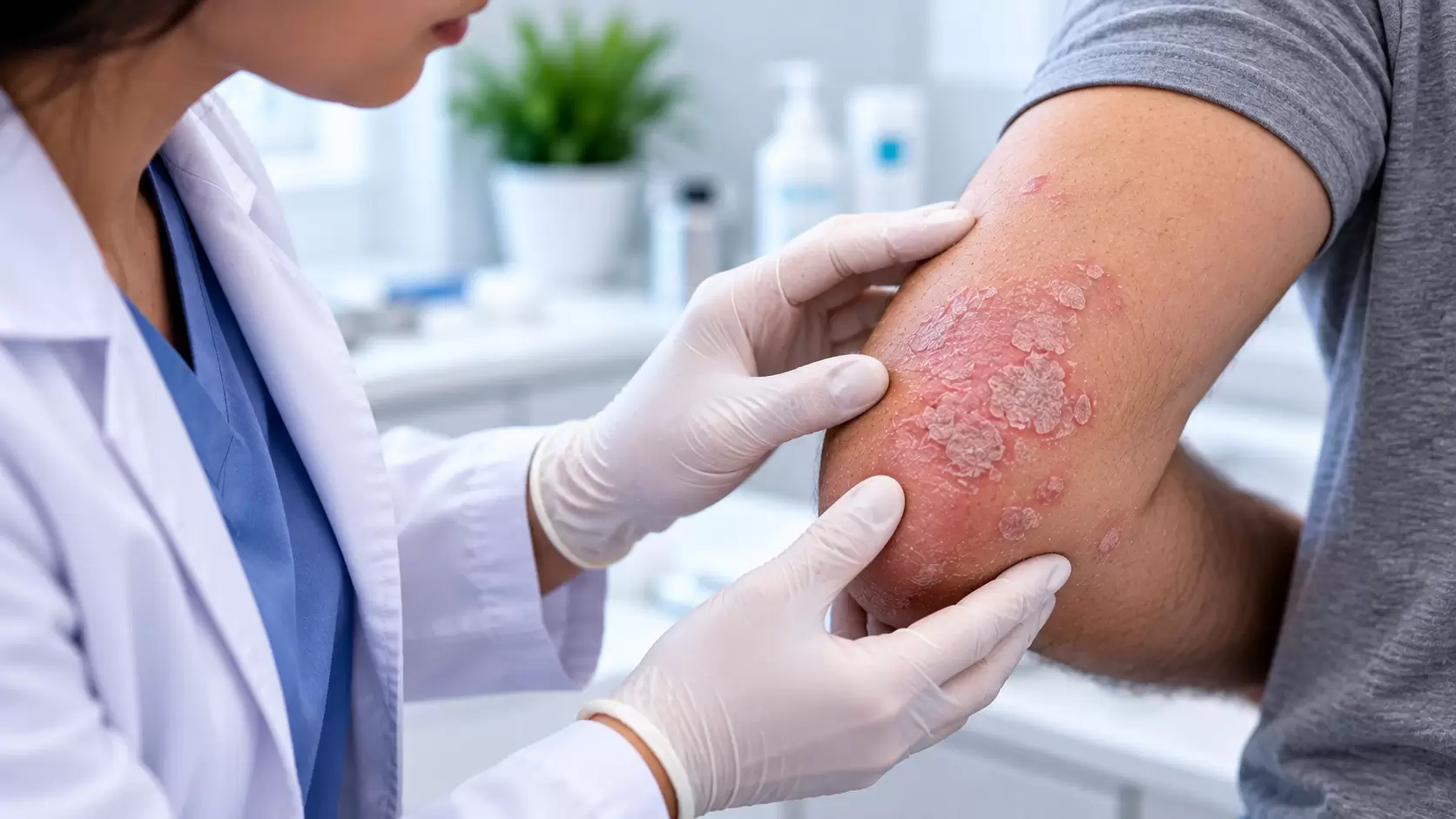
What is scalp psoriasis?
Scalp psoriasis is psoriasis affecting part or all of the scalp. It can remain within the hairline or extend onto the forehead, behind the ears or onto the back of the neck. Hair can make both diagnosis and treatment more challenging because scale may be hidden and medicines need to reach the scalp rather than simply coat the hair.
Scalp involvement may occur along with psoriasis elsewhere on the body or sometimes be one of the first noticeable manifestations. For the broader picture, see Psoriasis Causes, Symptoms & Types and Early Signs of Psoriasis.
Common symptoms of scalp psoriasis
Defined scaly plaques
Psoriasis typically produces well-demarcated patches or plaques with overlying scale. The colour can vary with skin tone, while the scale may look white, silver or grey.
Dandruff-like flaking
Scale can shed onto the hair and clothing and resemble dandruff. Psoriasis often produces drier, thicker and more clearly defined scaling than ordinary dandruff.
Itching and irritation
Scalp psoriasis can be intensely itchy. Some people also experience burning, tenderness or soreness, particularly during a flare.
Dryness and cracking
The scalp can become very dry. Thick plaques may crack or bleed, and repeated scratching can further damage irritated skin.
Extension beyond the hairline
Psoriasis may spread onto the forehead, around or behind the ears, or onto the back of the neck. This distribution can help distinguish it from some other scalp conditions.
Temporary hair loss
Scalp inflammation, scratching and forceful removal of scale can contribute to temporary hair shedding. Hair usually regrows after the scalp disease is controlled when follicles have not been permanently damaged.
Scalp psoriasis or dandruff?
The two can look similar, especially when scalp psoriasis is mild. Dandruff and seborrhoeic dermatitis commonly cause diffuse flaking, while psoriasis more often produces clearly defined plaques with thicker, drier scale. However, the conditions can overlap; DermNet uses the term sebopsoriasis when features of psoriasis and seborrhoeic dermatitis coexist.
Fungal scalp infection and other inflammatory scalp disorders can also mimic psoriasis. If scaling is persistent, severe, associated with hair loss, or does not improve with routine dandruff care, a dermatologist assessment is preferable to repeatedly changing shampoos.
How is scalp psoriasis treated?
Treatment depends on the thickness and extent of plaques, symptoms, previous response, psoriasis elsewhere on the body and practical factors such as hair type and styling routine. For mild-to-moderate scalp disease, topical treatment is generally the starting point.
Topical corticosteroids
Prescription corticosteroid solutions, lotions, foams, gels or shampoos can reduce inflammation, itching and scale. Potency and duration need to be selected appropriately because prolonged or incorrect steroid use can cause adverse effects.
Vitamin D analogues
Medicines such as calcipotriol may be used for scalp psoriasis, alone or in combination with a corticosteroid. The appropriate formulation and schedule should be chosen for the individual patient.
Scale-softening treatments
Keratolytic preparations such as salicylic acid can help loosen thick scale and may improve penetration of other topical medicines. They are not appropriate for every patient or every situation.
Medicated shampoos
Depending on the diagnosis and degree of scaling, a dermatologist may recommend a medicated shampoo. Shampoo alone is not sufficient for every case, particularly when plaques are thick or extensive.
For psoriasis that is severe, widespread or inadequately controlled with topical therapy, dermatologists may consider targeted phototherapy or medicines that work throughout the body, including conventional systemic medicines and biologic therapies. Treatment choice requires individual medical assessment.
Scalp care that can reduce irritation
Use shampoo gently rather than vigorously rubbing or scratching the scalp. If scale needs to be loosened, follow the method recommended with your treatment instead of pulling plaques away. Apply prescribed scalp medication to the affected skin by parting the hair so that the medicine reaches the scalp.
Hair colouring, heat styling, tight hairstyles and fragranced products can irritate an already inflamed scalp in some people. During a significant flare, simplifying the hair-care routine may be more comfortable.
If hair shedding is occurring, mention it during your consultation. Scalp psoriasis itself, scratching and aggressive scale removal can all contribute, but other causes of hair loss may coexist and should not automatically be attributed to psoriasis.
When should you see a dermatologist?
Seek assessment when scalp scaling or itching is persistent, painful, extensive, associated with bleeding or hair loss, or repeatedly returns despite routine dandruff care. Review is also appropriate if you have plaques elsewhere, nail changes or recurring joint pain, stiffness or swelling.
A dermatologist can distinguish scalp psoriasis from seborrhoeic dermatitis, fungal infection and other scalp disorders and select a formulation that is practical for your hair and severity. At Ram Skin Clinic, learn more about psoriasis treatment in Chennai.
Frequently asked questions
Is scalp psoriasis the same as dandruff?
No. They can both cause flaking, but psoriasis typically causes more clearly defined, inflamed plaques with thicker and drier scale. Seborrhoeic dermatitis and psoriasis can also overlap.
Can scalp psoriasis cause hair loss?
Temporary hair loss can occur, especially with severe inflammation, scratching or forceful removal of scale. Hair commonly regrows once scalp psoriasis is controlled.
Should I remove psoriasis scales from my scalp?
Thick scale sometimes needs to be softened so treatment can reach the skin, but it should not be picked or forcibly scraped away. Follow the scale-removal method recommended for your treatment.
Can scalp psoriasis spread beyond the hairline?
Yes. It can extend onto the forehead, behind the ears and onto the back of the neck.
Can shampoo alone treat scalp psoriasis?
Some mild cases may benefit from medicated shampoos, but many patients need additional topical medicine. More severe or resistant disease may require other forms of treatment.
Is scalp psoriasis contagious?
No. Psoriasis is an immune-mediated inflammatory disease and cannot be spread to another person by touching the scalp or sharing normal contact.
For authoritative information, see the American Academy of Dermatology and DermNet.
Visit us in OMR
Persistent scalp scaling or suspected psoriasis?
Book a dermatologist consultation at Ram Skin Clinic in Thoraipakkam, Chennai.
#48, Second Floor, Flat E, Best Towers,Okkiampet, Thoraipakkam, OMR,
Chennai – 600097. Above Domino’s Pizza.