
Pattern hair loss
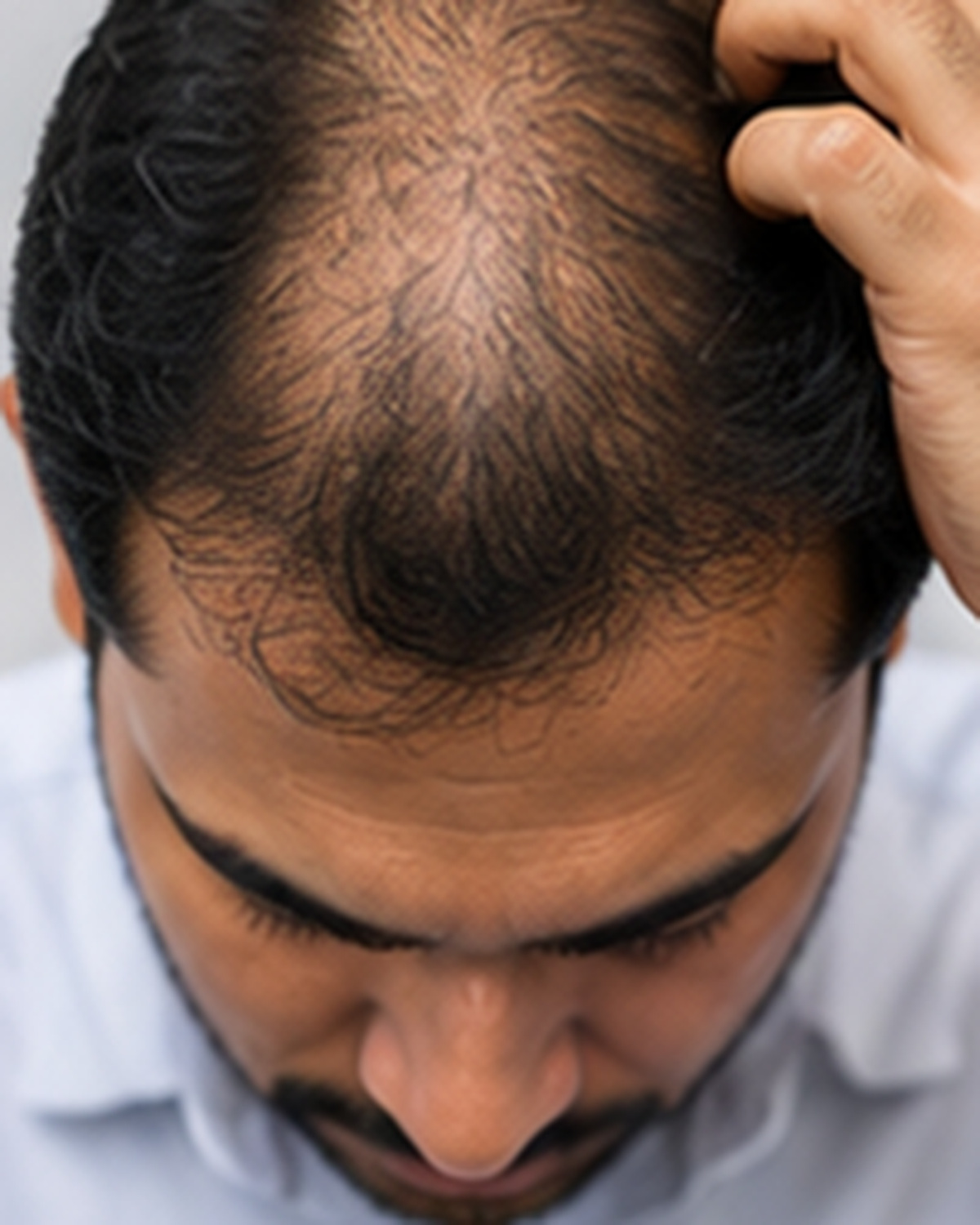
Genetic hair loss can cause gradual thinning at the temples, crown or central scalp. Treatment is generally more useful when started earlier.
Hair & scalp assessment · OMR
Find the cause first. Then choose treatment that matches the type of hair loss.
Hair thinning, excessive shedding, patchy bald areas and scalp-related hair loss can have very different causes. At Ram Skin Clinic in Thoraipakkam, OMR, evaluation focuses on the pattern, duration, scalp findings, medical history and possible triggers before treatment is recommended.
Why diagnosis matters
The medical term for hair loss is alopecia. It may be localised or diffuse, temporary or progressive, and may occur with or without scalp inflammation or scarring.
The American Academy of Dermatology notes that effective treatment starts by identifying the cause. A dermatologist may examine the scalp and nails, assess hair shedding and, when indicated, request blood tests or a scalp biopsy.
Common patterns
Several conditions can look similar at first. The pattern and scalp examination help narrow the diagnosis.
Genetic hair loss can cause gradual thinning at the temples, crown or central scalp. Treatment is generally more useful when started earlier.
Telogen effluvium can follow fever, major illness, surgery, childbirth, marked weight change, nutritional deficiency or other physical stressors.
Alopecia areata, scalp infection, inflammatory scalp disease and scarring alopecia can cause patchy loss and need different management.
Tight hairstyles, repeated pulling, heat and chemical processing can contribute to breakage or traction alopecia.
Inflammation, psoriasis, infection or lichenoid scalp disease may affect hair growth. See our psoriasis, skin infection and lichen planus pages for related information.
Assessment
A consultation may include questions about the onset and pace of loss, family history, recent illness, medications, diet, menstrual or hormonal history where relevant, hair-care practices and associated scalp symptoms.
The scalp is examined for the pattern of thinning, inflammation, scaling, broken hairs, miniaturisation or signs of scarring. Hair pull testing or dermoscopic examination may be used.
Blood tests may be considered when the history suggests anaemia, thyroid disease, nutritional deficiency, hormonal factors or another medical trigger.
If the diagnosis is uncertain or a scarring process is suspected, a skin or scalp biopsy may sometimes be recommended.
Treatment planning
There is no single treatment that suits every form of hair loss. The aim may be to slow progression, reduce inflammation, correct a trigger, improve density or protect remaining follicles.
Depending on the diagnosis, treatment may include topical minoxidil or prescription medicines. These are chosen according to the type of hair loss, age, health, pregnancy plans and potential side effects.
When hair loss is related to infection, inflammation, nutritional deficiency, thyroid disease, medication or another trigger, addressing that cause is central to management.
For selected patients, procedures such as platelet-based treatments or other hair-restoration approaches may be discussed only after the diagnosis, expectations and suitability are reviewed.
AAD guidance states that minoxidil can help some forms of early hair loss but does not work for every cause, and that treatment choice should follow diagnosis. Read the AAD diagnosis and treatment overview.
Hair-care support
Hair that is thinning or shedding may break more easily. Gentle handling can reduce avoidable damage while medical treatment addresses the underlying cause.
When to seek earlier review
Scarring alopecia can cause permanent follicle loss, so early recognition is especially important. DermNet notes that prognosis and treatment depend heavily on the underlying diagnosis.
Follow-up & cost
Hair growth cycles are slow. Depending on the diagnosis, meaningful assessment may require several months. Follow-up can include scalp photographs, examination of density and shedding, treatment tolerance and adjustment of the plan.
Cost depends on the diagnosis, tests required, medications and whether any procedure is recommended. You can discuss expected costs after assessment, before proceeding with optional treatments.
Frequently asked questions
No. Some daily shedding is normal. The AAD notes that losing roughly 50 to 100 hairs a day can be normal, while a receding hairline, widening part, bald patch or overall thinning can indicate hair loss.
Yes. Physical stressors such as high fever, major illness, surgery, childbirth or substantial weight loss can trigger telogen effluvium, often appearing weeks to months later. Other causes should still be considered if shedding persists.
No. Minoxidil can help some forms of hair loss, particularly certain types of pattern hair loss, but it is not appropriate for every diagnosis. Benefit generally requires continued use and realistic expectations.
Not everyone does. Tests are chosen according to the history and examination. They may be useful when anaemia, thyroid disease, nutritional deficiency, hormonal factors or another medical cause is suspected.
Sometimes. Hair may regrow when the trigger is temporary and follicles remain intact. Scarring alopecia is different because permanent follicle damage can occur, which is why diagnosis matters.
Only if there is a reason to do so. Excessive intake of certain nutrients can worsen hair loss, and supplements should not replace evaluation for an underlying cause.
Before your appointment
Hair loss can overlap with scalp inflammation and other skin disease. You may also find these pages useful:
Hair & scalp consultation
Book a dermatology consultation at Ram Skin Clinic, OMR, for assessment of the likely cause and a treatment plan based on the diagnosis.
Medical information on this page is educational and does not replace an in-person diagnosis. Treatment suitability, benefits and risks vary by patient.