
Evidence-Based Hair Care
Hair Loss Treatment Options
Hair loss treatment works best when it matches the diagnosis. Pattern hair loss, telogen effluvium, alopecia areata and scarring alopecia require different strategies, so identifying the cause comes before choosing a treatment.
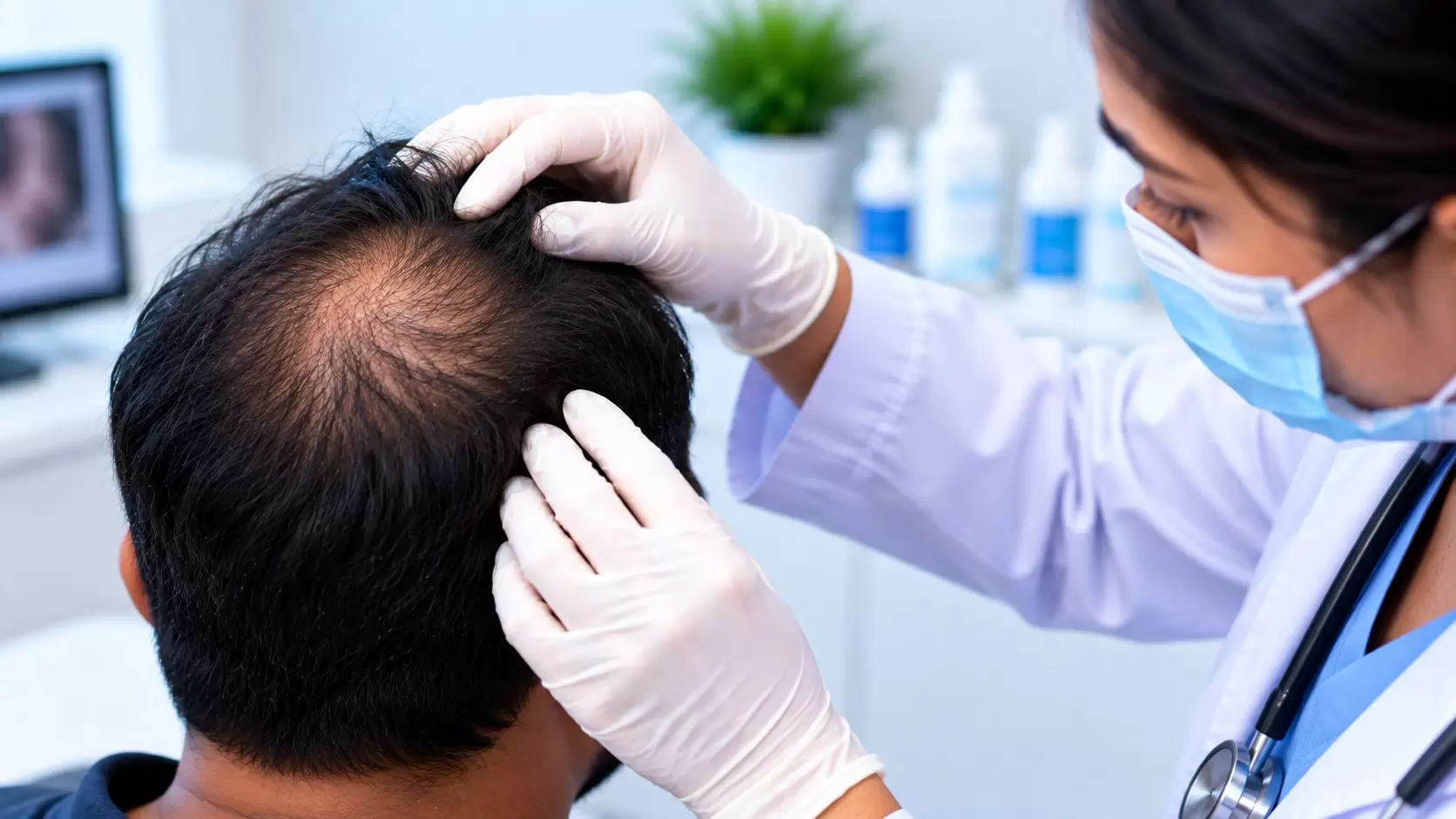
Start with the correct diagnosis
“Hair loss” describes many different disorders. A treatment that helps hereditary pattern thinning may do little for telogen effluvium or an inflammatory scarring alopecia.
A dermatologist assesses the pattern, scalp, hair shafts, recent triggers, family history, medicines and other symptoms. Dermoscopy and selected blood tests can help when the cause is uncertain.
See Common Causes of Hair Loss for an overview of the major diagnoses.
Common hair loss treatment options
Topical minoxidil
An established treatment for male and female pattern hair loss that can reduce further loss and stimulate growth in some patients.
Prescription medicines
Finasteride is used for male pattern hair loss, while selected women may be considered for anti-androgen therapy under medical supervision.
Targeted medical treatment
Alopecia areata, inflammatory scalp disease, thyroid problems or nutritional deficiencies require treatment directed at the underlying diagnosis.
Procedures
PRP, selected laser devices and hair transplantation may have roles for appropriate patients, depending on the type and extent of loss.
Topical minoxidil
Minoxidil is one of the most widely used treatments for androgenetic alopecia. Applied consistently to the scalp, it can help maintain existing hair and stimulate growth in some people.
Results take time. The American Academy of Dermatology notes that visible regrowth commonly requires about six to twelve months. Continued use is generally needed to maintain benefit; stopping treatment allows the underlying hair-loss process to resume.
Possible effects include scalp irritation and unwanted hair growth outside the intended area if the product spreads onto nearby skin.
Finasteride for male pattern hair loss
Finasteride is a prescription 5-alpha-reductase inhibitor that reduces formation of dihydrotestosterone (DHT). It can slow progression and stimulate some regrowth in men with androgenetic alopecia.
It is a long-term treatment, and benefit is lost after discontinuation. Potential adverse effects and individual contraindications should be discussed before treatment.
Read Male Pattern Hair Loss for more detail about androgenetic alopecia in men.
Treatment for female pattern hair loss
Topical minoxidil is an established option. Depending on the patient, a dermatologist may also consider prescription anti-androgen approaches such as spironolactone or other therapies, particularly when clinical features suggest androgen sensitivity.
Read Female Pattern Hair Loss for the typical signs and diagnostic approach.
Telogen effluvium: treat the trigger
Telogen effluvium often improves after the underlying trigger resolves. Management may involve recovery after illness or surgery, improving nutritional adequacy, correcting a documented iron deficiency, treating thyroid disease or reviewing a potentially contributing medicine with the prescribing clinician.
Because hair growth is slow, shedding can settle before visible density has fully recovered. Read Telogen Effluvium.
Alopecia areata and corticosteroid treatment
Alopecia areata is an autoimmune form of hair loss and requires a different approach from pattern hair loss. For adults with a limited number of patches, intralesional corticosteroid injections are an established treatment used by dermatologists.
More extensive alopecia areata may require other topical or systemic therapies depending on severity, age and medical circumstances.
Platelet-rich plasma (PRP)
PRP uses a concentrated component of the patient’s own blood that is injected into the scalp. The AAD describes PRP as a treatment that can be safe and effective for some patients with hair loss, with repeat and maintenance sessions typically required.
Results vary, and PRP should not replace diagnosis. It is most useful when selected for an appropriate type of hair loss and integrated into a broader treatment plan.
Low-level laser and light devices
Low-level laser devices are marketed for pattern hair loss, and some devices have regulatory clearance for promoting hair growth. Evidence suggests potential benefit for some patients, but results vary and repeated treatment over months is required.
A device should not be confused with a guaranteed cure, and it does not address inflammatory, autoimmune or nutritional causes of hair loss.
Hair transplantation
Hair transplantation relocates follicles from a donor area, usually the back or sides of the scalp, to thinning or bald areas. It can provide natural-looking, long-lasting growth in suitable patients with pattern hair loss.
Good candidates need an adequate donor area and a realistic plan for future progression. Medical treatment may still be recommended to protect non-transplanted hair.
Do nutritional supplements treat hair loss?
Supplements help when they correct a genuine deficiency; they are not universal hair-growth medicines. Iron deficiency, inadequate protein and selected micronutrient deficiencies can contribute to shedding, but unnecessary high-dose supplementation can be ineffective or harmful.
What about GFC and other procedures?
Autologous growth-factor procedures are offered for selected patients with hair thinning. Evidence, protocols and outcomes can vary by technique, so they should be considered as part of an individual plan rather than as a guaranteed replacement for established medical therapy.
Ram Skin Clinic also has a dedicated page on GFC Hair Treatment in Chennai.
How long before treatment works?
Hair treatment is measured in months, not days. Pattern hair-loss therapies often require at least several months before meaningful change can be judged. Photographs taken under consistent lighting and hairstyle can be more useful than checking the mirror every day.
Long-term treatment is commonly required for hereditary pattern hair loss because stopping effective therapy allows the underlying process to continue.
When should you see a dermatologist?
Seek assessment for progressive thinning, persistent heavy shedding, bald patches, scalp inflammation or pain, loss of eyebrows or body hair, or any sign of scarring. Early evaluation is especially important when permanent follicle damage is possible.
For diagnosis and an individual treatment plan, visit Hair Loss Treatment in Chennai.
Frequently asked questions
What is the best treatment for hair loss?
There is no single best treatment for every type of hair loss. Treatment depends on the diagnosis, whether follicles remain viable, medical history, age and treatment goals.
Does minoxidil work for hair loss?
It can slow hair loss and stimulate growth in some people with pattern hair loss. Consistent long-term use is generally required to maintain benefit.
Can finasteride treat male pattern hair loss?
Yes. Prescription finasteride can slow male pattern hair loss and improve growth in some men, but risks and contraindications should be discussed with a doctor.
Can PRP help hair loss?
PRP is used for selected types of hair loss, particularly pattern hair loss. Results vary and maintenance sessions may be needed.
When is hair transplantation considered?
It may be considered for suitable patients with stable pattern hair loss and an adequate donor area after future progression has been assessed.
Visit us in OMR
Not sure which hair-loss treatment fits your diagnosis? Start with an assessment.
Book a dermatologist consultation at Ram Skin Clinic in Thoraipakkam, Chennai.
#48, Second Floor, Flat E, Best Towers,Okkiampet, Thoraipakkam, OMR,
Chennai – 600097. Above Domino’s Pizza.