
Flaking & itch
White or yellowish flakes, scalp itch and recurrent scaling are common complaints.
Scalp care · OMR
Persistent flakes, itching or an oily irritated scalp deserve more than repeated shampoo changes.
Dandruff is common, but ongoing scaling can also overlap with seborrheic dermatitis, psoriasis, eczema, fungal scalp disease or contact irritation. At Ram Skin Clinic in Thoraipakkam, OMR, evaluation focuses on the scalp pattern, severity and triggers before treatment is recommended.
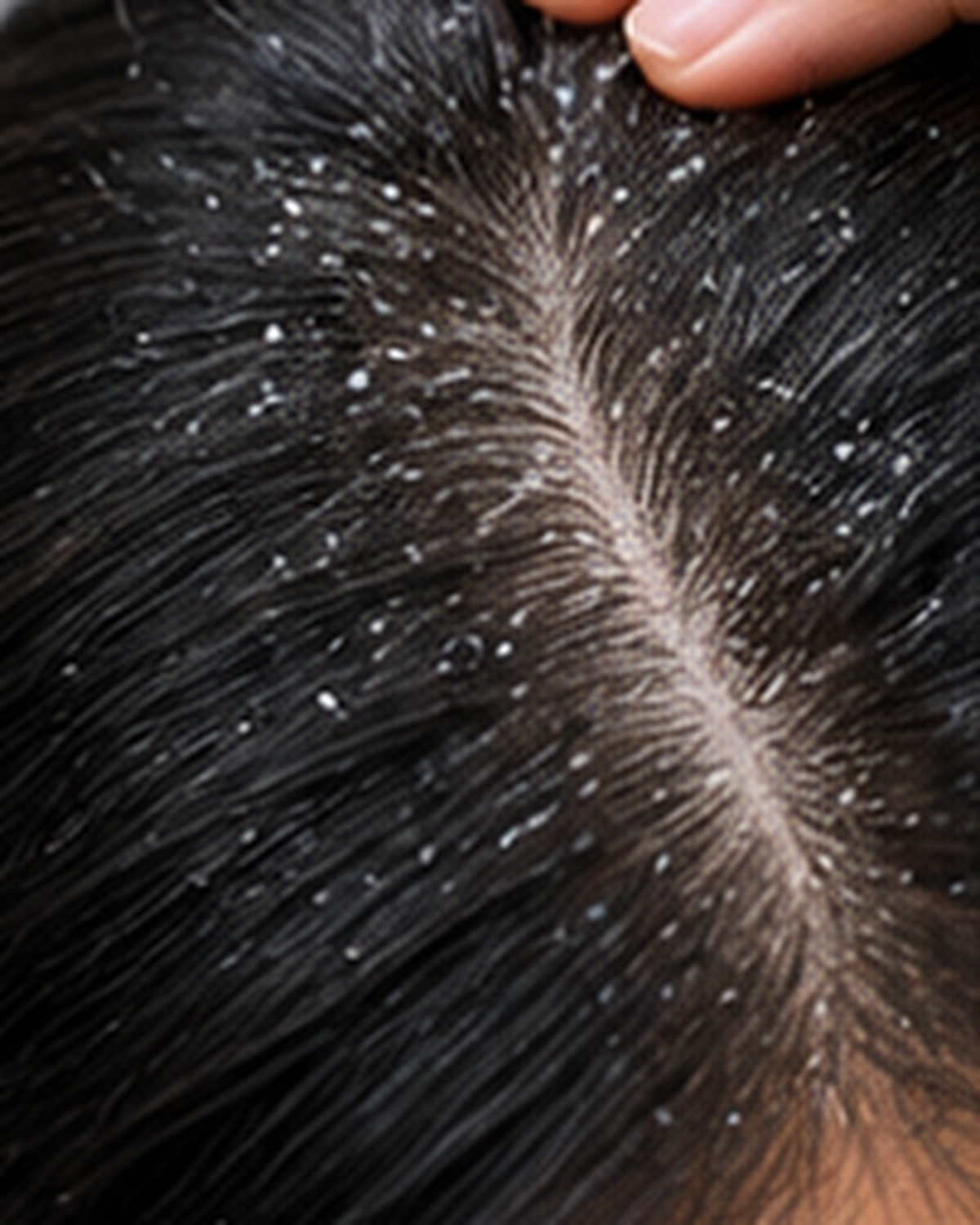
The condition explained
Dandruff causes visible scalp flaking and may also cause itching. It is often considered the mild end of the seborrheic dermatitis spectrum, although not every flaky scalp has the same cause.
The American Academy of Dermatology notes that dandruff can be associated with several factors, including oily skin, hair-care habits and some medical conditions.
Common symptoms
Mild dandruff may respond to appropriate shampooing. Persistent or severe symptoms can justify dermatology assessment, especially when there is redness, thick scale, hair loss or involvement beyond the scalp.
White or yellowish flakes, scalp itch and recurrent scaling are common complaints.
Seborrheic dermatitis can produce greasy scale and inflammation, sometimes extending around the ears, eyebrows, beard or sides of the nose.
Thick plaques, broken hairs or patchy hair loss can suggest another diagnosis such as psoriasis or scalp infection and should not be assumed to be simple dandruff.
Diagnosis
A dermatologist can often diagnose dandruff or seborrheic dermatitis by examining the scalp and asking about symptoms, products, previous treatment and other skin conditions.
AAD guidance notes that seborrheic dermatitis can coexist with conditions such as psoriasis. If the appearance is atypical or overlapping, additional assessment may occasionally be needed.
See our pages on psoriasis treatment, eczema treatment, skin infections and hair loss for related concerns.
Treatment options
Treatment is tailored to the scalp findings and severity. The goal is to reduce flakes, itch and inflammation and then maintain control with a practical routine.
Depending on the diagnosis, shampoos may contain ingredients such as ketoconazole, selenium sulfide, salicylic acid, zinc pyrithione or other anti-dandruff agents. The right choice and frequency depend on the scalp and hair type.
For an inflamed or itchy scalp, a dermatologist may prescribe a short course of an appropriate topical anti-inflammatory treatment. Strength and duration matter because scalp medications are not meant for indiscriminate long-term use.
Because dandruff and seborrheic dermatitis can recur, many patients need a maintenance routine rather than a one-time treatment. This may involve continuing a medicated shampoo less frequently after control is achieved.
AAD guidance on seborrheic dermatitis treatment includes dandruff shampoos, antifungal treatment and selected topical anti-inflammatory medicines, depending on severity and site.
Using shampoo correctly
Medicated shampoos are intended for the scalp. Some products need contact time before rinsing, and the ideal washing frequency varies with hair texture, oiliness and the active ingredient.
AAD self-care guidance recommends following the product or dermatologist instructions rather than assuming all dandruff shampoos are used in the same way.
Over-washing, aggressive scratching and frequent switching between multiple products can irritate the scalp. If a reasonable trial is not helping, the next step is to reassess the diagnosis rather than simply increasing product use.
When to seek care
Follow-up depends on the diagnosis and response. Some patients improve with a simple shampoo plan; others need prescription treatment or reassessment for another scalp condition.
Treatment cost therefore varies according to the consultation, medications or investigations actually required. The clinic can discuss fees and next steps after assessment.
Everyday scalp care
Apply medicated shampoo to the scalp rather than coating the hair unnecessarily, and rinse thoroughly.
Scratching can increase irritation and may lead to excoriations or secondary infection.
Heavy oils or fragranced products can worsen symptoms in some people. Product history is useful when symptoms recur.
Dandruff often occurs on an oily scalp. Adding more oil is not always the solution.
Frequently asked questions
No. Dandruff is not simply a cleanliness problem. It can be related to scalp oil, yeast-associated seborrheic dermatitis, hair-care habits and other skin conditions.
No. Dandruff and seborrheic dermatitis are not considered contagious.
Simple dandruff does not usually cause permanent hair loss, but intense scratching or an underlying inflammatory or infectious scalp condition can contribute to shedding or breakage. Patchy loss should be assessed.
There is no single best shampoo for everyone. Active ingredients work differently, and the right choice depends on the scalp findings, hair type and previous response.
Dandruff and seborrheic dermatitis commonly recur. Once symptoms improve, a maintenance routine may be needed to reduce flare-ups.
Consultation at Ram Skin Clinic
Book a dermatology consultation at Ram Skin Clinic in OMR for an assessment of dandruff, seborrheic dermatitis and other causes of scalp scaling.
Medical information on this page is general and does not replace an in-person diagnosis. Treatment choice depends on examination and individual clinical factors.