
Scalp Itching & Scale
Itchy & Flaky Scalp: Common Causes and What to Do
An itchy, flaky scalp is often blamed on dandruff, but dandruff is only one possibility. Dry skin, psoriasis, eczema, contact dermatitis and fungal infection can produce similar symptoms and may require different treatment.
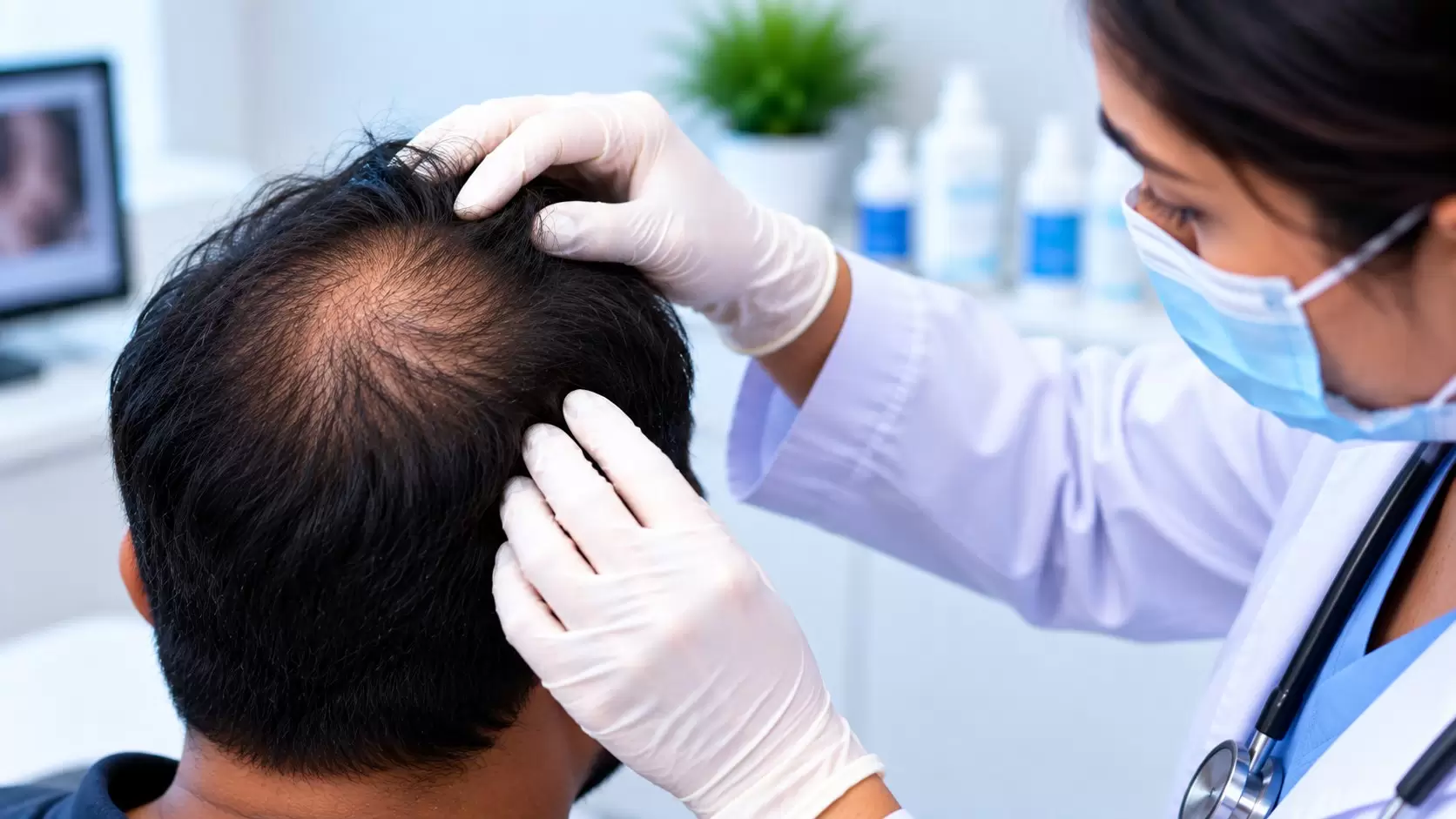
Why is your scalp itchy and flaky?
Scale develops when dead skin cells accumulate or are shed more rapidly than usual. Itching can accompany dryness, inflammation, allergy, irritation or infection.
Because several scalp disorders share these features, the pattern of scale, redness, hair changes, affected areas and recent product exposures helps narrow the diagnosis.
Common causes of an itchy flaky scalp
Dandruff
Usually causes diffuse white-to-yellow flakes and mild itching. It can occur on an oily scalp and represents the mild scalp form of seborrheic dermatitis.
Dry scalp
Often causes finer dry flakes with tightness or dryness. Low humidity and irritating cleansing practices can contribute.
Scalp psoriasis
Often forms more clearly defined plaques with thicker scale and may extend beyond the hairline.
Contact dermatitis
Hair dyes, fragrances, shampoos or styling products can trigger itching, burning, redness and scale in susceptible people.
1. Dandruff and seborrheic dermatitis
Dandruff is one of the most common explanations for scalp flaking. It is associated with Malassezia yeast, sebum and an individual’s skin-barrier and inflammatory response.
When seborrheic dermatitis is more active, the scalp can become visibly inflamed with greasy scale, and similar changes may affect the eyebrows, ears, sides of the nose or beard.
Read What Causes Dandruff?.
2. A genuinely dry scalp
A dry scalp can feel tight and itchy and produce fine flakes. Dryness may become more noticeable in low humidity, with repeated hot-water exposure or when harsh products disrupt the skin barrier.
Dandruff and dryness are not interchangeable. See Dandruff vs Dry Scalp for the main differences.
3. Scalp psoriasis
Psoriasis is an immune-mediated inflammatory disease. On the scalp it can produce thick, clearly defined plaques with scale, itching, cracking or bleeding.
Psoriasis may extend beyond the hairline or occur on the elbows, knees, nails or elsewhere. Read Dandruff vs Scalp Psoriasis.
4. Atopic eczema
Atopic dermatitis can affect the scalp and cause dryness, inflammation and significant itching. A history of eczema elsewhere on the body or other atopic conditions can provide useful context.
Scratching can worsen the skin barrier and increase inflammation, creating an itch-scratch cycle.
5. Contact dermatitis from hair products
An itchy or burning scalp after using hair dye, shampoo, fragrance, styling products or other chemicals can be irritant or allergic contact dermatitis.
The American Academy of Dermatology notes that an itchy, dry and flaky scalp can occur with a reaction to hair-care products, including hair dye. Stopping the suspected product is an important first step, but persistent reactions may require treatment or allergy evaluation.
6. Tinea capitis: fungal infection of the scalp
Tinea capitis can cause itching and scale but is different from dandruff. It may produce broken hairs, patchy hair loss, black dots, redness or a tender inflammatory swelling.
Can lice cause an itchy scalp?
Head lice can cause significant itching, but what appears to be “flakes” may actually be nits attached firmly to hair shafts. Unlike loose dandruff flakes, nits do not brush away easily.
Finding live lice or viable nits supports the diagnosis. Treatment is different from dandruff care.
Can an itchy scalp cause hair loss?
Repeated vigorous scratching can damage hair shafts and irritate the scalp, contributing to breakage or temporary shedding. More severe scalp inflammation can also be associated with temporary hair loss.
However, patchy, progressive or persistent loss should not be blamed on itching alone. Read Can Dandruff Cause Hair Loss?.
What can you do for an itchy flaky scalp?
For likely dandruff
Use an appropriate medicated anti-dandruff shampoo as directed and allow the recommended contact time before rinsing.
For likely dryness
Reduce harsh cleansing, very hot water and irritating products. Choose a gentler scalp-care routine.
After a new product
Stop the suspected product and avoid further exposure while the scalp settles. Persistent reactions need assessment.
Avoid scratching
Keep nails short and treat the underlying itch rather than repeatedly scratching or scraping scale from the scalp.
Why the correct diagnosis matters
An antifungal dandruff shampoo can help seborrheic dermatitis but will not adequately treat psoriasis, allergic contact dermatitis or tinea capitis. Similarly, moisturising a scalp with inflammatory seborrheic dermatitis may not address the main cause.
If symptoms repeatedly return, read Recurrent Dandruff and consider whether the diagnosis has been confirmed.
When should you see a dermatologist?
Arrange an assessment if itching or flaking is severe, persists despite appropriate care, or repeatedly returns. Thick plaques, marked redness, pain, crusting, pustules, broken hairs, patchy hair loss or scarring are additional reasons for examination.
For diagnosis and an individual scalp-care plan, visit Dandruff Treatment in Chennai.
Frequently asked questions
What causes an itchy flaky scalp?
Common causes include dandruff or seborrheic dermatitis, dry skin, psoriasis, eczema, contact dermatitis and fungal scalp infection.
Is an itchy flaky scalp always dandruff?
No. Several inflammatory, irritant and infectious scalp conditions can cause itching and scale, so persistent symptoms may need examination.
Can hair products cause an itchy scalp?
Yes. Hair dye, fragrances, shampoos and styling products can trigger irritant or allergic contact dermatitis in susceptible people.
Can an itchy scalp cause hair loss?
Repeated vigorous scratching and severe inflammation can contribute to temporary shedding or breakage, while patchy or progressive hair loss may indicate another scalp disorder.
When should I see a dermatologist?
Seek assessment for persistent or severe symptoms, thick plaques, pain, crusting, pustules, broken hairs, patchy hair loss, scarring or failure to improve with appropriate dandruff care.
Visit us in OMR
Persistent itching and flakes? Find out what your scalp actually needs.
Book a dermatologist consultation at Ram Skin Clinic in Thoraipakkam, Chennai.
#48, Second Floor, Flat E, Best Towers,Okkiampet, Thoraipakkam, OMR,
Chennai – 600097. Above Domino’s Pizza.