
Scalp Flaking Compared
Dandruff vs Scalp Psoriasis: How to Tell the Difference
Both dandruff and scalp psoriasis can cause itching and visible flakes, but they are different conditions. Dandruff is linked to seborrheic dermatitis, while psoriasis is an immune-mediated inflammatory disease that can produce thicker, more clearly defined plaques.
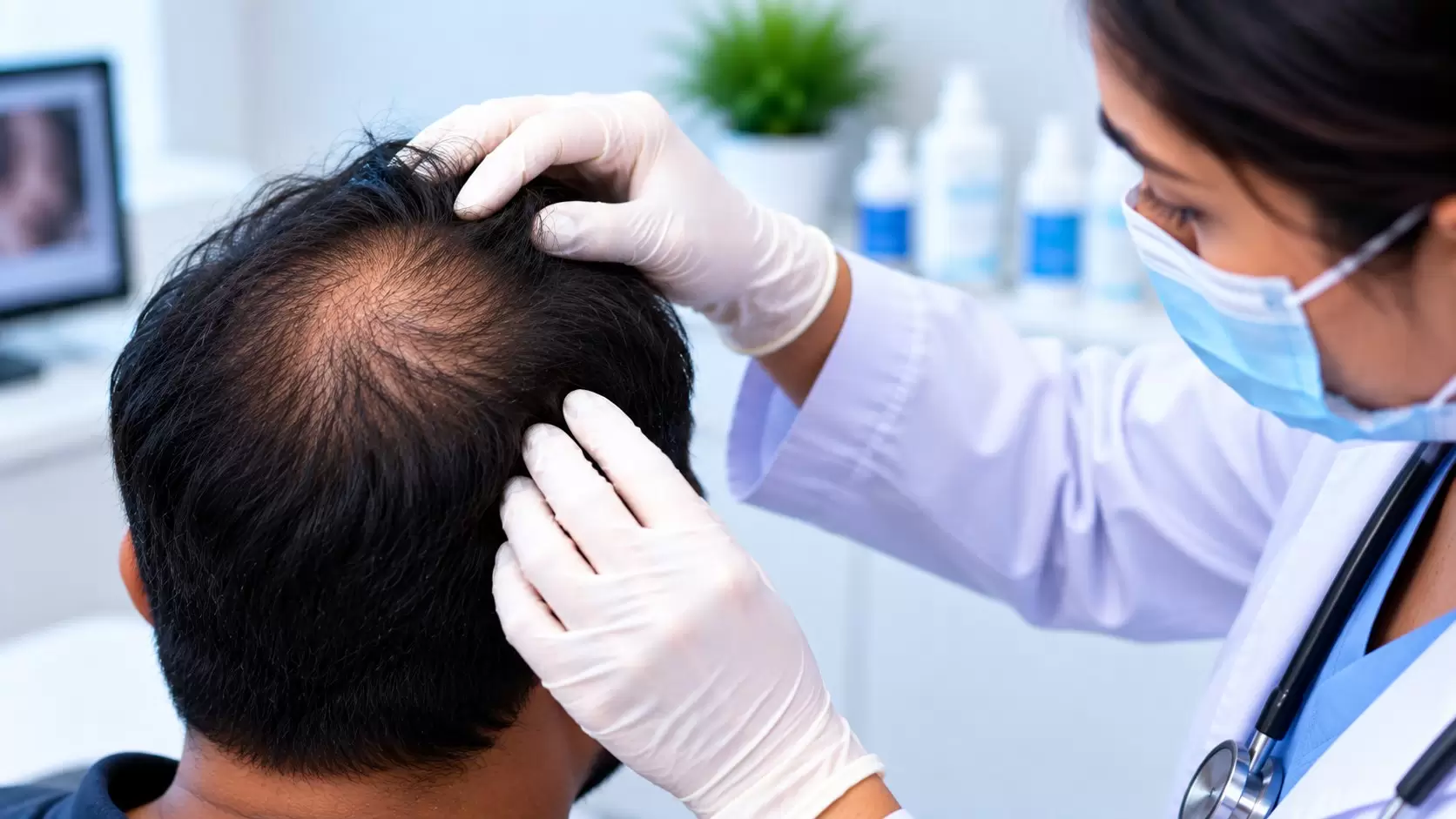
Why dandruff and scalp psoriasis are confused
Both conditions can produce scalp scale, itching and flakes on the hair or clothing. In mild disease, appearance alone may not be enough to distinguish them.
The underlying biology is different. Dandruff lies on the seborrheic dermatitis spectrum and is associated with Malassezia yeast, sebum and individual inflammatory response. Psoriasis is a chronic immune-mediated disease in which skin-cell turnover and inflammation are increased.
Dandruff vs scalp psoriasis: quick comparison
Dandruff
Diffuse white-to-yellow scale, often with mild itching. The scalp may be oily, and obvious inflammation can be minimal in simple dandruff.
Scalp psoriasis
More often forms clearly defined inflamed plaques with thicker scale. Plaques may extend onto the forehead, behind the ears or beyond the hairline.
Other body areas
Seborrheic dermatitis may affect the eyebrows, nose folds, ears, beard and chest. Psoriasis may also affect elbows, knees, nails or other skin sites.
Treatment
Dandruff often responds to medicated anti-dandruff shampoos. Psoriasis may require prescription anti-inflammatory treatment in addition to scale management.
What dandruff usually looks like
Dandruff generally causes loose white or yellowish flakes distributed through the scalp. Itching may be present, but simple dandruff typically has little obvious redness.
When seborrheic dermatitis is more active, the scalp can become inflamed with greasy scale, and similar changes may appear around the eyebrows, ears or sides of the nose.
Read What Causes Dandruff?.
What scalp psoriasis usually looks like
Scalp psoriasis can range from fine scale to thick plaques covering large areas of the scalp. The American Academy of Dermatology describes signs including reddish or discoloured patches, silvery-white scale, dryness, cracking and bleeding.
A useful clue is extension beyond the scalp margin. Psoriasis can spread onto the forehead, back of the neck or around the ears, although this is not present in every patient.
Does the type of scale tell you the difference?
It can provide a clue but is not definitive. Dandruff scale is often looser and may appear white or yellowish. Psoriasis tends to produce thicker, more adherent scale over a defined plaque.
Scratching or forcefully lifting psoriasis scale can cause bleeding and irritation, so trying to diagnose the condition by scraping the scalp is not recommended.
Which condition causes more itching?
Both can itch. Dandruff commonly causes mild-to-moderate itching, while scalp psoriasis can range from little itch to severe itching, burning or discomfort.
Itch intensity alone cannot reliably distinguish the two conditions. The distribution, plaque borders, scale, other affected skin and nail changes are more useful clues.
Can you have dandruff and psoriasis together?
Yes. Features of psoriasis and seborrheic dermatitis can overlap, sometimes described clinically as sebopsoriasis. These cases can have characteristics of both conditions and may require a combined treatment approach.
This overlap is another reason persistent scalp scaling should be examined when standard dandruff treatment is not working.
Does scalp psoriasis cause hair loss?
Scalp psoriasis usually does not permanently destroy hair follicles. However, inflammation, vigorous scratching, picking at scale and trauma during scale removal can contribute to temporary shedding or breakage.
Hair typically regrows once the scalp disease is controlled unless another hair-loss condition is also present.
How dandruff is usually treated
Dandruff and seborrheic dermatitis are commonly managed with medicated shampoos containing antifungal or scale-reducing ingredients. Depending on severity, a dermatologist may add short-term anti-inflammatory treatment.
Because seborrheic dermatitis commonly relapses, maintenance shampoo use may be needed after symptoms improve. Visit Dandruff Treatment in Chennai for an individual plan.
How scalp psoriasis is usually treated
Scalp psoriasis treatment depends on severity and extent. Topical corticosteroids are commonly used. Other topical medicines, scale-softening treatments, medicated shampoos, phototherapy or systemic psoriasis treatment may be considered in appropriate patients.
For broader information about psoriasis management, see Psoriasis Treatment Options and the Psoriasis Treatment in Chennai page.
Could scalp flaking be something else?
Yes. Dry scalp, atopic eczema, allergic or irritant contact dermatitis and tinea capitis can all cause scale. Fungal scalp infection is particularly important when there are broken hairs, patchy hair loss or significant inflammation.
See Dandruff vs Dry Scalp for another common comparison.
When should you see a dermatologist?
Arrange an assessment when scalp scale is thick, persistent, painful, bleeding or extending beyond the hairline; when there are obvious plaques elsewhere; or when hair loss accompanies the scalp changes.
Frequently asked questions
How is scalp psoriasis different from dandruff?
Dandruff usually causes diffuse white-to-yellow flakes, while scalp psoriasis more often produces well-defined inflamed plaques with thicker scale and may extend beyond the hairline.
Can scalp psoriasis look like severe dandruff?
Yes. Mild scalp psoriasis and seborrheic dermatitis can overlap in appearance, so persistent or unusually thick scaling may need examination.
Does dandruff shampoo treat scalp psoriasis?
Some scale-reducing shampoos may help symptoms, but scalp psoriasis often needs psoriasis-specific treatment such as topical corticosteroids or other prescribed therapies.
Can scalp psoriasis cause hair loss?
It usually does not directly destroy follicles, but inflammation, scratching and forceful scale removal can contribute to temporary shedding.
When should I see a dermatologist for scalp scaling?
Seek assessment when scale is thick or persistent, extends beyond the hairline, is associated with marked redness, pain, bleeding or hair loss, or does not improve with appropriate dandruff care.
Visit us in OMR
Unsure whether it is dandruff or scalp psoriasis? Get the scalp examined.
Book a dermatologist consultation at Ram Skin Clinic in Thoraipakkam, Chennai.
#48, Second Floor, Flat E, Best Towers,Okkiampet, Thoraipakkam, OMR,
Chennai – 600097. Above Domino’s Pizza.