
Acne Treatment in Chennai.
Acne can involve blackheads, whiteheads, inflammatory pimples, nodules or cysts on the face, chest, shoulders and back. Effective treatment starts by identifying the acne pattern, severity, scarring risk and factors that may be contributing to repeated breakouts.
Book an appointment ↗Acne scar treatment
Quick answer: Acne treatment is not one-size-fits-all. Dermatologists select topical medicines, oral medicines and sometimes procedures according to the type and severity of acne, age, pregnancy considerations, previous treatment and risk of scarring or post-inflammatory pigmentation.
Why does acne develop?
Acne develops within the pilosebaceous unit—the hair follicle and its oil gland. Excess sebum, abnormal shedding of cells within the follicle, Cutibacterium acnes and inflammation all contribute. Hormonal influences are important, which is why acne often begins around puberty and can persist or recur in adulthood.
Acne is not caused simply by “dirty skin.” Aggressive scrubbing can irritate the skin and worsen inflammation. Some people also develop acne-like eruptions from folliculitis, perioral dermatitis or other conditions, so persistent or unusual breakouts benefit from diagnosis before escalating treatment.
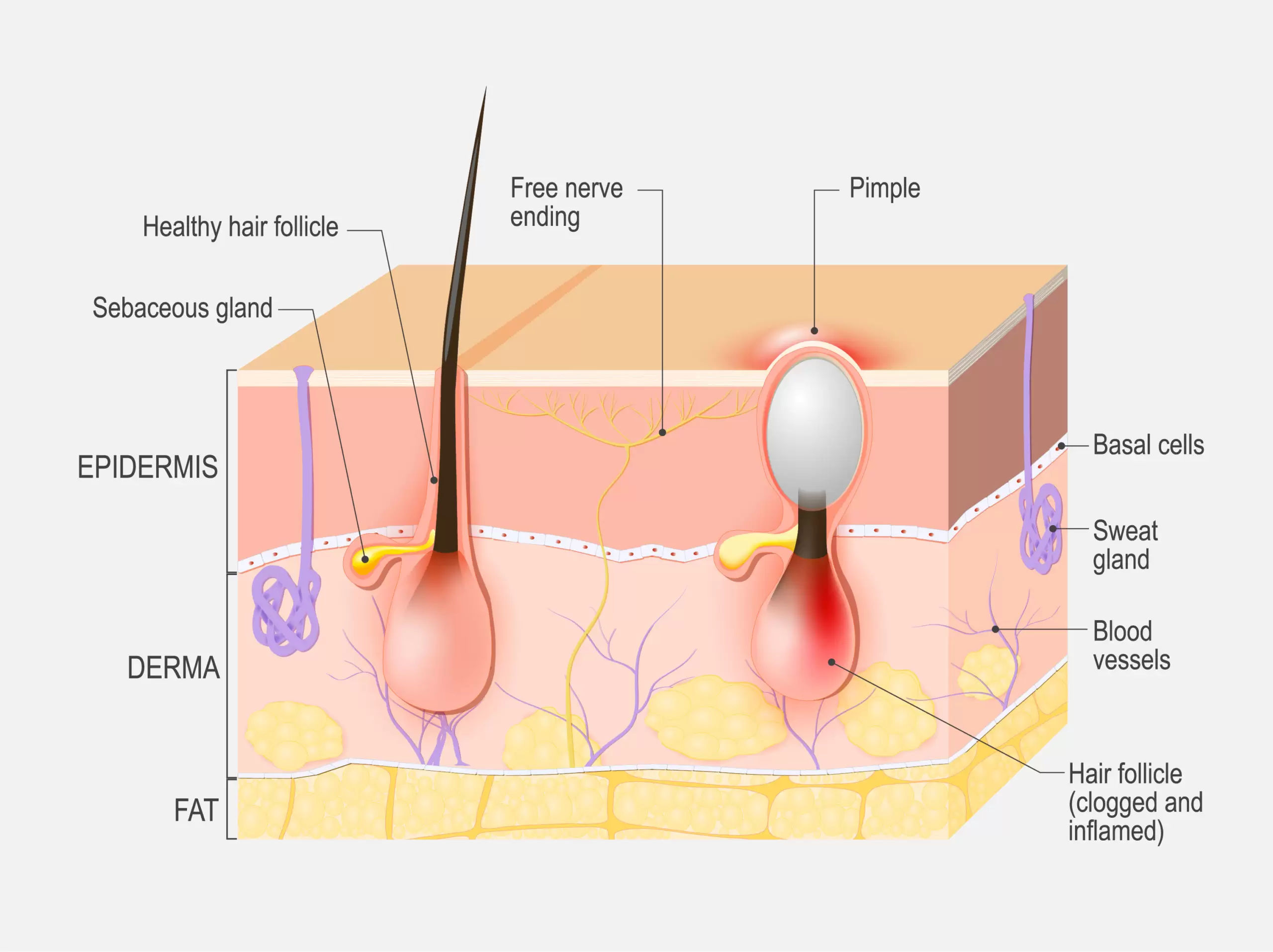
Different acne needs different treatment.
Comedonal acne
Blackheads and whiteheads result from clogged follicles and often respond to treatments that normalize follicular turnover.
Inflammatory acne
Red papules and pustules need treatment that addresses inflammation as well as follicular blockage and acne-associated bacteria.
Nodules and cysts
Deep, painful lesions carry a greater scarring risk and should be assessed early rather than repeatedly squeezed or treated only with cosmetics.
Adult acne
Adult women may notice jawline or cyclical flares. Hormonal history and other symptoms can influence the treatment plan.
Body acne
Acne can affect the chest, shoulders and back. Clothing, sweat, products and treatment practicality may influence management.
Acne with dark marks
Post-inflammatory hyperpigmentation can persist after a pimple settles, especially in darker skin tones. Preventing new inflammation is central to reducing new marks.
How dermatologists treat acne.
Treatment may include topical retinoids, benzoyl peroxide, azelaic acid, topical antibiotics used appropriately with antimicrobial strategies, or other prescription agents. Moderate or severe inflammatory acne may require oral treatment. Oral antibiotics are generally used for limited periods and as part of a broader regimen rather than as indefinite monotherapy.
For severe, scarring or treatment-resistant acne, isotretinoin may be considered after medical assessment and appropriate monitoring. Hormonal treatment may be suitable for selected women. Pregnancy and pregnancy planning materially change which acne medicines are appropriate, so patients should tell their dermatologist.
Important: treatment often needs 6–8 weeks or longer before meaningful improvement is apparent. Changing products every few days can increase irritation without giving an evidence-based regimen time to work.
When procedures may help.
Chemical peels, selected light or laser therapies, comedone extraction and injections for a small number of large inflammatory lesions can be used in appropriate circumstances. These are adjuncts, not substitutes for controlling the underlying tendency to develop acne.
Once active acne is controlled, persistent scars can be assessed separately. Rolling, boxcar and ice-pick scars may require different approaches such as MNRF, microneedling, subcision, peels or other scar-directed procedures.

Skin care that supports acne treatment.
Cleanse gently
Wash gently, usually twice daily and after heavy sweating. Scrubs, harsh brushes and repeated washing can worsen irritation.
Use non-comedogenic products
Choose moisturiser, sunscreen and cosmetics labelled oil-free or non-comedogenic when appropriate.
Do not pick
Squeezing increases inflammation and can raise the risk of scars and persistent dark marks.
Moisturise when needed
Acne medicines can dry the skin. A suitable non-comedogenic moisturiser can improve treatment tolerance.
Protect from UV
Use broad-spectrum SPF 30+ protection; this is especially important when treatments increase sun sensitivity or when pigmentation is a concern.
Give treatment time
Consistency usually matters more than adding many products. Review persistent acne rather than continually self-switching regimens.
When acne deserves dermatologist care.
Seek assessment for painful nodules or cysts, acne that is leaving scars, persistent acne despite appropriate over-the-counter care, sudden severe adult acne, significant pigmentation, or acne that is affecting confidence and daily life. Early treatment can reduce the chance of additional scarring.
Diet can influence acne in some people, but simplistic food bans are rarely a complete treatment plan. A balanced diet and attention to personally reproducible triggers are more useful than blaming one food without evidence.
Acne treatment FAQs.
How long does acne treatment take?
Many regimens need at least 6–8 weeks before fewer breakouts are noticeable, and longer courses are often required for control and maintenance.
Does acne happen only in teenagers?
No. Acne can persist into adulthood or begin in adults, particularly women.
Should I pop pimples?
No. Picking and squeezing can prolong inflammation and increase the risk of scarring and dark marks.
Can acne scars be treated?
Yes, but scar treatment is usually planned after active acne is reasonably controlled. The best procedure depends on scar type.
Does oily skin still need moisturiser?
It can. Acne treatments often cause dryness, and a non-comedogenic moisturiser can help support the skin barrier.
Can acne treatment cause dryness?
Yes. Retinoids, benzoyl peroxide and other treatments can irritate or dry skin, particularly early in treatment. Your dermatologist can adjust the regimen.
When is isotretinoin considered?
It may be considered for severe, scarring or treatment-resistant acne after medical evaluation, counselling and appropriate monitoring.
Continue your acne care journey.
Medical reference: American Academy of Dermatology — Acne Diagnosis and Treatment.
Let’s talk about your acne concerns.
Book a consultation at Ram Skin Clinic in Thoraipakkam, Chennai.
#48, Second Floor, Flat E, Best Towers,
Okkiampet, Thoraipakkam, OMR, Chennai – 600097.
78258 33355 · 78259 33355
Book an appointment ↗Contact & location