
Dermatologist-Guided Acne Care
Acne Treatment Options: Creams, Tablets and Procedures Explained
Acne treatment is chosen according to the type and severity of acne, risk of scarring, skin sensitivity, previous treatment, age and other clinical factors. Different medicines target different parts of the acne process.
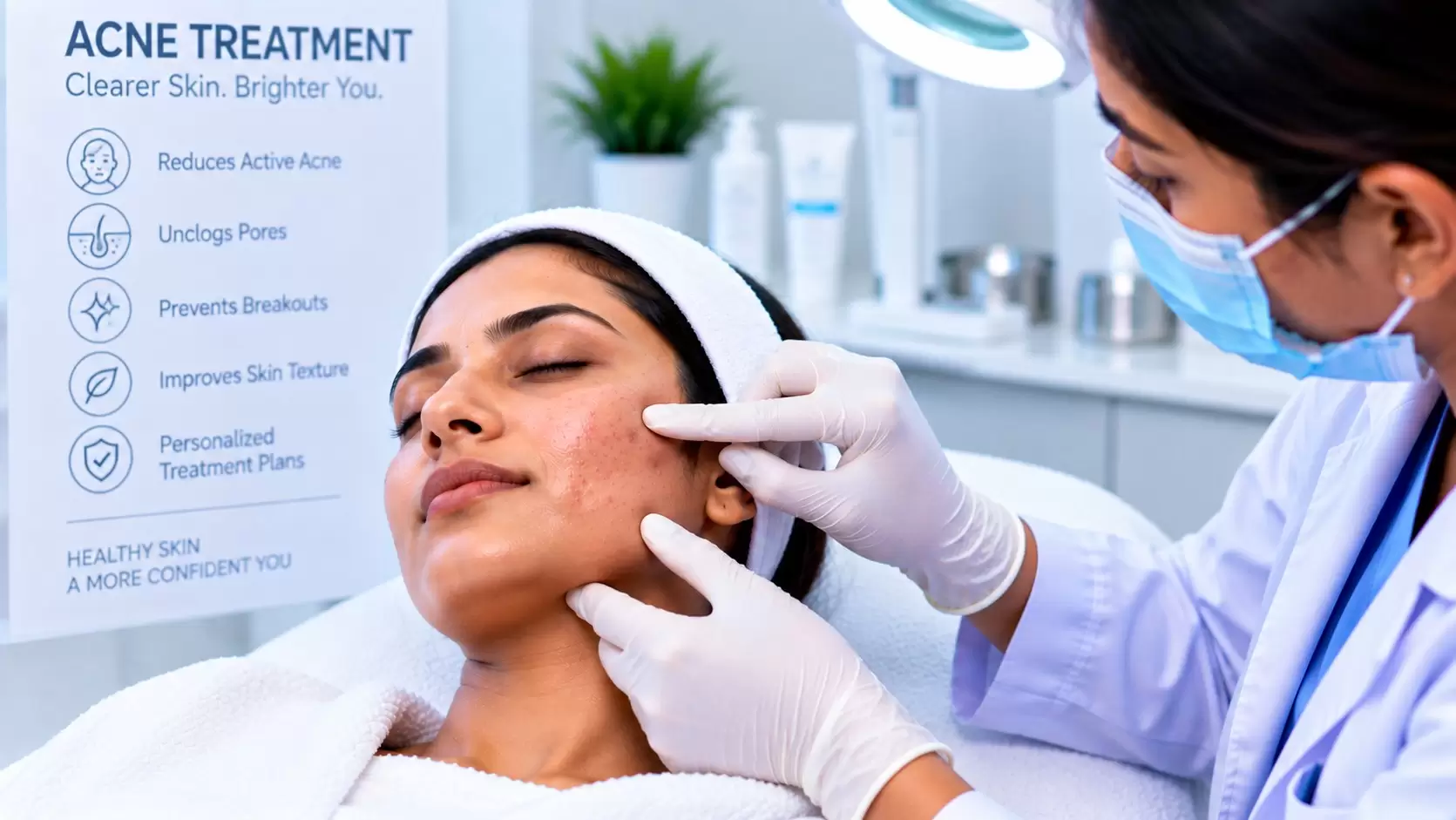
Why acne treatment is not one-size-fits-all
Blackheads, inflammatory pimples, deep nodules and acne scars are different clinical problems. A dermatologist first considers lesion type, severity, body area, scarring, pigmentation, pregnancy potential, medicines and previous response.
For the underlying biology, read What Causes Acne?. For clinic treatment, visit Acne Treatment in Chennai.
Main categories of acne treatment
Topical medicines
Applied to the skin to reduce comedones, inflammation or acne-associated bacterial activity.
Oral medicines
Used when acne is more extensive, inflammatory, persistent or at greater risk of scarring.
Procedures
Selected procedures may complement medical treatment or address particular acne-related concerns.
Maintenance
Once acne improves, an appropriate maintenance plan may reduce recurrence.
Topical retinoids
Topical retinoids help normalise follicular cell turnover and are particularly useful for comedonal acne. They can also be part of maintenance treatment because they help prevent new blocked pores from forming.
Dryness, peeling and irritation can occur, especially early in treatment. The product, strength and frequency should suit the patient’s skin. Retinoid use also requires specific consideration during pregnancy, so treatment should be discussed with a clinician when pregnancy is possible.
Benzoyl peroxide
Benzoyl peroxide has antimicrobial activity and can help inflammatory acne. It is often used alone or in combination regimens and is important in strategies intended to limit antibiotic resistance.
It can cause dryness or irritation and may bleach fabrics such as towels and pillowcases.
Azelaic acid and other topical options
Azelaic acid can be useful for acne in selected patients and may also help post-inflammatory pigmentation. Other topical agents may be considered depending on the pattern of acne and individual tolerance.
The aim is not to layer as many active ingredients as possible. Too many irritating products can damage the skin barrier and make a regimen difficult to continue.
Topical antibiotics
Topical antibiotics may be used for inflammatory acne in selected regimens, but antibiotic stewardship matters. They are generally not intended to be used indefinitely as stand-alone therapy.
Your dermatologist may combine an antibiotic with other acne treatments to improve effectiveness and reduce the risk of bacterial resistance.
When oral antibiotics may be considered
Oral antibiotics can be appropriate for moderate to severe inflammatory acne, particularly when larger areas such as the back or chest are involved. They are usually prescribed for a defined period and combined with appropriate topical treatment.
Hormonal treatment for acne
In appropriate female patients, hormonal therapies may be considered when acne has a hormonal pattern or persists despite other approaches. The choice depends on medical history, contraindications and pregnancy plans.
Acne accompanied by irregular periods, excess facial/body hair or other features of androgen excess may warrant assessment for PCOS or another hormonal condition.
Isotretinoin for severe or persistent acne
Oral isotretinoin can be highly effective for selected patients with severe, scarring or treatment-resistant acne, but it requires medical supervision because of important adverse effects and pregnancy-related risks.
Suitability, dosing, monitoring and contraception requirements where applicable must be determined by the treating doctor. It should not be self-prescribed or shared.
Can chemical peels treat acne?
Chemical peels may be useful in selected acne patients, particularly for comedonal acne, oiliness or post-acne pigmentation depending on the peel used and skin type. They are usually an adjunct to an overall acne plan rather than a substitute for medical treatment when acne is active and significant.
Learn more at Chemical Peel Treatment in Chennai.
What about acne marks and scars?
Active acne, post-inflammatory marks and permanent scars require different strategies. Treating scars while uncontrolled acne is still producing new lesions may lead to an ongoing cycle of new scarring.
Read Acne Marks vs Acne Scars. Procedures such as MNRF for Acne Scars or Dermaroller for Acne Scars may be considered for selected established scars after assessment.
How long does acne treatment take to work?
Acne usually improves gradually rather than overnight. Many treatments require consistent use over several weeks before the trend becomes clear. Some topical medicines can initially cause dryness or irritation while the skin adapts.
Stopping treatment too early because every pimple has not disappeared within a few days can prevent an otherwise useful regimen from having time to work.
Why maintenance treatment matters
Acne can recur because the tendency to form blocked follicles and inflammation may persist even after visible lesions improve. For some patients, continued maintenance treatment helps prevent new lesions.
The maintenance regimen is often simpler than the treatment used during an active flare and should be tailored to tolerance and recurrence risk.
Skincare while treating acne
Gentle cleansing
Avoid aggressive scrubbing intended to physically remove acne.
Moisturiser
A suitable non-comedogenic moisturiser can improve tolerance of drying acne medicines.
Sun protection
Sun protection is especially useful when acne leaves post-inflammatory pigmentation or when treatment increases sensitivity.
Avoid picking
Squeezing inflamed lesions can increase tissue injury, pigmentation and scar risk.
When should you see a dermatologist?
Seek dermatologist assessment for painful nodules, acne that is scarring, widespread chest or back acne, persistent pigmentation, recurrent acne despite appropriate non-prescription care, suspected hormonal acne or significant emotional impact.
Early control is particularly important when permanent scarring is beginning to develop.
Frequently asked questions
What is the best treatment for acne?
There is no single best treatment for everyone. Treatment depends on acne type, severity, scarring risk, skin tolerance, medical history and previous response.
Can acne be treated with creams alone?
Mild acne can often respond to topical treatment, while more inflammatory, extensive or scarring acne may require oral treatment as well.
Are antibiotics always needed for acne?
No. Antibiotics are used selectively for inflammatory acne and should be prescribed with attention to duration and antibiotic resistance.
Do chemical peels cure acne?
Chemical peels can complement acne treatment in selected patients but do not replace an appropriate medical regimen for every type of acne.
Why does acne return after treatment?
The underlying tendency to develop blocked follicles and inflammation can persist. Some patients therefore benefit from an ongoing maintenance plan after the active acne improves.
Acne treatment in OMR, Chennai
Choose acne treatment according to your acne type and severity.
Book a consultation at Ram Skin Clinic in Thoraipakkam, Chennai.
#48, Second Floor, Flat E, Best Towers,Okkiampet, Thoraipakkam, OMR,
Chennai – 600097. Above Domino’s Pizza.