
Understanding Acne
What Causes Acne? Types, Triggers and Why Breakouts Keep Coming Back
Acne develops when hair follicles become blocked with oil and dead skin cells and inflammation develops around the follicle. Hormones, genetics, skin products, friction and some medicines can influence how often and how severely acne occurs.
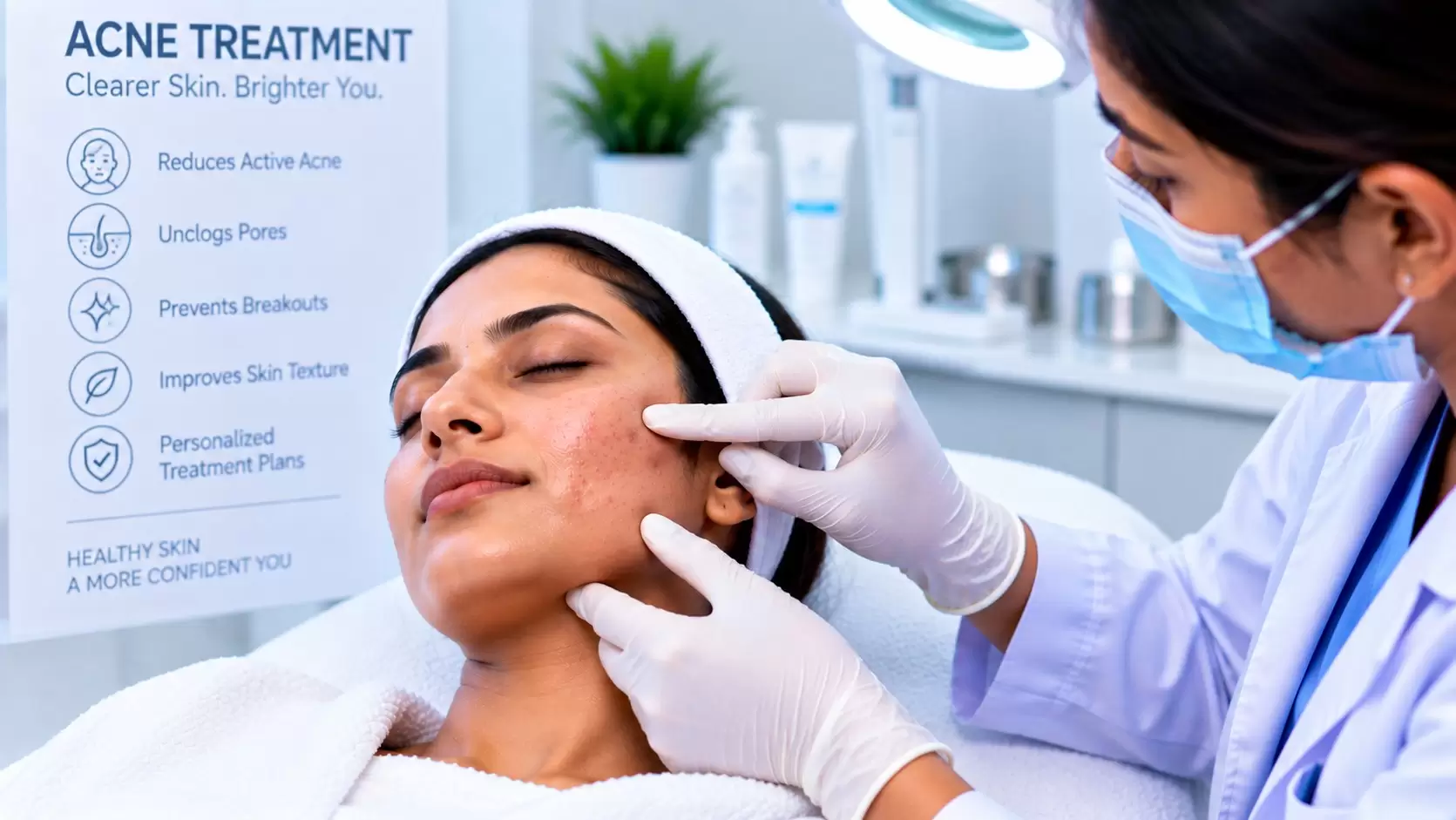
Acne starts inside the hair follicle
Acne is a disorder of the pilosebaceous unit—the hair follicle and its associated oil gland. A breakout begins below the visible surface, so simply washing away surface oil cannot correct every process involved.
For diagnosis and treatment options, visit Acne Treatment in Chennai.
Four major processes behind acne
Excess sebum
Sebaceous glands can produce more oil, particularly under hormonal influence.
Follicular plugging
Dead skin cells and keratin can accumulate within the follicle and contribute to comedones.
Cutibacterium acnes
This normal skin bacterium can participate in acne inflammation within blocked follicles.
Inflammation
Inflammatory signalling contributes to red papules, pustules, nodules and deeper lesions.
What are the main types of acne lesions?
Blackheads and whiteheads are comedonal lesions caused by follicular plugging. Papules and pustules are inflamed lesions. Nodules and cyst-like deep lesions are more severe and carry a greater risk of persistent scarring.
Acne severity is not judged only by the number of spots. Lesion type, depth, distribution, scarring and impact on the patient also matter.
Why hormones can trigger acne
Androgens can increase sebaceous gland activity and influence acne. This helps explain why acne often begins around puberty and why some adults experience cyclical or persistent breakouts.
In women, acne accompanied by irregular periods, excess facial/body hair or other signs of androgen excess may warrant assessment for conditions such as PCOS.
Why adult acne can keep returning
Acne does not always end after adolescence. Genetic tendency, hormones, ongoing comedone formation, cosmetics, hair products, friction and treatment interruption can contribute to adult recurrence.
Does oily skin cause acne?
Increased sebum is one component of acne, but oily skin alone does not explain the condition. Follicular plugging and inflammation are also important.
Aggressively stripping the skin with harsh cleansers can cause irritation without correcting the underlying acne process.
Does dirty skin cause acne?
No. Acne is not simply caused by dirt or inadequate washing. Over-cleansing, scrubbing and repeatedly using harsh products can damage the skin barrier and make irritation worse.
Gentle cleansing is usually preferable to trying to “scrub acne away.”
Can food cause breakouts?
Diet and acne is an active area of research. Some dietary patterns—particularly high glycaemic-load diets—have been associated with acne in some studies, but food is not the sole cause of acne and responses vary between individuals.
Rather than imposing extreme dietary restrictions, discuss persistent acne with a dermatologist and consider diet as one part of the broader clinical picture.
Can stress make acne worse?
Stress does not explain every case of acne, but it can coincide with worsening breakouts in some people through hormonal, inflammatory and behavioural pathways. Sleep disruption, picking and changes in skincare routines may also contribute during stressful periods.
Products that can contribute to breakouts
Heavy or occlusive cosmetics, hair oils and styling products can aggravate acne in susceptible areas. The pattern can provide clues—for example, repeated lesions along the hairline or forehead where oily hair products contact the skin.
“Non-comedogenic” products may be helpful, although no label can guarantee that a product will suit every acne-prone person.
Friction, sweat and acne mechanica
Repeated friction, pressure, heat and occlusion can aggravate acne-like breakouts. Helmets, tight straps, masks, sports equipment and tight clothing may contribute in susceptible areas.
Sweat itself is not simply “acne-causing,” but the combination of heat, occlusion and friction can matter.
Can medicines cause acne-like eruptions?
Some medicines can trigger or worsen acneiform eruptions. If acne starts suddenly after a new medicine or supplement, tell your dermatologist what you are taking.
Do not stop a prescribed medicine on your own because of a suspected skin side effect; the prescribing clinician and dermatologist can assess the safest approach.
Acne, folliculitis or something else?
Not every red bump is acne. Folliculitis, rosacea, perioral dermatitis and other conditions can resemble acne but require different treatment.
If lesions are unusually itchy, very uniform, sudden in onset or not responding to standard acne care, reconsidering the diagnosis can be important. See Folliculitis vs Acne.
Why squeezing acne can lead to marks and scars
Picking or squeezing inflamed lesions can increase tissue injury and inflammation. This may increase the likelihood of post-inflammatory dark marks and permanent scarring.
Dark acne marks and true scars are different problems. Read Acne Marks vs Acne Scars.
When should acne be treated early?
Early dermatologist assessment is particularly useful when acne is painful, nodular, leaving scars or persistent dark marks, affecting a large area, recurring despite appropriate over-the-counter care or causing significant distress.
Scar prevention is generally easier than treating established scars later.
Frequently asked questions
What is the main cause of acne?
Acne develops through several interacting processes: excess sebum, follicular plugging, Cutibacterium acnes activity and inflammation. Hormonal and genetic factors influence these processes.
Is acne caused by dirty skin?
No. Acne begins within the pilosebaceous unit and is not simply caused by dirt or poor hygiene.
Why does my acne keep coming back?
Ongoing comedone formation, hormones, genetics, products, friction and stopping effective maintenance treatment can all contribute to recurrence.
Can PCOS cause acne?
PCOS can contribute to acne through androgen-related effects. Acne with irregular periods or excess facial/body hair may warrant medical assessment.
Can squeezing pimples cause scars?
Picking and squeezing can increase inflammation and tissue injury and may increase the risk of persistent marks or scarring.
Acne treatment in OMR, Chennai
Recurring acne needs the right diagnosis and plan.
Book a consultation at Ram Skin Clinic in Thoraipakkam, Chennai.
#48, Second Floor, Flat E, Best Towers,Okkiampet, Thoraipakkam, OMR,
Chennai – 600097. Above Domino’s Pizza.