
Microneedling RF for Atrophic Acne Scars
MNRF for Acne Scars: How It Works, Results and Who May Benefit
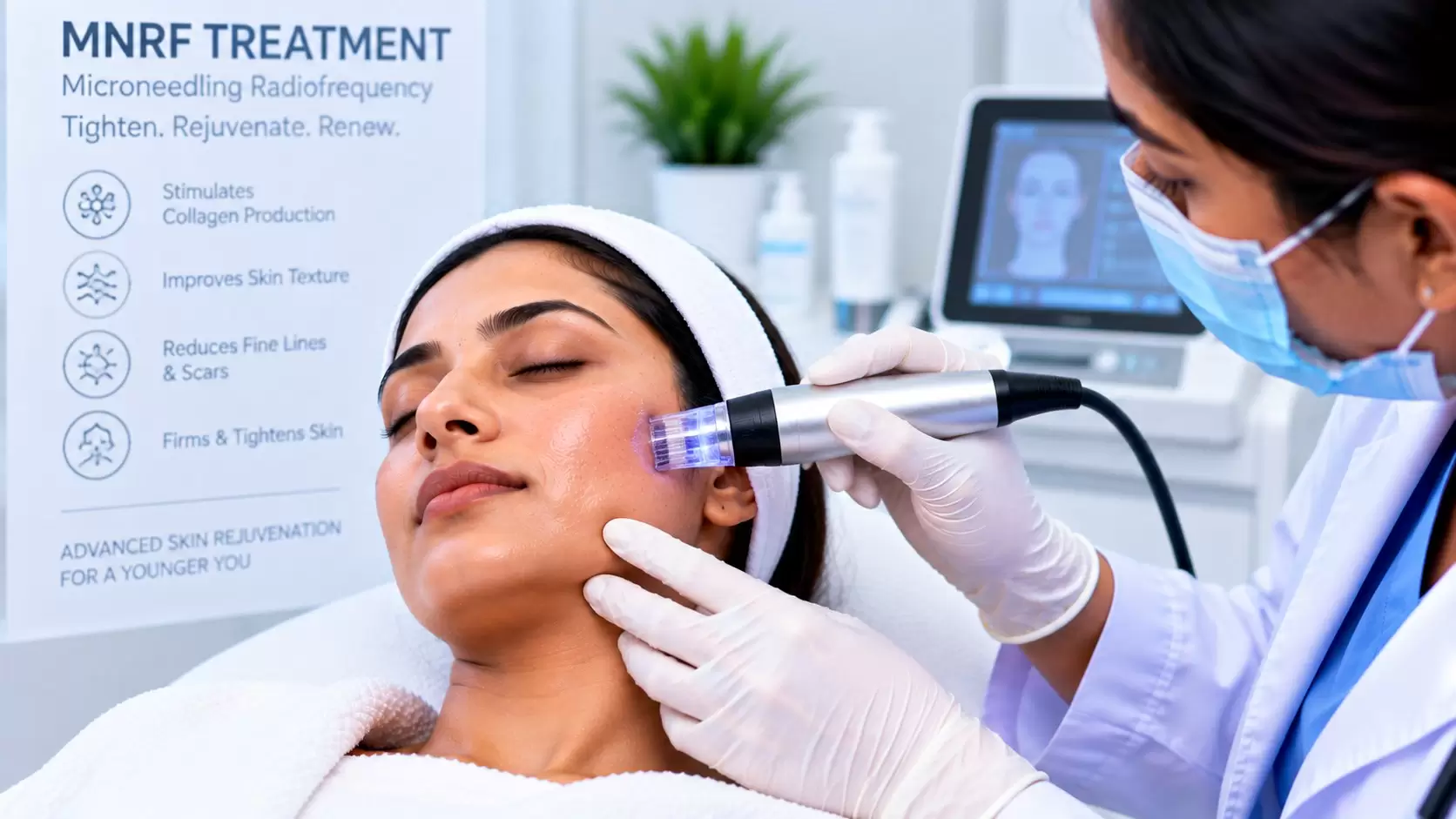
Microneedling radiofrequency can be used to remodel selected atrophic acne scars by combining controlled needle penetration with radiofrequency energy delivered within the skin.
Why acne scars need remodelling
Inflammatory acne can damage collagen and alter the architecture of the dermis. When healing leaves a depression below the surrounding skin, the result is an atrophic acne scar.
MNRF does not simply polish the surface. The treatment creates controlled microscopic injury and delivers radiofrequency energy within the dermis, encouraging a repair response and gradual collagen remodelling.
For a general introduction to the procedure, read What Is MNRF Treatment?.
Which acne scars may respond to MNRF?
Rolling scars
Broad depressions may improve with remodelling, although scars tethered by fibrous bands may also require subcision.
Boxcar scars
Selected shallow or moderate boxcar scars may respond to fractional RF microneedling. Deep sharply edged scars can require additional approaches.
Ice-pick scars
Very narrow deep ice-pick scars are often less suited to MNRF alone and may need techniques specifically directed at deep focal scars.
Mixed scar patterns
Many patients have more than one scar type, making combination treatment more appropriate than a single procedure.
How does MNRF improve acne scars?
Fine needles penetrate to a selected depth and deliver radiofrequency energy into the tissue. The mechanical microchannels and controlled thermal zones initiate a wound-healing response.
Over time, collagen remodelling can soften transitions between scarred and surrounding skin and improve overall texture. The process is gradual, which is why immediate post-treatment swelling should never be mistaken for the final result.
Why needle depth matters
Acne scars are not all located at the same depth. Device settings can be adjusted so treatment is delivered to the tissue level relevant to the scar and anatomical area.
Deeper or more aggressive treatment is not automatically better. Excessive energy or inappropriate depth can increase inflammation and complication risk, particularly in pigment-prone skin.
How many MNRF sessions are needed for acne scars?
Most scar-remodelling plans use a series of sessions rather than expecting one treatment to erase established scars. The number and spacing depend on scar type, severity, device, settings, skin response and whether other procedures are being combined.
When will you see results?
Redness and swelling occur first; these are treatment reactions, not scar improvement. Collagen remodelling develops over subsequent weeks and months.
Because improvement is gradual, standardised photographs taken before treatment and at appropriate follow-up intervals are useful for judging response.
Does MNRF work for deep acne scars?
Depth alone does not determine the best procedure. A deep scar may be narrow, sharply edged, broad or tethered to underlying tissue. Each architecture can require a different approach.
For example, tethered rolling scars may benefit from subcision, while certain deep focal scars may require other targeted techniques. MNRF can then be incorporated when dermal remodelling is useful.
MNRF versus regular microneedling
Both procedures use needles to create controlled micro-injury, but MNRF additionally delivers radiofrequency energy within the skin. This adds a controlled thermal component to the treatment.
That does not mean MNRF is automatically necessary for every scar. Scar type, skin type, downtime, previous treatment and treatment goals should guide the choice. See Dermaroller vs Microneedling RF for a detailed comparison.
Can MNRF treat acne marks as well as scars?
Brown or red marks left after acne are different from true depressed scars. Post-inflammatory pigmentation involves colour change, whereas atrophic scarring involves structural loss or remodelling of tissue.
MNRF may be chosen primarily for texture and scarring rather than treating every type of acne mark. If pigmentation is the main concern, the treatment plan may be different. Read Acne Marks vs Acne Scars.
Is MNRF suitable for Indian skin?
RF microneedling is used in darker skin types because much of the energy is delivered beneath the epidermal surface. Nevertheless, any procedure that creates inflammation can potentially trigger post-inflammatory hyperpigmentation.
Conservative parameter selection, appropriate intervals, sun protection and aftercare are especially important in patients who pigment easily after acne or procedures.
What is the downtime after MNRF for acne scars?
Temporary redness, swelling, warmth, sensitivity and small crusts or grid-like marks can occur. The degree and duration depend on treatment intensity and individual skin response.
Patients should follow instructions about cleansing, moisturiser, sunscreen, makeup and restarting retinoids, exfoliating acids or other active skincare products.
Possible risks and side effects
Redness and swelling
These are common short-term responses after controlled microneedling and RF treatment.
Post-inflammatory pigmentation
Darkening can occur after inflammation, particularly in pigment-prone skin.
Infection
Infection is uncommon but possible whenever needles intentionally penetrate the skin barrier.
Burns or scarring
Uncommon but important complications can occur if treatment depth, energy or technique is inappropriate.
Why combination treatment may give a better scar plan
Acne scars frequently coexist in different shapes and depths. A dermatologist may therefore combine MNRF with procedures selected for individual scar components rather than repeatedly treating every scar with the same device.
The sequence also matters. Active acne should usually be controlled before investing heavily in scar correction, because new inflammatory lesions can create additional scars.
For clinic treatment information, visit MNRF Treatment in Chennai.
Frequently asked questions
Does MNRF remove acne scars completely?
No. Treatment aims to improve scar depth, texture and visibility. Complete removal of every acne scar should not be promised.
Which acne scars respond best to MNRF?
MNRF is commonly considered for selected atrophic scars, including some rolling and boxcar scars. Deep ice-pick or tethered scars may require additional procedures.
How many MNRF sessions are needed for acne scars?
Multiple sessions are commonly used, but there is no universal number. Scar type, severity, device settings and response determine the treatment plan.
How long does MNRF take to improve acne scars?
Collagen remodelling occurs gradually, so meaningful changes are generally assessed over weeks to months rather than immediately after treatment.
Can MNRF cause pigmentation?
Post-inflammatory hyperpigmentation is possible, especially in skin prone to darkening after inflammation. Appropriate settings, sun protection and aftercare reduce risk.
Acne scar treatment in OMR, Chennai
Not all acne scars are the same. Start with scar mapping.
Book a dermatologist consultation at Ram Skin Clinic in Thoraipakkam, Chennai.
#48, Second Floor, Flat E, Best Towers,Okkiampet, Thoraipakkam, OMR,
Chennai – 600097. Above Domino’s Pizza.