
Treatment Comparison
Dermaroller vs Microneedling RF
Both treatments use fine needles to stimulate skin repair, but radiofrequency microneedling adds controlled RF energy through the needles while a conventional dermaroller relies on mechanical microneedling alone.
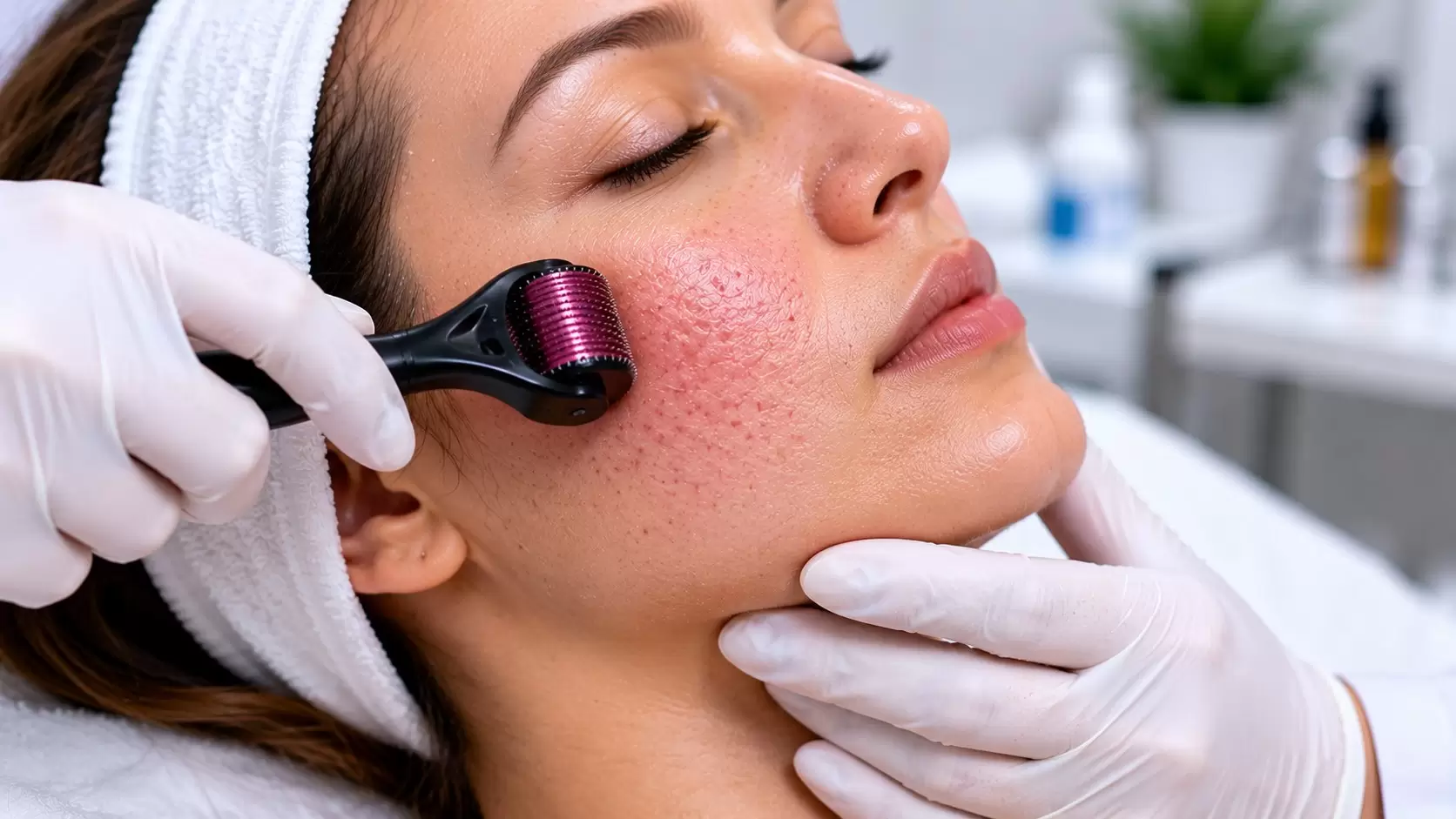
Conventional microneedling
How does a dermaroller work?
A dermaroller is a handheld device with many fine needles arranged on a rotating cylinder. As the roller passes across the skin, the needles create controlled microchannels. These tiny injuries trigger a wound-healing response that includes new collagen formation and remodelling.
Conventional microneedling may be used for selected depressed acne scars, uneven skin texture and other appropriate concerns. The American Academy of Dermatology describes microneedling as collagen induction therapy and notes that dermatologists may use a roller, pen or other medical microneedling device.
For a broader explanation, read What Is Dermaroller Treatment? and our main Dermaroller Treatment in Chennai page.
Radiofrequency microneedling
What does MNRF add?
Radiofrequency microneedling also places fine needles into the skin, but the device delivers radiofrequency energy through those needles at controlled depths. This produces thermal energy within the targeted tissue in addition to the mechanical effect of microneedling.
The AAD notes that adding heat through radiofrequency microneedling can increase collagen production. For acne scarring, AAD guidance also states that combining radiofrequency with microneedling can produce less noticeable scars than either approach alone in suitable patients.
Our separate MNRF Treatment in Chennai page explains the clinic’s radiofrequency microneedling service in more detail.
Key differences
Dermaroller and MNRF compared
Energy delivery
A conventional dermaroller creates mechanical micro-injuries without delivering radiofrequency energy. MNRF combines needle penetration with controlled RF energy within the skin.
Treatment depth
Dermaroller needle length is determined by the roller being used. Professional MNRF systems can be configured to deliver treatment at selected depths according to the device, treatment area and clinical indication.
Collagen stimulation
Both approaches stimulate wound healing and collagen remodelling. MNRF adds a controlled thermal component, which can further stimulate collagen and tissue remodelling.
Treatment selection
Neither procedure is automatically appropriate for every scar or texture concern. Scar morphology, active acne, pigmentation tendency, medical history, downtime preferences and previous treatment all influence the plan.
Acne scars
Which is used for acne scarring?
Both conventional microneedling and radiofrequency microneedling can be considered for atrophic or depressed acne scars. Acne scars are not all alike, however. Rolling, boxcar and ice-pick scars differ in shape and depth, and a dermatologist may recommend different procedures or a combination approach.
A 2025 systematic review of fractional radiofrequency microneedling for acne scarring included 16 studies and 481 patients. The authors concluded that fractional RF microneedling is likely effective as a standalone acne-scar treatment, while also emphasizing the need for further randomized trials to establish optimal treatment parameters.
AAD guidance similarly emphasizes individualized acne-scar treatment and notes that more than one technique is often used. See our Dermaroller for Acne Scars guide and Acne Treatment in Chennai.
Recovery & safety
What about downtime?
Temporary redness or darkening, swelling, tenderness and a warm or sunburn-like sensation can occur after microneedling. Radiofrequency microneedling can also cause transient redness, swelling and discomfort. Recovery varies with treatment intensity, device settings, skin characteristics and the area treated.
Professional assessment is important for both treatments. Microneedling may need to be delayed or avoided when there is active infection, deep inflamed acne, recent significant sun exposure, poor wound healing, certain immune problems or a history of keloid formation. Your medication and treatment history should also be reviewed.
After conventional treatment, follow the steps in our Dermaroller Aftercare guide. After MNRF, follow the specific instructions provided for the device and treatment depth used.
Choosing treatment
How does a dermatologist decide?
A dermatologist examines the type and depth of scars or textural change, checks for active acne or infection, considers skin tone and pigment response, and reviews previous procedures and abnormal scarring history. Treatment expectations and acceptable recovery time are also relevant.
Some patients may be suitable for conventional microneedling, some for MNRF, and others may benefit from a different or combined scar-treatment strategy. For this reason, consultation is more useful than trying to choose a procedure solely from before-and-after photographs or online comparisons.
Evidence-based information
Authoritative references
The American Academy of Dermatology microneedling guidance explains conventional and radiofrequency microneedling, collagen induction and safety considerations. Its acne-scar treatment guidance describes microneedling and radiofrequency approaches. A 2025 systematic review indexed in PubMed summarizes clinical evidence for fractional radiofrequency microneedling in acne-scar management.
Common questions
Dermaroller vs MNRF FAQ
Is dermaroller treatment the same as MNRF?
No. Both involve microneedling, but MNRF additionally delivers radiofrequency energy through needles into the skin.
Which treatment is better for acne scars?
There is no single best procedure for every acne scar. Scar type, depth, skin characteristics and treatment goals determine which technique or combination is appropriate.
Does MNRF stimulate more collagen?
Both treatments stimulate collagen. MNRF adds controlled thermal energy, and AAD guidance notes that the added heat can increase the body’s collagen response.
Are both suitable for darker skin tones?
AAD guidance describes conventional microneedling and radiofrequency microneedling as usable across skin tones, but individual pigment risk, diagnosis and device settings still require clinical assessment.
Can active acne be treated with a dermaroller?
Microneedling is generally postponed over painful, pus-filled or deep active acne. The acne should first be assessed and controlled before scar-focused procedures are planned.
Visit us in OMR
Let’s talk about
your skin concerns.
Book a consultation at Ram Skin Clinic in Thoraipakkam, Chennai.
#48, Second Floor, Flat E, Best Towers,Okkiampet, Thoraipakkam, OMR,
Chennai – 600097. Above Domino’s Pizza.