
Acne Scar Treatment
Dermaroller for Acne Scars
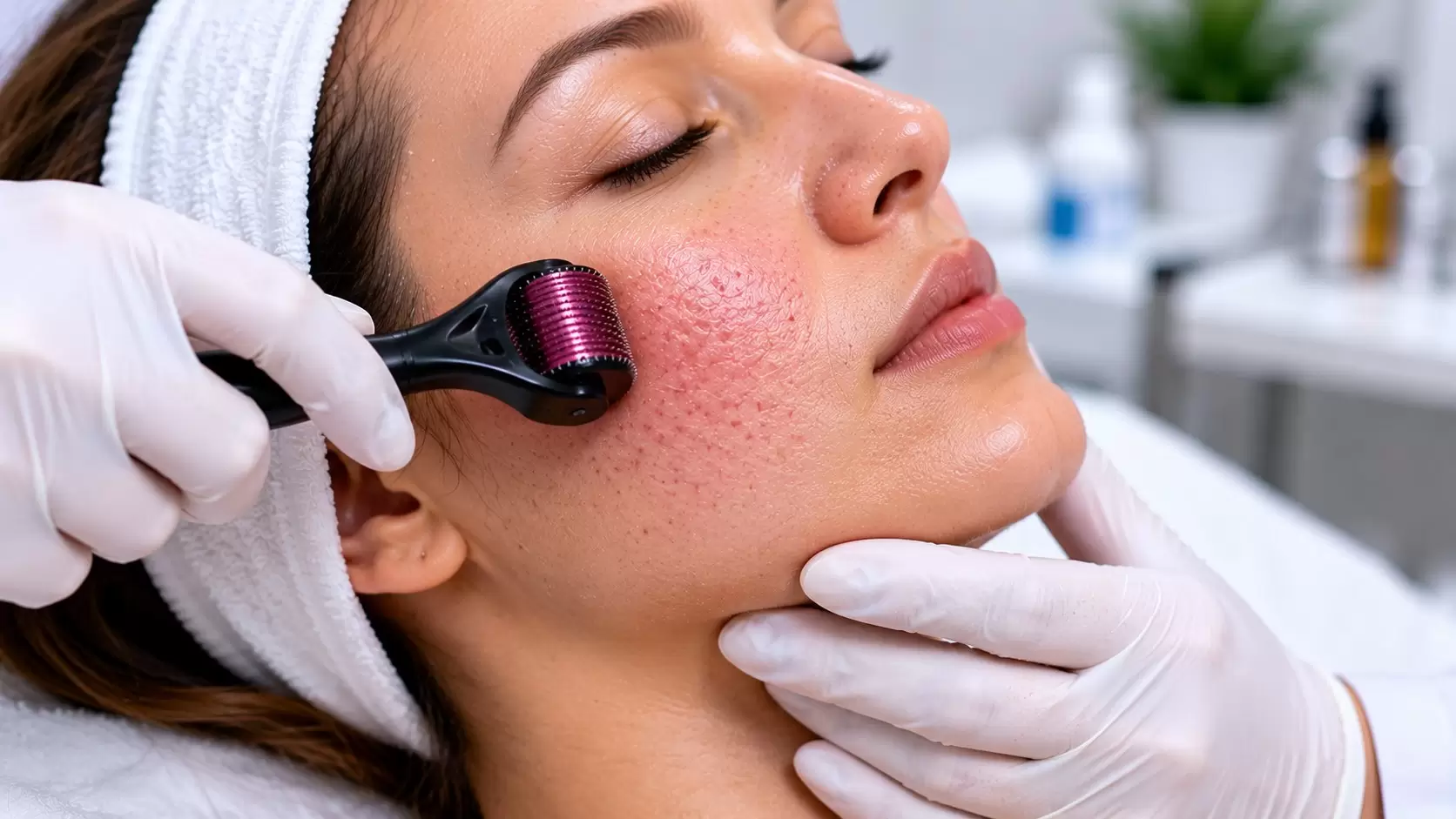
Dermaroller treatment is a form of microneedling that creates controlled micro-injuries to stimulate collagen and may make selected depressed acne scars less noticeable over time.
Why scars form
Why does acne leave depressed scars?
Acne scars can form when inflammation extends deeper into the skin and the healing process does not restore the original tissue structure. The American Academy of Dermatology explains that depressed or sunken scars develop when too little collagen is produced during healing, while raised scars develop when the body produces too much collagen.
Before treating scars, active acne should usually be brought under control. Continuing breakouts can create new scars while older ones are being treated. If breakouts are still active, see our Acne Treatment in Chennai page.
Scar assessment
Which acne scars may respond to microneedling?
Rolling scars
Rolling scars create broad, shallow depressions and an uneven or wavy surface. Collagen-induction procedures may form part of a treatment plan, although tethered scars can require an additional procedure such as subcision.
Boxcar scars
Boxcar scars are round or oval depressions with more defined edges. Their depth varies, and shallower scars may respond differently from deep boxcar scars.
Ice-pick scars
Ice-pick scars are narrow and extend more deeply into the skin. They often need a different or combined approach rather than relying on microneedling alone.
Raised scars and keloids
Raised acne scars involve excess collagen and are treated differently from depressed scars. A history of keloid formation is also an important consideration before microneedling.
This is why a dermatologist evaluates the type, depth, distribution and number of scars rather than choosing one procedure for every acne scar.
How it works
How can dermaroller treatment improve acne scars?
A dermaroller contains multiple fine needles. When used at an appropriate depth in a clinical setting, it creates controlled microscopic channels in the skin. The healing response stimulates new collagen and elastin, which can gradually improve the appearance of suitable depressed scars.
Microneedling is therefore also called collagen induction therapy. The AAD includes microneedling among treatment options for depressed acne scars and notes that it is considered safe across skin tones when appropriately performed.
For a broader explanation of the procedure, read What Is Dermaroller Treatment? or visit the main Dermaroller Treatment in Chennai page.
Treatment course
How many sessions are usually needed?
Acne-scar microneedling is generally performed as a series rather than a one-time procedure. The AAD notes that patients being treated for acne scars may need approximately three to five microneedling sessions, often spaced two to four weeks apart. The actual schedule should be individualized.
Collagen remodelling is gradual. Some improvement may become visible within weeks, while fuller results can take several months. The goal is typically to make scars less noticeable and improve overall texture rather than promise complete scar removal.
Treatment day
What happens during a dermaroller session?
The skin is first examined and cleansed. A topical anaesthetic may be applied depending on the treatment depth and area. The device is then passed systematically across the scarred skin to create controlled microchannels.
Afterward, redness or temporary darkening, swelling, tightness and tenderness can occur. These effects commonly settle over several days. Sun protection and the dermatologist’s aftercare instructions are important during recovery.
Professional microneedling should not be equated with aggressive at-home dermarolling. Home use can cause irritation and, if the skin is punctured improperly, can increase the risk of infection, scarring or pigment problems.
Who should wait?
When may microneedling not be appropriate?
Treatment may need to be postponed when there is an active skin infection, significant recent sun exposure or inflamed, painful or pus-filled acne in the treatment area. A tendency to develop keloids, poor wound healing, immune suppression and some medical treatments also require careful assessment.
Medication history matters as well. Tell your dermatologist about prescription and non-prescription products you use, including current or recent acne medicines. The aim is to choose a treatment and timing appropriate for your skin rather than applying a standard protocol to everyone.
Evidence-based information
What does the evidence say?
The American Academy of Dermatology acne-scar treatment guidance lists microneedling as an option for depressed acne scars and emphasizes matching treatment to scar type. Its microneedling guidance explains collagen induction, treatment sessions and recovery. Randomized-trial evidence has also been synthesized in a 2024 network meta-analysis evaluating microneedling alone and in combination for acne scars.
Common questions
Dermaroller for acne scars FAQ
Can a dermaroller completely remove acne scars?
No. Microneedling can make suitable acne scars less noticeable, but complete scar removal should not be promised. Results depend on scar type, depth, skin characteristics and the overall treatment plan.
Which acne scars respond best to dermaroller treatment?
Microneedling is primarily used for depressed acne scars. Rolling and some boxcar scars may be suitable, while deep ice-pick scars and raised scars often need different or combined treatments.
Should active acne be treated before acne scars?
Usually yes. Controlling ongoing acne helps prevent new scars and allows the dermatologist to plan scar treatment more effectively.
How long does it take to see results?
Improvement develops gradually as collagen remodels. Changes may begin within weeks, but fuller results can take several months and a series of sessions may be needed.
Is microneedling suitable for darker skin tones?
The AAD states that microneedling is safe for all skin tones when appropriately performed, but individual assessment and careful aftercare remain important.
Visit us in OMR
Let’s talk about
your skin concerns.
Book a consultation at Ram Skin Clinic in Thoraipakkam, Chennai.
#48, Second Floor, Flat E, Best Towers,Okkiampet, Thoraipakkam, OMR,
Chennai – 600097. Above Domino’s Pizza.