
Microneedling Radiofrequency
What Is MNRF Treatment? How Microneedling Radiofrequency Works
MNRF combines controlled microneedling with radiofrequency energy delivered below the skin surface. Dermatologists use it for selected concerns such as acne scars, enlarged pores, uneven texture and skin remodelling.
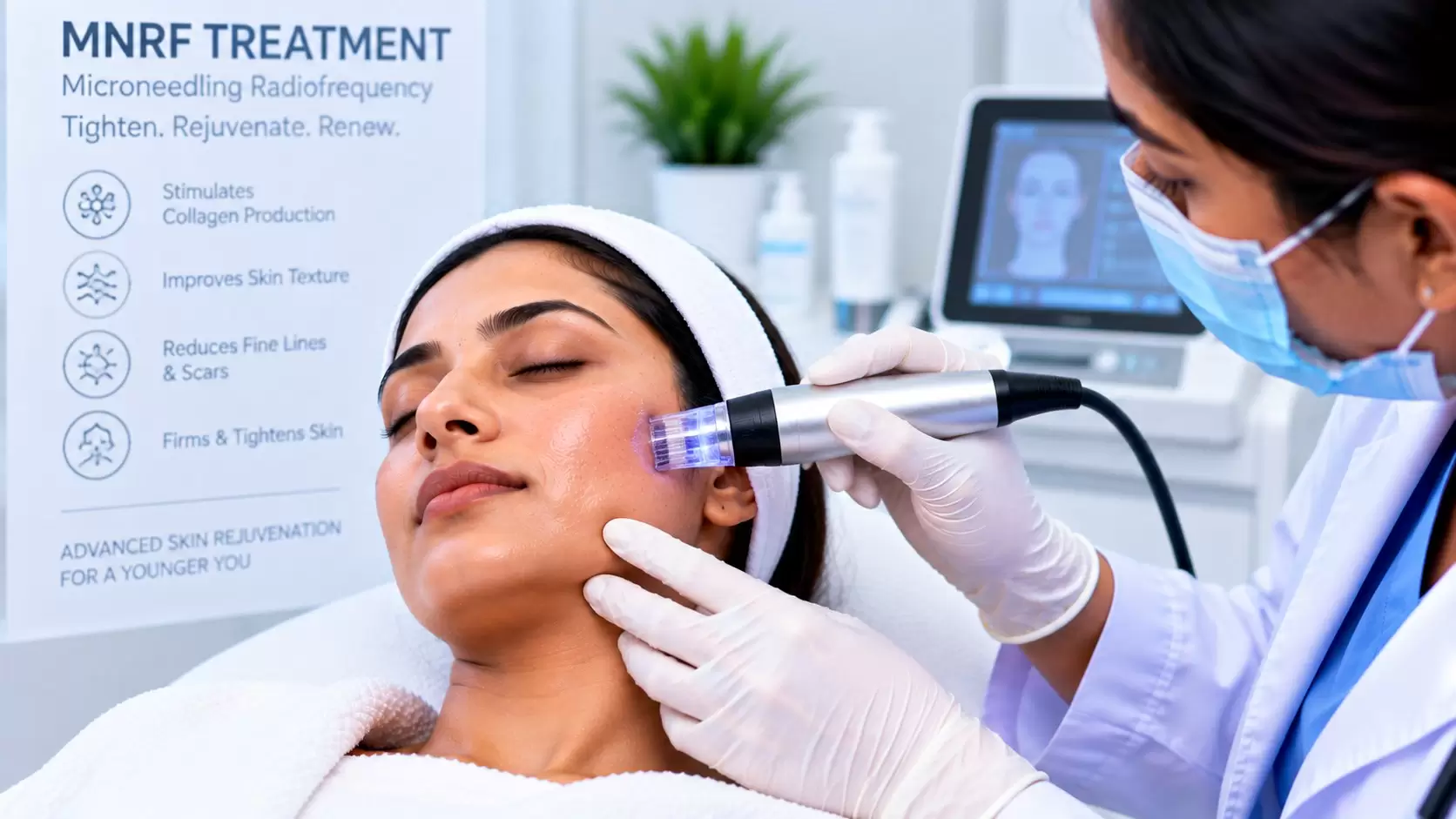
What does MNRF mean?
MNRF commonly refers to microneedling radiofrequency, also called radiofrequency microneedling. The treatment combines two mechanisms in one procedure: controlled needle penetration and radiofrequency energy delivered at selected depths within the skin.
Unlike a surface-only treatment, the needles allow energy to be delivered beneath the epidermis. Settings such as needle depth and energy can be adjusted according to the treatment area, indication, device and skin characteristics.
For clinic-specific information, visit MNRF Treatment in Chennai.
How does MNRF work?
1. Microneedles enter the skin
A handpiece places fine needles into the skin at a controlled depth, creating microscopic treatment zones.
2. RF energy is delivered
Radiofrequency energy is delivered through the needle system into targeted tissue rather than relying only on surface heating.
3. Controlled injury triggers repair
The mechanical and thermal effects initiate a wound-healing response in the treated skin.
4. Remodelling develops gradually
Collagen-related remodelling occurs over time, so texture changes are assessed over weeks to months.
Why combine microneedling with radiofrequency?
Traditional microneedling creates controlled mechanical micro-injuries. MNRF adds radiofrequency energy at the needle tips or along parts of the needle, depending on the device design. This creates a controlled thermal effect within the dermis.
The combination allows the clinician to target depth and energy rather than simply increasing the intensity of a surface treatment.
What skin concerns can MNRF treat?
MNRF may be considered for several textural and remodelling concerns, but suitability depends on diagnosis and severity.
Acne scars
Fractional radiofrequency microneedling is commonly used for selected atrophic acne scars as part of a scar-treatment plan.
Uneven skin texture
Controlled dermal remodelling may help improve the appearance of rough or irregular texture.
Enlarged-looking pores
Some patients seek treatment for overall texture and the visible appearance of pores.
Skin remodelling
RF microneedling may be used when controlled collagen remodelling is an appropriate treatment goal.
How does MNRF help acne scars?
Atrophic acne scars involve changes in the structure of the dermis. MNRF creates controlled treatment columns and thermal zones intended to stimulate repair and collagen remodelling within scarred tissue.
Not all acne scars behave the same way. Rolling, boxcar and ice-pick scars have different architecture, and a dermatologist may combine MNRF with other scar procedures rather than using one treatment for every scar.
For a comparison with mechanical microneedling, see Dermaroller vs Microneedling RF.
What happens during an MNRF session?
The skin is assessed and prepared before treatment. A topical anaesthetic may be used to improve comfort. The device is then passed over the planned treatment area while the clinician selects parameters such as needle depth and radiofrequency energy according to the indication and device.
The session time varies with the area being treated. Temporary redness, swelling, sensitivity or pinpoint crusting can occur afterwards.
Is MNRF painful?
Patients may feel pressure, pricking, warmth or brief discomfort as the needles and radiofrequency energy are delivered. Topical anaesthesia is commonly used before treatment.
Comfort varies with treatment depth, energy, body area and individual sensitivity. Higher intensity is not automatically better; parameters should be chosen for the clinical objective and skin type.
How many MNRF sessions are needed?
MNRF is commonly performed as a series rather than judged from one session. The number of treatments and interval between sessions depend on the indication, scar severity, response, device and settings.
When do MNRF results become visible?
Some early improvement may relate to resolution of inflammation or changes in surface texture, but collagen remodelling is gradual. Meaningful assessment therefore occurs over weeks to months.
Standardised photographs taken under similar lighting are more useful than comparing the skin from day to day.
What is the recovery after MNRF?
Temporary redness, swelling, warmth, sensitivity and small crusts or grid-like marks can occur after treatment. Recovery depends on the device, treatment depth, energy and individual skin response.
Patients should follow the dermatologist’s instructions about cleansing, moisturiser, sun protection, makeup and restarting active skincare products.
Is MNRF suitable for Indian skin?
Radiofrequency microneedling is used across a range of skin tones because much of the energy is delivered below the surface. However, darker skin can still develop post-inflammatory hyperpigmentation after procedures that cause inflammation.
Appropriate settings, careful patient selection, sun protection and post-procedure care remain important. A history of pigmentation after acne or procedures should be discussed before treatment.
What are the possible side effects?
Expected short-term effects
Redness, swelling, tenderness, dryness and pinpoint crusting can occur while the skin heals.
Pigment change
Post-inflammatory hyperpigmentation can occur, particularly in skin that is prone to pigment after inflammation.
Infection
Infection is uncommon but possible whenever the skin barrier is intentionally penetrated.
Scarring or burns
These are uncommon but potentially serious complications if energy, depth or technique is inappropriate.
Who may need to postpone or avoid MNRF?
Active skin infection, inflamed acne in the treatment zone, open wounds or certain active inflammatory skin conditions may need management before an elective procedure. A tendency to abnormal scarring, relevant medical conditions, implanted devices and medicines that affect healing should be discussed with the treating dermatologist.
Pregnancy should also be disclosed so that elective procedural treatment can be planned appropriately.
MNRF is not the same as a dermaroller
Both treatments use needles, but MNRF additionally delivers radiofrequency energy within the skin. This changes the mechanism and allows controlled thermal treatment at selected depths.
The choice should be based on the skin concern, scar pattern, downtime, skin type and treatment goal—not simply on which procedure sounds more advanced.
Frequently asked questions
What is MNRF treatment?
MNRF is microneedling radiofrequency, a procedure that combines controlled needle penetration with radiofrequency energy delivered within the skin to stimulate a healing and remodelling response.
What is MNRF used for?
It may be used for selected acne scars, uneven texture, enlarged-looking pores and other concerns where controlled dermal remodelling is appropriate.
How many MNRF sessions do I need?
There is no universal number. The treatment course depends on the indication, severity, device, settings and individual response.
How long does MNRF take to show results?
Collagen remodelling develops gradually, so results are generally assessed over weeks to months rather than immediately after treatment.
Is MNRF safe for darker skin?
RF microneedling can be used across different skin tones, but post-inflammatory pigmentation remains possible. Appropriate settings, patient selection and aftercare are important.
MNRF treatment in OMR, Chennai
Considering MNRF? Start with a dermatologist assessment.
Book a consultation at Ram Skin Clinic in Thoraipakkam, Chennai.
#48, Second Floor, Flat E, Best Towers,Okkiampet, Thoraipakkam, OMR,
Chennai – 600097. Above Domino’s Pizza.