
Understanding Acne Lesions
Types of Acne: Blackheads, Whiteheads, Papules, Pustules, Nodules and Cysts
Acne is not just one kind of pimple. It can appear as clogged pores, red inflamed bumps, pus-filled lesions or deeper painful nodules. Identifying the dominant lesion type helps determine severity, scar risk and treatment.
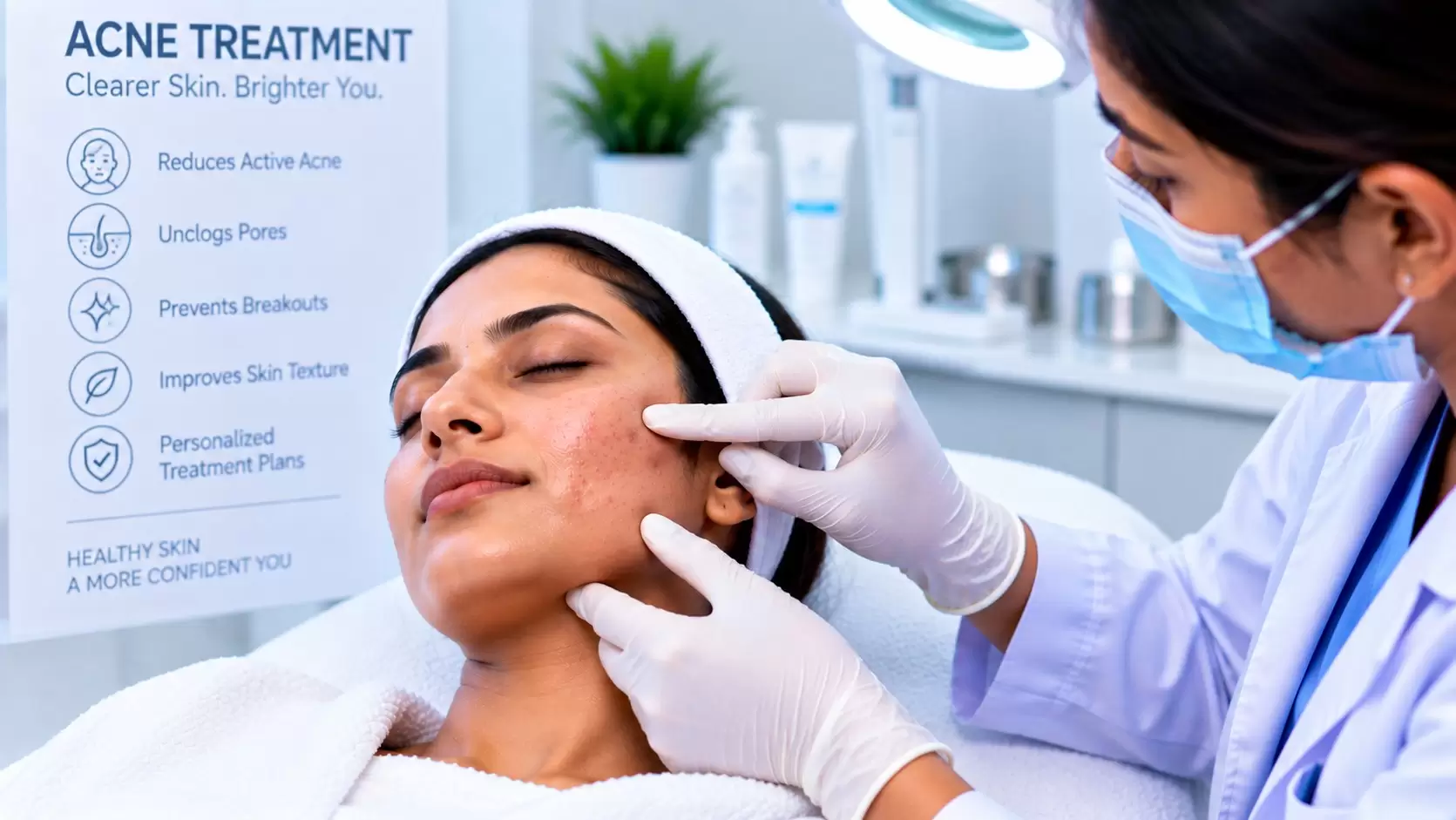
Why identifying acne type matters
Different lesions reflect different degrees of follicular blockage and inflammation. A few blackheads do not carry the same scar risk as repeated deep painful nodules.
Correct classification helps guide treatment intensity and whether topical treatment alone may be reasonable or dermatologist-supervised oral therapy should be considered. For the underlying mechanism, read What Causes Acne?.
1. Whiteheads: closed comedones
A whitehead forms when a follicle becomes plugged with sebum and keratin while the follicular opening remains relatively closed. It usually appears as a small skin-coloured or whitish bump.
Whiteheads are non-inflammatory lesions, although they can later develop inflammation.
2. Blackheads: open comedones
A blackhead is an open comedone. The dark colour is mainly related to oxidation of material exposed at the follicular opening—it does not mean the pore is filled with dirt.
3. Papules: red inflamed bumps
Papules are small, raised inflammatory acne lesions without an obvious collection of pus at the surface. They may be red, tender or sore.
Squeezing an inflamed papule can increase tissue injury and may worsen post-inflammatory pigmentation or scarring.
4. Pustules: inflamed lesions with visible pus
Pustules are inflammatory acne lesions with a visible pale or yellow-white centre. They are sometimes casually called pimples.
The presence of pus does not mean acne is simply a contagious skin infection. Acne involves follicular blockage, inflammation and the skin microbiome.
5. Nodules: deeper, painful acne
Acne nodules are deeper inflammatory lesions that can feel firm and painful beneath the skin. They may persist longer than superficial papules or pustules and have a greater risk of permanent scarring.
Repeated nodules are a reason to seek dermatologist assessment early rather than relying only on spot treatments.
6. What people call “cystic acne”
The term cystic acne is commonly used for severe, deep, painful acne. In clinical practice, severe nodulocystic acne can include deep inflammatory nodules and cyst-like lesions.
Because deep acne has a higher scar risk, appropriate systemic treatment may be considered after medical assessment.
Comedonal vs inflammatory acne
Comedonal acne
Dominated by blackheads and whiteheads. Treatments that reduce follicular plugging are particularly important.
Inflammatory acne
Dominated by red papules, pustules or deeper lesions. Anti-inflammatory and antimicrobial strategies may be needed.
Many patients have mixed acne with both comedones and inflammatory lesions.
Mild, moderate and severe acne
Severity is not determined by one lesion alone. Dermatologists consider the number and type of lesions, depth of inflammation, affected areas, presence of scars or pigmentation and the impact on the patient.
Deep nodules, established scars or extensive chest/back disease can make acne clinically important even when a simple lesion count does not appear dramatic.
Facial, chest and back acne
Acne commonly affects areas rich in sebaceous glands, including the face, chest, shoulders and upper back. Truncal acne may require a different practical approach because topical medicines are harder to apply over large areas.
Widespread inflammatory acne may require systemic treatment depending on severity.
Hormonal acne is a pattern—not a separate lesion type
Hormonal influences can produce ordinary acne lesion types such as comedones, papules, pustules and nodules. “Hormonal acne” describes a contributing mechanism or clinical pattern rather than a unique kind of pimple.
Adult women with cyclical flares, irregular periods or signs of androgen excess can read Hormonal Acne in Women.
Acne marks are not an acne type
Flat red, brown or dark spots left after acne are post-inflammatory changes rather than active acne lesions. Depressed or raised permanent changes are scars.
Understanding the distinction prevents unnecessary scar procedures for flat pigmentation. Read Acne Marks vs Acne Scars.
Conditions that can look like acne
Folliculitis, rosacea, perioral dermatitis and other skin conditions can resemble acne. Very itchy, unusually uniform or treatment-resistant bumps may deserve diagnostic reassessment.
See Folliculitis vs Acne for one important comparison.
How treatment changes with acne type
Comedonal acne often benefits from medicines that prevent follicular plugging. Inflammatory acne may need additional antimicrobial or anti-inflammatory treatment. Severe, nodular, scarring or extensive acne can require oral therapy.
Procedures can have a role in selected cases but should not distract from controlling active disease. See Acne Treatment Options.
When should you seek treatment early?
Early assessment is particularly important for deep painful nodules, rapidly worsening acne, scarring, widespread chest/back involvement, persistent pigmentation or acne that is significantly affecting daily life.
Visit Acne Treatment in Chennai for dermatologist-guided assessment at Ram Skin Clinic.
Frequently asked questions
What are the main types of acne?
The main lesion types are blackheads, whiteheads, papules, pustules and deeper nodules or cyst-like lesions. Many patients have a mixture.
What is the difference between a blackhead and a whitehead?
A blackhead is an open comedone, while a whitehead is a closed comedone. The dark colour of a blackhead is not caused by dirt.
Which type of acne is most likely to scar?
Deep inflammatory acne, particularly nodules and severe nodulocystic disease, carries a greater risk of permanent scarring.
Are acne marks a type of acne?
No. Flat dark or red marks are post-inflammatory changes left after acne. Structural depressions or raised areas are scars.
Can one person have several acne types?
Yes. Mixed acne with comedones, papules and pustules at the same time is common.
Acne treatment in OMR, Chennai
Different acne types need different treatment strategies.
Book a consultation at Ram Skin Clinic in Thoraipakkam, Chennai.
#48, Second Floor, Flat E, Best Towers,Okkiampet, Thoraipakkam, OMR,
Chennai – 600097. Above Domino’s Pizza.