
Knowing When Acne Needs Medical Care
When to See a Dermatologist for Acne: Signs You Need Medical Treatment
Mild acne can sometimes be managed with a simple skincare routine and appropriate non-prescription products. But painful, deep, scarring, persistent or widespread acne deserves earlier medical assessment because delaying effective treatment can allow additional inflammation and scars to develop.
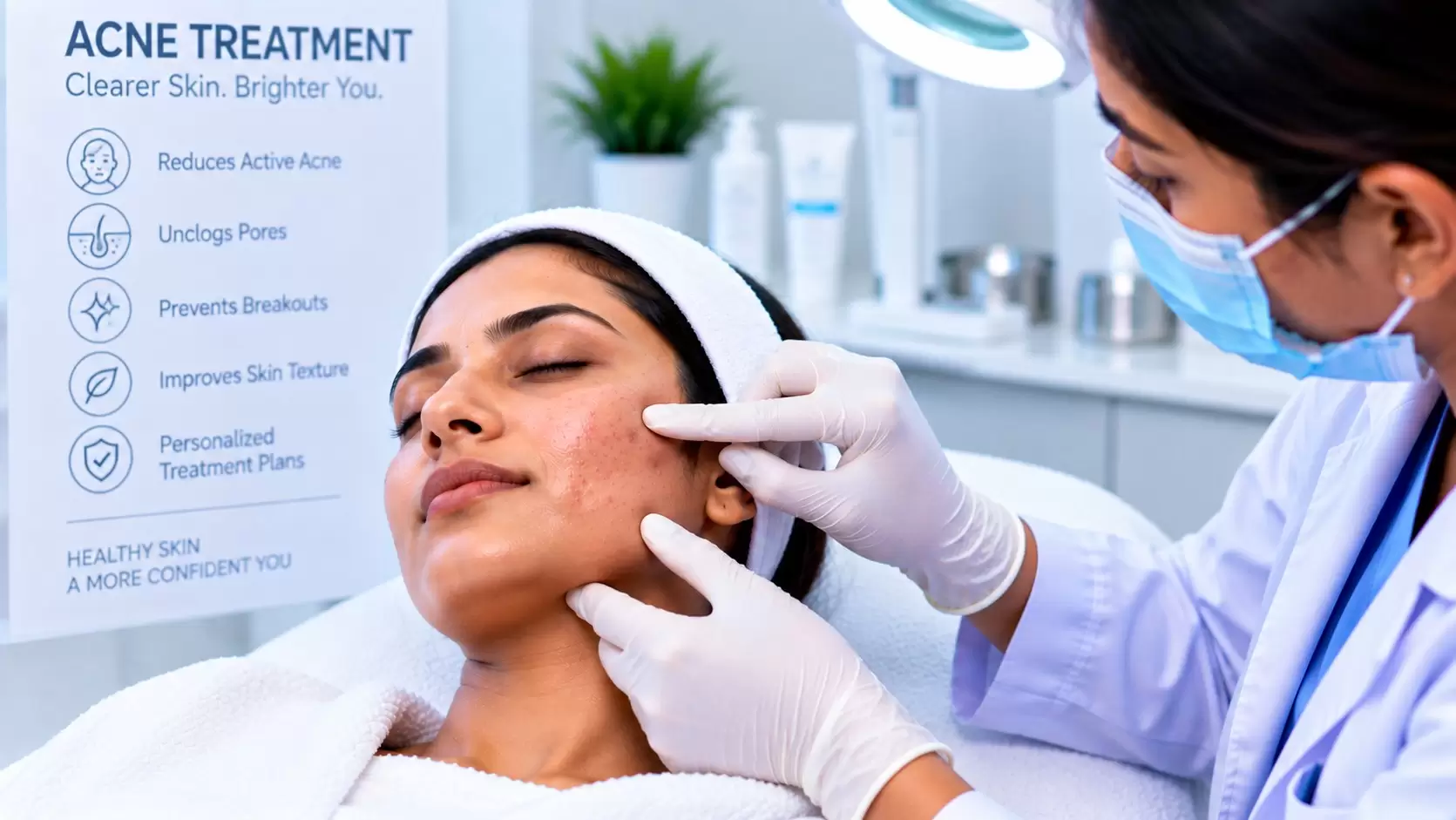
You do not have to wait for severe acne
A dermatologist can help confirm whether the eruption is actually acne, identify the dominant lesion types and select treatment according to severity, skin type, scarring risk and medical history.
If you are unsure what you have, see Types of Acne.
1. You have deep, painful nodules
Deep inflammatory nodules can remain tender for longer than superficial pimples and have a greater risk of permanent scarring. Repeated nodules are a strong reason to seek medical treatment rather than relying only on spot products.
2. Acne is starting to leave scars
Once structural acne scars develop, they can be difficult to completely correct. Controlling active inflammatory acne early is therefore important.
Flat red or dark marks are different from permanent scars. Read Acne Marks vs Acne Scars.
3. Acne keeps coming back
Acne is often a relapsing condition. If it improves briefly and repeatedly returns, your treatment may need a maintenance phase or the diagnosis and contributing factors may need review.
See Recurrent Acne for common reasons breakouts return.
4. Over-the-counter treatment is not working
Acne products require consistent use and adequate time, but persistent inflammatory acne despite a sensible regimen may need prescription treatment. Continuing to add more acids, scrubs and spot treatments can increase irritation without addressing the disease effectively.
Review the available approaches in Acne Treatment Options.
5. Acne covers the chest, back or shoulders
Truncal acne can be difficult to treat because of the larger surface area and difficulty applying topical medicines consistently. Extensive inflammatory chest or back acne may require systemic therapy depending on severity.
6. You suspect hormonal acne
Women with recurrent acne plus irregular menstrual cycles, excess facial/body hair, scalp hair thinning or other signs of androgen excess may benefit from further assessment.
Acne or jawline distribution alone does not diagnose PCOS or another hormonal disorder. Read Hormonal Acne in Women.
7. Acne starts or persists in adulthood
Adult acne is common, but new or persistent breakouts may need a different strategy from occasional teenage acne. Medicines, cosmetics, hair products, hormonal influences and acne mimics may all need consideration.
8. You are unsure whether it is actually acne
Folliculitis, rosacea, perioral dermatitis and acneiform eruptions can resemble acne. Very itchy, unusually uniform or treatment-resistant bumps deserve diagnostic reconsideration.
For one common comparison, see Folliculitis vs Acne.
9. Dark marks are accumulating after every breakout
Post-inflammatory hyperpigmentation can persist long after active acne settles, particularly in pigment-prone skin. The priority is usually to reduce new inflammatory lesions while also using appropriate sun protection and pigmentation management.
10. Acne is affecting your daily life
The number of visible lesions is not the only reason to seek care. Acne that causes significant distress, avoidance of social situations or persistent concern deserves to be taken seriously. Earlier effective treatment may reduce both physical complications and the burden of repeated flares.
What happens at an acne consultation?
Diagnosis and lesion type
The dermatologist assesses whether lesions are comedonal, inflammatory, nodular or potentially another condition.
Severity and distribution
The face, chest and back are assessed along with pigmentation and scarring.
Relevant history
Previous treatments, medicines, skincare, supplements and hormonal symptoms can help identify contributing factors.
Treatment and maintenance
A plan can address the current flare and, where appropriate, reduce future recurrence.
What treatments can a dermatologist prescribe?
Depending on the acne pattern, options may include topical retinoids, benzoyl peroxide, azelaic acid, topical or oral antimicrobials, hormonal therapies in selected women, and isotretinoin for appropriate severe or resistant cases.
Procedures may complement treatment for selected patients, but controlling active acne is usually the priority before focusing on established scars.
What can you do before your appointment?
Keep your routine simple, avoid squeezing lesions and make a list of products, medicines and supplements you use. If acne changes with your menstrual cycle or a particular product, supplement or dietary pattern, note the timing.
Our Skincare Routine for Acne-Prone Skin provides a practical foundation. If food triggers concern you, see Diet and Acne.
Frequently asked questions
How bad does acne need to be before seeing a dermatologist?
It does not need to be severe. Persistent, recurrent, painful or scarring acne, or acne that is not responding to appropriate care, can justify assessment.
Should I see a dermatologist for acne scars?
Yes, particularly if active acne is still creating new scars. Controlling ongoing acne is an important first step before planning scar procedures.
When should teenagers see a dermatologist for acne?
Teenagers should be assessed when acne is painful, scarring, widespread, persistent or causing significant distress, or when appropriate non-prescription treatment is not helping.
Should I see a dermatologist for hormonal acne?
Assessment is useful when acne is recurrent or significant, particularly when accompanied by irregular periods, excess hair growth or other possible hormonal signs.
Can a dermatologist help if acne keeps returning?
Yes. The diagnosis, triggers, treatment adherence and need for maintenance therapy can be reviewed to develop a longer-term control strategy.
Acne treatment in OMR, Chennai
Do not wait for acne to become severe or scar.
Book a consultation with Dr. Anuj Singh at Ram Skin Clinic in Thoraipakkam, Chennai.
#48, Second Floor, Flat E, Best Towers,Okkiampet, Thoraipakkam, OMR,
Chennai – 600097. Above Domino’s Pizza.