
Scalp Health & Shedding
Can Dandruff Cause Hair Loss?
Dandruff itself does not usually cause permanent baldness. However, more inflamed seborrheic dermatitis and repeated scratching can contribute to temporary shedding or breakage. Hair loss occurring with scalp flakes can also be a sign of another condition that needs a different diagnosis.
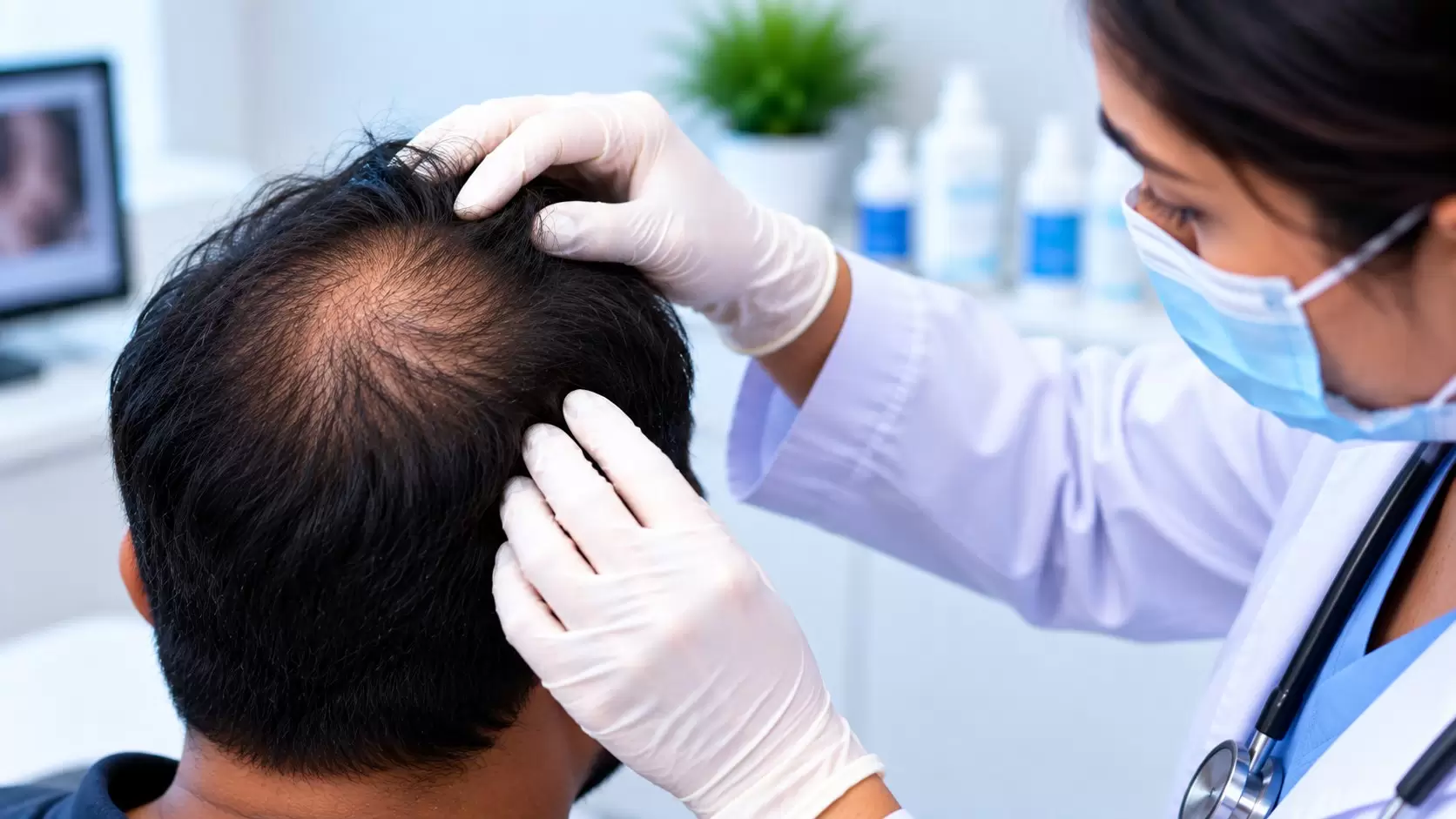
Does dandruff directly cause baldness?
Simple dandruff is an uninflamed form of seborrheic dermatitis and typically causes diffuse scale with little or no obvious redness. Hair loss is uncommon.
DermNet notes that when seborrheic dermatitis becomes severely inflamed, it can cause localised temporary hair loss. This is different from permanent follicle destruction.
How dandruff may be linked with hair shedding
Scalp inflammation
More active seborrheic dermatitis can produce redness, itching and inflammation. Severe inflammation may contribute to temporary shedding.
Repeated scratching
Vigorous scratching can traumatise the scalp and hair shafts, increase irritation and contribute to breakage or loosen hairs that are ready to shed.
Secondary infection
Scratching can damage the skin barrier. The AAD warns that scratching an itchy seborrheic dermatitis rash can lead to infection.
Another hair-loss condition
Dandruff and androgenetic alopecia, telogen effluvium or another alopecia can occur at the same time, making the dandruff appear responsible for unrelated thinning.
Why scratching matters more than the flakes
Itching is common with dandruff and seborrheic dermatitis. Scratching may provide brief relief, but repeated or forceful scratching can irritate already inflamed skin and damage hair shafts.
Keeping the underlying scalp condition controlled reduces itch and therefore reduces the urge to scratch. If itching is intense despite anti-dandruff treatment, the diagnosis or treatment plan may need review.
Will hair grow back after dandruff is controlled?
When shedding is temporary and the follicles have not been destroyed, regrowth is generally possible after inflammation and trauma settle. Hair recovery is gradual because scalp hair grows slowly.
If density continues to decline even after dandruff improves, another form of hair loss may be present and should be assessed separately.
Dandruff and male or female pattern hair loss
Pattern hair loss is common, so it can easily coexist with dandruff. In men it often causes a receding hairline and crown thinning; in women it commonly produces widening of the part and reduced central density.
DermNet specifically notes that people with seborrheic dermatitis may incorrectly blame dandruff for pattern balding. Treating dandruff can improve scalp comfort, but it does not reverse genetic follicle miniaturisation.
Could heavy shedding be telogen effluvium?
Diffuse shedding after illness, fever, surgery, childbirth, major stress or rapid weight loss may be telogen effluvium rather than dandruff-related loss. The trigger often occurs several months before the shedding becomes noticeable.
It is possible to have both dandruff and telogen effluvium at the same time. Read Telogen Effluvium.
Patchy hair loss with scale needs attention
Patchy hair loss with broken hairs and scale can indicate tinea capitis, a fungal infection of the scalp. This is different from ordinary dandruff and generally requires prescription oral antifungal treatment.
Scalp psoriasis can also produce heavy scale and temporary shedding, particularly when the scalp is scratched or scale is forcibly removed.
What about scarring hair loss?
Scarring alopecias are a separate group of inflammatory disorders that can permanently destroy hair follicles. Warning signs can include smooth shiny areas, loss of visible follicular openings, scalp pain or burning, redness and scale around follicles.
Can treating dandruff reduce shedding?
If scalp inflammation and scratching are contributing to shedding, controlling seborrheic dermatitis can remove those aggravating factors. Mild-to-moderate scalp seborrheic dermatitis is commonly treated with medicated dandruff shampoos.
Active ingredients may include ketoconazole, selenium sulfide, zinc pyrithione, salicylic acid, sulfur or coal tar. More inflamed disease may require prescription anti-inflammatory treatment.
For an individual plan, visit Dandruff Treatment in Chennai.
Avoid these common mistakes
Scraping off scale
Aggressive picking can increase irritation and trauma. Use appropriate treatment to loosen and control scale instead.
Assuming all hair loss is dandruff
Progressive thinning, bald patches and diffuse shedding have many possible causes and may require separate evaluation.
Stopping treatment too early
Seborrheic dermatitis commonly relapses. Maintenance shampoo may be needed after the scalp improves.
Using harsh home remedies
Irritating acids, concentrated essential oils or vigorous rubbing can worsen scalp inflammation rather than treat it.
Read Recurrent Dandruff for maintenance strategies.
When should you see a dermatologist?
Arrange an assessment when hair loss is patchy, progressive or persistent; when hairs are breaking; or when the scalp is painful, intensely inflamed, crusted or pustular. Also seek review if dandruff improves but hair density continues to decline.
For broader evaluation, visit Hair Loss Treatment in Chennai or read When to See a Dermatologist for Hair Loss.
Frequently asked questions
Can dandruff cause permanent hair loss?
Simple dandruff does not usually cause permanent hair loss. Severe inflammation, infection or repeated scratching can contribute to temporary shedding, while permanent loss suggests another diagnosis such as a scarring alopecia.
Why am I losing hair when I have dandruff?
Inflammation and scratching can loosen or break hairs, but dandruff may also coexist with unrelated hair-loss conditions such as androgenetic alopecia or telogen effluvium.
Will hair grow back after dandruff is treated?
When shedding is related to scalp inflammation or scratching and follicles remain intact, hair generally has the potential to regrow after the scalp condition is controlled.
Does scratching dandruff make hair fall worse?
Repeated vigorous scratching can traumatise the scalp and hair shafts, increase inflammation and contribute to temporary shedding or breakage.
When should dandruff with hair loss be checked?
Seek assessment for patchy or progressive hair loss, broken hairs, scalp pain, pustules, thick plaques, scarring, or persistent shedding despite controlling dandruff.
Visit us in OMR
Dandruff with noticeable hair loss? Check both the scalp and the follicles.
Book a dermatologist consultation at Ram Skin Clinic in Thoraipakkam, Chennai.
#48, Second Floor, Flat E, Best Towers,Okkiampet, Thoraipakkam, OMR,
Chennai – 600097. Above Domino’s Pizza.