
Hair Loss Warning Signs
When to See a Dermatologist for Hair Loss
Hair loss has many causes, from temporary shedding to hereditary thinning, autoimmune disease, infection and scarring disorders. Knowing when to get the scalp examined can prevent months of guesswork and, in some conditions, help protect remaining follicles.
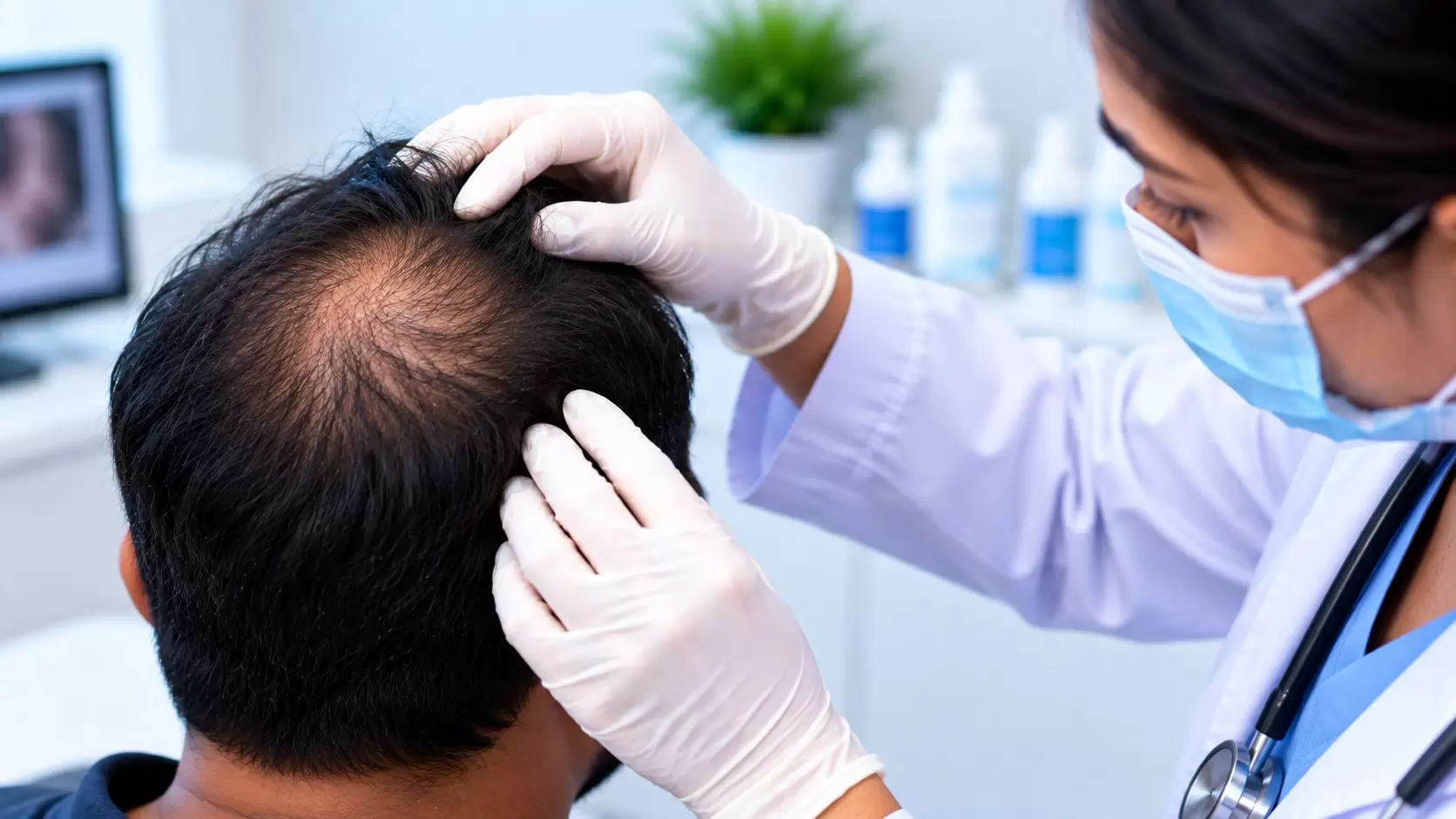
Why see a dermatologist for hair loss?
Dermatologists diagnose and treat disorders of the skin, hair and nails. Hair loss can result from multiple conditions that look similar at first, and some people have more than one cause at the same time.
Diagnosis may involve the pattern of loss, scalp examination, hair-pull testing, dermoscopy and, when clinically indicated, blood tests or a scalp biopsy. Treatment can then be matched to the cause rather than chosen by trial and error.
Signs that deserve a dermatology assessment
Sudden or patchy loss
A bald patch that appears quickly can occur with alopecia areata, infection or another condition that needs a specific diagnosis.
Progressive thinning
A widening part, receding hairline, thinner ponytail or enlarging crown area can indicate pattern hair loss.
Scalp symptoms
Burning, tenderness, intense itching, redness, pustules, sores or heavy scale suggest that more than simple shedding may be occurring.
Possible scarring
Smooth shiny areas with loss of visible follicular openings can indicate scarring alopecia, where early treatment is particularly important.
Sudden bald patches should be checked
Hair loss that appears abruptly in one or more defined patches is different from ordinary daily shedding. Alopecia areata can produce smooth round or oval patches, while fungal infection and inflammatory scalp disease may cause scale, broken hairs, redness or tenderness.
The treatment differs substantially between these conditions, so self-treating every patch as “hair fall” can delay the correct diagnosis.
A widening part or receding hairline
Gradual thinning is easy to overlook. In women, early signs can include a widening central part or reduced ponytail volume. In men, recession at the temples and thinning at the crown are common signs of androgenetic alopecia.
Early assessment matters because pattern hair loss is progressive and treatment tends to be more effective when started before advanced follicle miniaturisation.
Persistent heavy hair shedding
It is normal to shed some hair every day. A substantial increase can occur with telogen effluvium after illness, fever, childbirth, surgery, major stress or rapid weight loss.
Assessment is useful when shedding continues for months, density is declining, there is no clear trigger or you are unsure whether you have shedding, pattern hair loss or both.
See Telogen Effluvium and Hair Fall vs Hair Loss.
Scalp pain, burning, itching or inflammation
Hair loss accompanied by scalp symptoms deserves closer examination. The American Academy of Dermatology notes that intense itching, burning and tenderness can occur with infection, while scaly or inflamed bald areas may indicate fungal infection or inflammatory scalp disease.
Pustules, oozing sores, marked redness or painful crusting are additional reasons not to rely on cosmetic hair-loss products alone.
Why scarring alopecia needs early attention
Scarring, or cicatricial, alopecia involves inflammatory damage that can destroy follicles and replace them with scar tissue. Unlike many non-scarring forms of hair loss, destroyed follicles cannot simply restart normal hair production.
Hair loss involving eyebrows or body hair
Hair loss is not limited to the scalp. Alopecia areata and some other disorders can affect eyebrows, eyelashes, beard hair or body hair. Frontal fibrosing alopecia may also involve eyebrow loss.
Tell the dermatologist about changes outside the scalp because the distribution can provide useful diagnostic clues.
Should you see a dermatologist after childbirth?
Postpartum shedding is common and often improves as the hair cycle normalises. However, assessment is reasonable when shedding is unusually severe, persists, continues to reduce density or is accompanied by other symptoms.
Postpartum shedding can also make previously subtle female pattern hair loss more visible, so persistent thinning should not automatically be assumed to be temporary.
Hair loss with other medical symptoms
Diffuse hair loss can sometimes accompany iron deficiency, thyroid disease, severe illness or nutritional problems. Symptoms such as marked fatigue, major weight change, menstrual changes or other systemic concerns may influence which tests are appropriate.
Read Hair Loss & Nutritional Deficiencies for why testing should be targeted rather than relying on supplements alone.
What happens during a hair-loss consultation?
The dermatologist will usually ask when the loss began, whether it was sudden or gradual, whether shedding has increased, and about illness, pregnancy, stress, diet, medicines, hair-care practices and family history.
The scalp and hair are examined closely. Dermoscopy can reveal miniaturisation, broken hairs, inflammation and changes around follicles. Blood tests or a biopsy are used selectively when the clinical findings suggest they are needed.
Do you need to wait until hair loss is severe?
No. The AAD advises that it is never too early to seek dermatology assessment for hair loss. Earlier diagnosis can be particularly valuable for progressive pattern hair loss, traction alopecia and inflammatory or scarring conditions.
If you are simply unsure whether the amount of shedding is normal, a consultation can distinguish ordinary hair cycling from excessive shedding or a true hair-loss disorder.
What treatment might be recommended?
Treatment depends entirely on the diagnosis. Options can include minoxidil, prescription medicines for pattern hair loss, corticosteroid treatment for alopecia areata, treatment of infection or inflammation, correction of an identified deficiency and selected procedures.
See Hair Loss Treatment Options for a detailed overview.
Frequently asked questions
When should I see a dermatologist for hair loss?
See a dermatologist when hair loss is sudden, patchy, progressively worsening, persistent, associated with scalp pain, itching, inflammation or scarring, or when the cause is unclear.
Should I see a dermatologist for a receding hairline?
Yes, especially if it is progressively receding. Pattern hair loss often responds best when diagnosed and treated early.
Are bald patches a reason to see a dermatologist?
Yes. Smooth bald patches can occur with alopecia areata, while scaly or inflamed patches may indicate infection or another scalp disorder.
Should I see a dermatologist for heavy hair shedding?
Assessment is appropriate when shedding is substantially greater than usual, persists for months, reduces density or has no obvious temporary trigger.
Why is early diagnosis important in scarring hair loss?
Scarring alopecias can permanently destroy follicles. Early treatment aims to control inflammation and preserve remaining follicles.
Visit us in OMR
Concerned about hair loss? Get the cause identified early.
Book a dermatologist consultation at Ram Skin Clinic in Thoraipakkam, Chennai.
#48, Second Floor, Flat E, Best Towers,Okkiampet, Thoraipakkam, OMR,
Chennai – 600097. Above Domino’s Pizza.