
Nutrition & Hair Health
Hair Loss & Nutritional Deficiencies
Hair follicles are metabolically active and depend on adequate nutrition. Iron deficiency, inadequate protein intake, severe calorie restriction and selected micronutrient deficiencies can contribute to diffuse hair shedding.
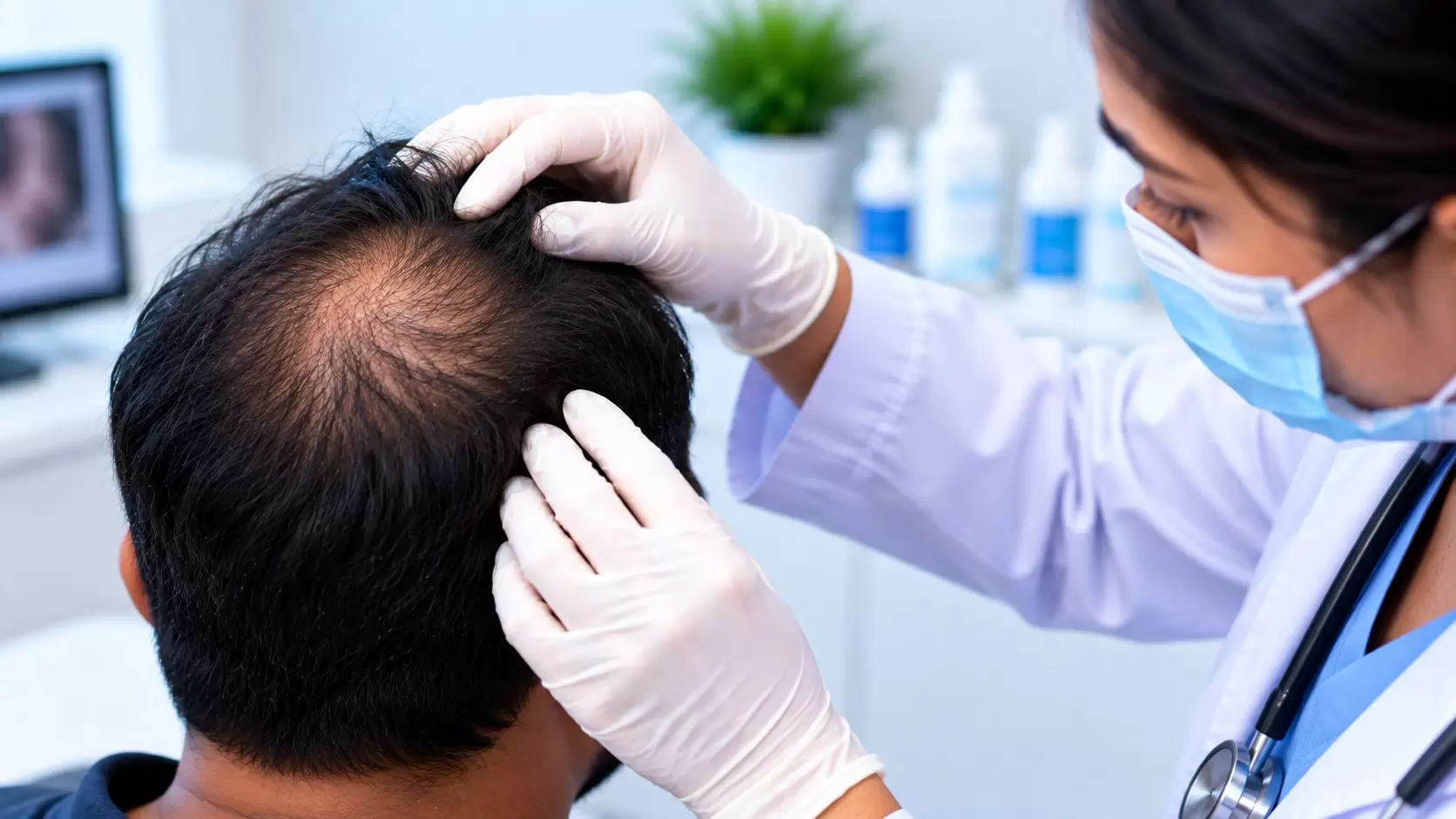
How can nutrition affect the hair cycle?
Hair follicles continuously produce new hair during the growth phase. Significant nutritional stress can interrupt this process and shift more follicles into the resting phase, leading to diffuse shedding several weeks or months later.
This pattern is often a form of telogen effluvium. Correcting an identified deficiency helps address the trigger, but visible recovery takes time because hair grows slowly.
Nutritional factors linked with hair shedding
Iron
Iron deficiency and iron-deficiency anaemia can be associated with diffuse shedding and telogen effluvium.
Protein
Inadequate protein intake and severe dietary restriction can disrupt normal hair production and trigger shedding.
Zinc
True zinc deficiency can affect hair, skin and nails. Supplementation is appropriate when deficiency is established or clinically suspected.
Calories
Crash diets and rapid weight loss can act as physiological stressors and are recognised triggers of telogen effluvium.
Iron deficiency and hair loss
Iron deficiency can produce increased hair shedding, particularly when it progresses to anaemia. A dermatologist may consider a complete blood count and ferritin when the history suggests low iron stores, heavy menstrual bleeding, restrictive diet or other risk factors.
Hair loss alone does not prove iron deficiency. Testing helps distinguish a treatable deficiency from other common causes such as pattern hair loss.
Can low protein intake cause hair shedding?
Yes. Hair is largely made of keratin, a protein, and severe protein inadequacy can affect hair production. Very restrictive diets, malnutrition and rapid weight-loss programmes can contribute to telogen effluvium.
The goal is adequate overall nutrition rather than simply adding a hair supplement. Protein needs vary with body size, age, activity, pregnancy, health conditions and total diet.
Zinc and hair health
Zinc deficiency can be associated with hair loss and other skin findings. However, routine zinc supplementation for every person with hair loss is not supported simply because zinc is involved in normal follicle biology.
If deficiency is suspected because of diet, malabsorption or other clinical factors, testing and replacement can be considered under medical guidance.
What about biotin?
Biotin is widely marketed for hair growth, but true biotin deficiency is uncommon. Taking high-dose biotin when there is no deficiency has not been established as a universal treatment for hair loss.
High-dose biotin can also interfere with certain laboratory tests. Tell your doctor about supplements you take before blood testing.
Can too many supplements make hair loss worse?
Yes. More is not always better. Excessive intake of some nutrients, including vitamin A and selenium, has been associated with hair loss. High-dose supplements can also create other health risks.
The American Academy of Dermatology advises identifying whether a deficiency actually exists before taking supplements such as iron, zinc or biotin specifically for hair loss.
Crash diets, rapid weight loss and hair shedding
Rapid weight loss combines several potential triggers: reduced calories, inadequate protein or micronutrients, and physiological stress. Increased shedding may not appear until two to four months after the diet or weight change.
This delay is why someone may be eating normally again by the time hair fall becomes obvious.
Does vitamin D cause hair loss?
Vitamin D has roles in follicle biology, and low levels have been reported in association with several hair disorders. However, an association does not mean that vitamin D deficiency is the sole cause of every case of hair loss or that high-dose vitamin D will restore hair.
Testing is most useful when there are clinical reasons to suspect deficiency or when a clinician believes the result would change management.
Which blood tests may be considered?
There is no universal “hair-loss blood panel” appropriate for everyone. Depending on symptoms and history, testing may include a complete blood count, ferritin and thyroid function, with other tests selected for specific nutritional or medical concerns.
The examination still matters. Pattern hair loss, alopecia areata and scarring alopecia cannot be diagnosed from a vitamin panel alone.
Nutrition vs other causes of hair loss
Hair thinning can result from genetics, autoimmune disease, hormonal factors, medications, scalp inflammation and many other conditions. A nutritional explanation should therefore fit the clinical pattern and history.
See Common Causes of Hair Loss and Hair Fall vs Hair Loss for a broader overview.
Will hair regrow after correcting a deficiency?
When a documented deficiency is the main trigger and the follicles are not permanently scarred, shedding can improve after the deficiency is corrected. Hair density recovers gradually because follicles need time to cycle back into active growth and produce visible length.
If thinning continues despite correction, another condition may be present at the same time and should be reassessed.
When should you see a dermatologist?
Arrange an assessment if shedding is persistent, density is progressively declining, you develop bald patches or scalp inflammation, or you are unsure whether nutrition is actually contributing. Medical review is especially useful before starting multiple high-dose supplements.
For diagnosis and an individual plan, visit Hair Loss Treatment in Chennai.
Frequently asked questions
Can nutritional deficiencies cause hair loss?
Yes. Inadequate iron, protein, zinc and selected other nutrients can contribute to diffuse hair shedding in some patients.
Can iron deficiency cause hair shedding?
Yes. Iron deficiency can be associated with telogen effluvium and diffuse shedding, particularly when iron stores are low or anaemia is present.
Does low protein intake affect hair growth?
Yes. Inadequate protein intake, severe calorie restriction and rapid weight loss can disrupt the hair cycle.
Should everyone with hair loss take biotin?
No. True biotin deficiency is uncommon, and routine high-dose biotin is not appropriate for every person with hair loss.
Should I take hair supplements without blood tests?
Not routinely. Testing and supplementation should be guided by history, examination, diet and suspected deficiencies because excess nutrients can be harmful.
Visit us in OMR
Wondering whether a deficiency is causing your hair loss? Get the cause assessed.
Book a dermatologist consultation at Ram Skin Clinic in Thoraipakkam, Chennai.
#48, Second Floor, Flat E, Best Towers,Okkiampet, Thoraipakkam, OMR,
Chennai – 600097. Above Domino’s Pizza.