
Understanding Similar Skin Conditions
Psoriasis vs Eczema
Psoriasis and eczema can both cause inflamed, dry and itchy skin, but they are different conditions. Their appearance, typical locations, associated symptoms and treatment plans can provide useful clues.
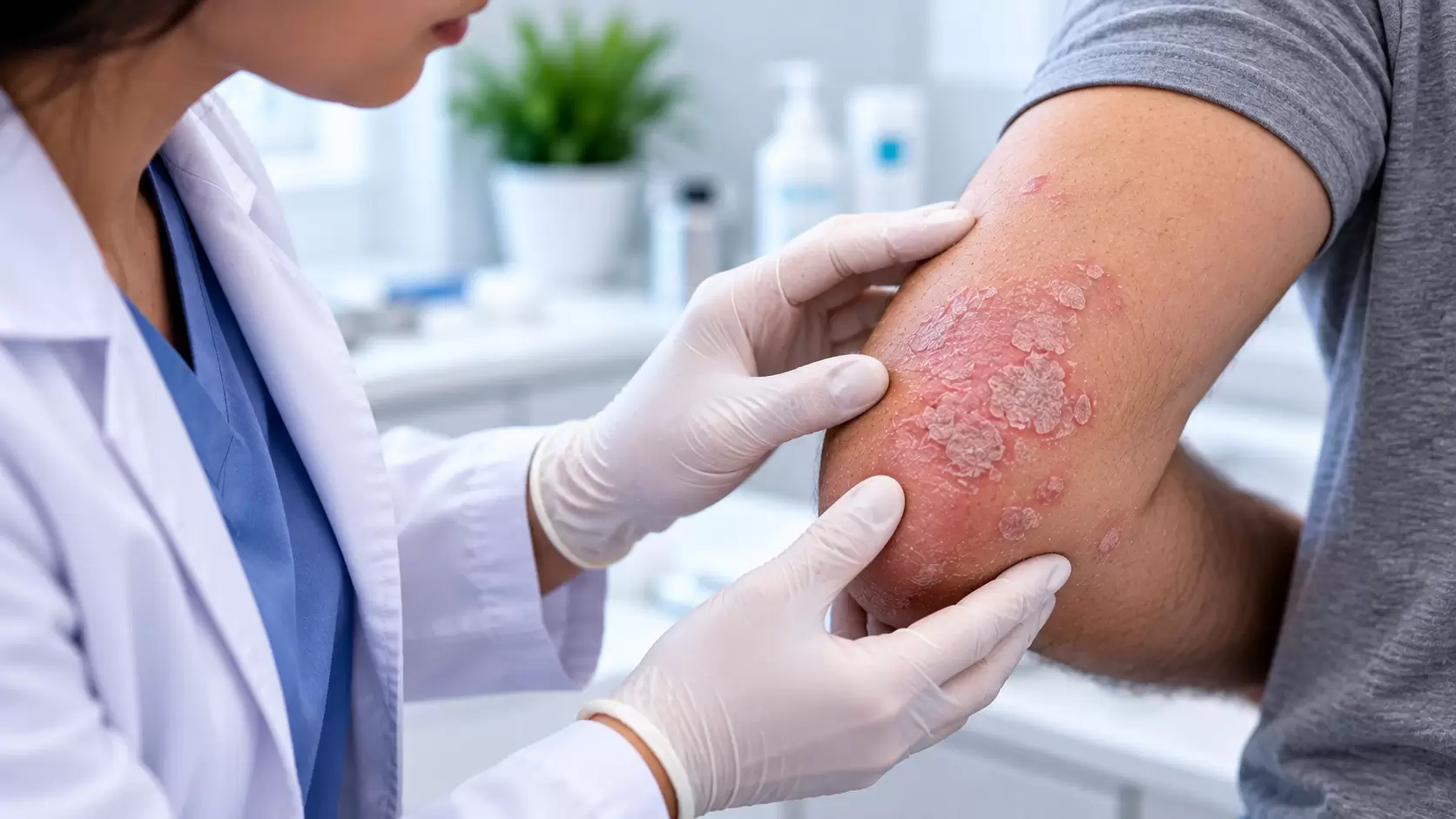
Why are psoriasis and eczema confused?
Both conditions can be chronic, recur in flares and cause dry, inflamed, scaly or itchy skin. Their appearance also varies with age, body site, severity and skin tone. A patch of psoriasis does not always look textbook, and eczema includes several forms of dermatitis rather than one single rash pattern.
The American Academy of Dermatology notes that distinguishing psoriasis from eczema can sometimes be difficult, particularly in children, although dermatologists can usually differentiate them from the pattern of the rash, degree of itch and body sites involved.
Psoriasis vs eczema: key differences
| Feature | Psoriasis | Atopic eczema |
|---|---|---|
| Typical appearance | Often well-defined, raised or thickened plaques with scale. | Dry, inflamed, itchy patches; may become cracked, thickened, weepy or crusted depending on stage and severity. |
| Itching | Can itch, burn or feel sore; itch severity varies. | Itching is a prominent feature and can be intense. |
| Common sites | Scalp, elbows, knees and lower back are common; nails may also be involved. | Distribution changes with age; flexures such as elbow and knee creases are common, particularly in older children and adults. |
| Nails | Pitting, thickening, discolouration or separation can occur. | Nail changes can occur from chronic dermatitis or scratching but classic psoriatic nail findings favour psoriasis. |
| Associated conditions | Can be associated with psoriatic arthritis. | Atopic dermatitis commonly occurs in people with an atopic tendency and may be associated with asthma or hay fever. |
| Contagious? | No. | No. |
These are patterns rather than a self-diagnosis checklist. Some people have atypical disease, and eczema and psoriasis can occasionally coexist.
How psoriasis typically looks
Plaque psoriasis—the most common form—usually produces relatively well-circumscribed plaques with scale. The colour varies with skin tone: inflammation may appear pink or red on lighter skin and violet, brown, grey or darker than surrounding skin on darker skin tones. Scale can appear white, silver or grey.
Psoriasis commonly affects the scalp, elbows, knees and lower back, although it can occur almost anywhere. Nail pitting or other nail changes and inflammatory joint symptoms can provide additional clues. Read more about early signs of psoriasis and scalp psoriasis.
How eczema typically looks
“Eczema” is an umbrella term for several forms of dermatitis. Atopic dermatitis is the most common type. It characteristically causes itchy, dry and inflamed skin, and the location and appearance can change with age.
Atopic eczema often affects skin folds such as the bends of the elbows and knees in older children and adults. Repeated rubbing and scratching can thicken the skin. During active flares, skin may become cracked or sore and, in some cases, ooze or crust.
If eczema is suspected, see our dedicated Eczema Treatment in Chennai page for assessment and treatment information.
Which condition itches more?
Itching can occur with both. Atopic dermatitis is particularly characterised by itch and can be intensely itchy. Psoriasis can also itch significantly, so itch severity alone cannot reliably diagnose the condition.
Scratching either rash can damage the skin. In psoriasis, skin injury may also provoke new lesions in susceptible people through the Koebner phenomenon. Our guide to psoriasis triggers and flare-ups explains this in more detail.
Are the treatments the same?
There is some overlap, but the treatment plans are not interchangeable. Moisturisers and appropriately selected topical corticosteroids may be used in both conditions, but the choice of medicine, potency, formulation, duration and additional therapies depend on the diagnosis, body site and severity.
Psoriasis treatment
Options can include topical corticosteroids, vitamin D analogues and other topical therapies, phototherapy, conventional systemic medicines and biologic or targeted therapies for appropriate patients.
Eczema treatment
Skin-barrier care and regular moisturising are central to atopic dermatitis management. Depending on severity, treatment may include topical anti-inflammatory medicines, phototherapy or systemic and biologic therapies.
How does a dermatologist tell the difference?
Diagnosis is usually clinical. A dermatologist examines the appearance and distribution of the rash and may inspect the scalp and nails. Questions about itch, age at onset, family history, triggers, previous treatments and associated joint symptoms can provide additional clues.
Most cases do not require a biopsy. When the diagnosis remains uncertain or another condition needs to be excluded, a small skin biopsy may sometimes be considered.
Because psoriasis can be associated with psoriatic arthritis, recurring joint pain, swelling or morning stiffness should be mentioned during the consultation.
When should you seek medical advice?
See a dermatologist if a rash is persistent, recurrent, widespread, painful, intensely itchy, affecting sleep or daily activities, or not responding as expected to routine skin care. Assessment is also useful when you are unsure whether the problem is psoriasis, eczema, fungal infection or another condition.
For psoriasis-specific evaluation, visit our Psoriasis Treatment in Chennai page.
Frequently asked questions
How can I tell eczema from psoriasis?
Psoriasis often forms more sharply defined, thicker scaly plaques, while atopic eczema is characteristically very itchy and commonly affects flexural skin. There is substantial variation, so a dermatologist should assess an uncertain rash.
Can you have psoriasis and eczema at the same time?
Yes. Although they are different conditions, features can overlap and some people can have both.
Is psoriasis more serious than eczema?
Both range from mild to severe and can significantly affect quality of life. Psoriasis can be associated with psoriatic arthritis, while atopic dermatitis can be associated with skin infection and other atopic conditions. Severity should be assessed individually.
Are psoriasis and eczema contagious?
No. Neither psoriasis nor atopic eczema is contagious.
Can a skin biopsy distinguish psoriasis from eczema?
Diagnosis is usually based on clinical examination. A biopsy may occasionally be used when the diagnosis is uncertain or another condition needs to be excluded.
Can I use the same cream for psoriasis and eczema?
Some treatments overlap, but treatment is not automatically interchangeable. The medicine, strength, formulation and duration should be selected for the diagnosis and body site.
For authoritative patient information, see the American Academy of Dermatology: Eczema vs Psoriasis, AAD Psoriasis Diagnosis & Treatment and AAD Atopic Dermatitis Diagnosis & Treatment.
Visit us in OMR
Unsure if it is psoriasis or eczema?
Book a dermatologist consultation at Ram Skin Clinic in Thoraipakkam, Chennai.
#48, Second Floor, Flat E, Best Towers,Okkiampet, Thoraipakkam, OMR,
Chennai – 600097. Above Domino’s Pizza.