
Understanding HPV Transmission
Are Warts Contagious?
Yes. Common skin warts are caused by human papillomavirus (HPV) and can spread through direct skin contact, contaminated objects and from one part of your body to another.
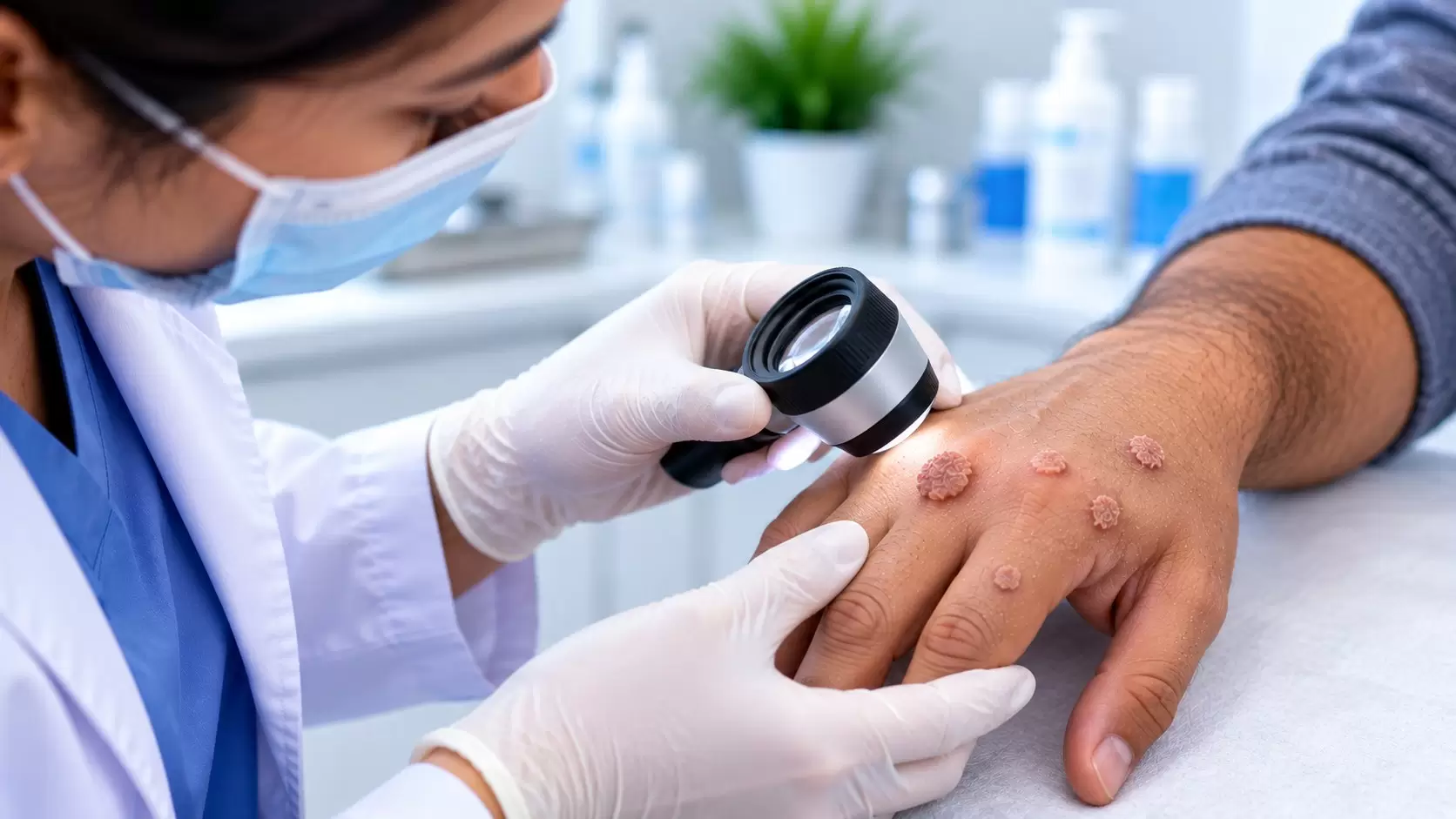
Why are warts contagious?
Warts develop when certain types of human papillomavirus infect the outer layers of skin. Dermatology guidance explains that HPV can enter through tiny cuts or other breaks in the skin and trigger extra skin-cell growth, producing the characteristic wart.
For more background on HPV and risk factors, read What Causes Warts?.
How do warts spread?
Direct skin contact
Touching a wart can transfer HPV, particularly when the recipient’s skin is damaged or softened.
Self-spread
Picking or scratching a wart and then touching another area can transfer the virus to new skin sites.
Shaving
Shaving across a wart can create micro-injuries and spread HPV along the shaved area.
Shared objects
Items such as razors, nail tools and other objects that contact affected skin can contribute to transmission.
Are all types of warts contagious?
Common, plantar and flat warts are all caused by HPV and can spread. Their appearance and preferred body sites differ, but the underlying viral nature is the same.
See our guide to Types of Warts for common, plantar, flat, filiform and periungual wart patterns.
Can plantar warts spread from floors?
Plantar warts affect the soles. HPV can persist in environments where bare feet and moist surfaces are common, so shared changing rooms, pool surrounds and communal showers are situations where protective footwear is sensible.
However, not everyone exposed to HPV develops a wart. Individual susceptibility and the condition of the skin barrier also matter.
Can you spread warts to yourself?
Yes. This is called autoinoculation. Manipulating a wart can move virus-containing skin material to nearby or distant sites.
How long after exposure can a wart appear?
Warts may not become visible immediately after HPV exposure. The incubation period can be prolonged, which makes it difficult to determine exactly when or from whom a wart was acquired.
This also means a newly visible wart does not necessarily reflect a recent exposure.
How to reduce the risk of spreading warts
Do not pick or scratch
Repeated manipulation can spread HPV to surrounding skin.
Keep personal items personal
Do not share razors, nail clippers or other grooming tools that contact a wart.
Protect your feet
Wear footwear in communal showers, changing rooms and similar shared wet areas.
Cover when appropriate
Covering a wart during activities involving repeated close contact may help limit direct exposure.
Should you cut or remove a wart at home?
Do not cut, burn or aggressively scrape a wart yourself. This can cause bleeding, secondary bacterial infection, scarring and viral spread.
Some over-the-counter wart treatments are appropriate for selected common or plantar warts, but diagnosis matters. Corns, calluses and other lesions can be mistaken for warts.
When should you see a dermatologist?
Consider dermatologist assessment if a wart is painful, bleeding, rapidly changing, spreading, recurrent, located on the face or around nails, or if you are uncertain whether the growth is actually a wart. People with diabetes, poor circulation or reduced immunity should seek medical advice before self-treating foot lesions.
For clinical assessment and treatment options, visit Warts Treatment in Chennai.
Frequently asked questions
Are warts contagious by touch?
Yes. HPV can spread through direct contact with a wart, although not every exposure results in infection.
Can warts spread through towels or razors?
HPV can spread indirectly through contaminated objects. Avoid sharing razors, nail tools and other items that directly contact affected skin.
Can I spread a wart to another part of my body?
Yes. Picking, scratching or shaving over warts can transfer HPV to other skin sites.
Are plantar warts contagious?
Yes. Plantar warts are caused by HPV. Protective footwear in communal wet areas can help reduce exposure.
Does touching a wart mean I will definitely get one?
No. Transmission depends on factors including viral exposure, small breaks in the skin and individual susceptibility.
Should I cover a wart?
Covering a wart can be useful in situations involving close skin contact or repeated friction, but it does not replace appropriate treatment or hygiene.
Medical information in this article follows current dermatologist-reviewed guidance on cutaneous HPV warts and prevention of spread.
Visit us in OMR
Warts spreading or recurring? Get them assessed.
Book a dermatologist consultation at Ram Skin Clinic in Thoraipakkam, Chennai.
#48, Second Floor, Flat E, Best Towers,Okkiampet, Thoraipakkam, OMR,
Chennai – 600097. Above Domino’s Pizza.