
Understanding Viral Warts
What Causes Warts?
Warts are benign skin growths caused by infection with certain types of human papillomavirus (HPV). The virus enters the outer skin through tiny breaks and stimulates extra growth of skin cells, producing the characteristic rough or thickened lesion.
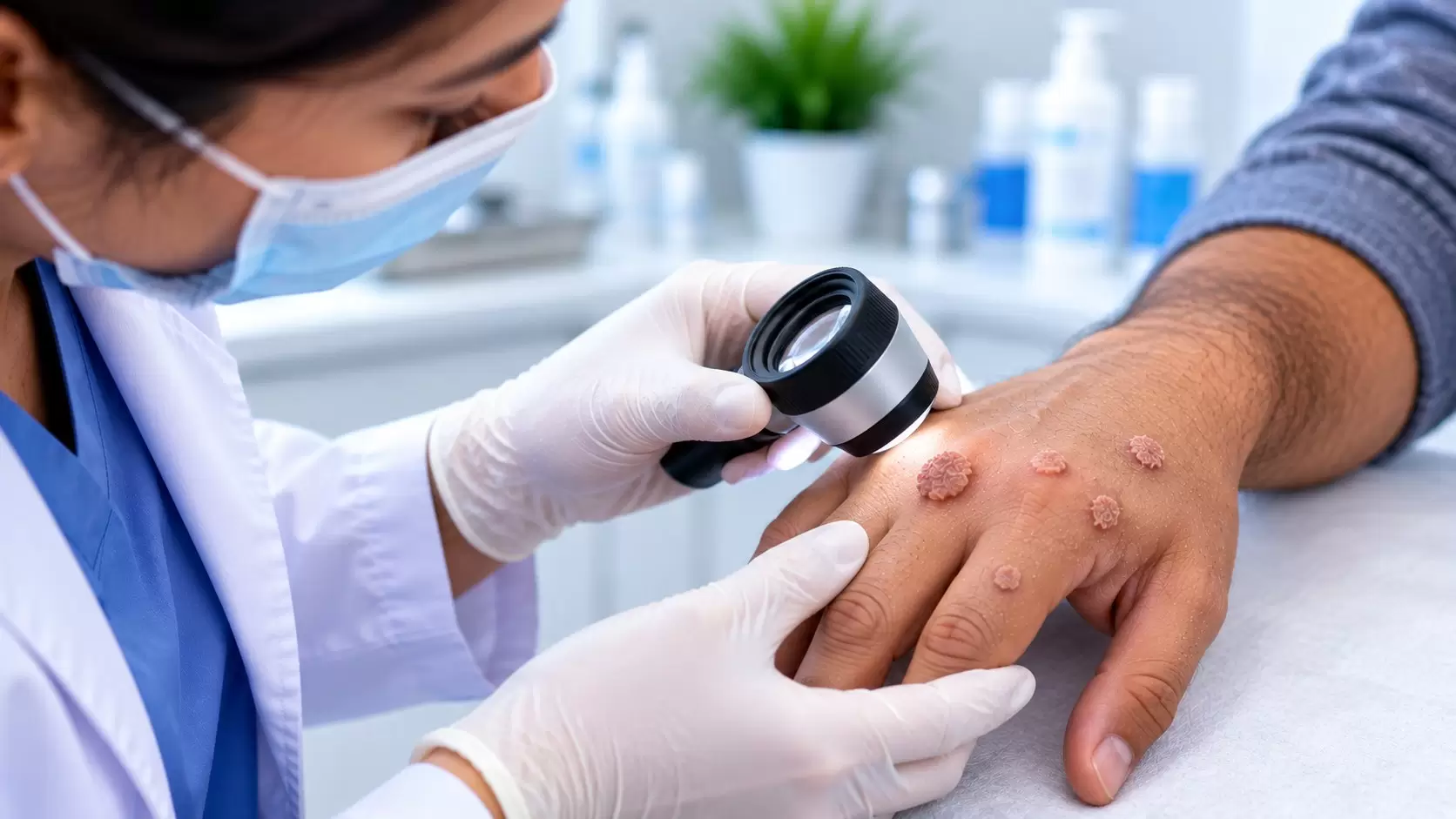
Warts are caused by HPV
The human papillomavirus family contains many virus types. DermNet explains that viral warts are caused by HPV infection of the skin and mucous membranes. The HPV types that commonly cause ordinary hand or foot warts are not necessarily the same types associated with genital disease.
After HPV enters the skin, a visible wart may take weeks or months to develop. This delay can make it difficult to identify exactly when or where exposure occurred.
How does HPV enter the skin?
The virus is more likely to establish infection where the skin barrier has been disrupted. Tiny cuts, abrasions, cracked skin, nail biting, picking and shaving can create entry points that may not be obvious.
Minor cuts
Small breaks in the skin can make viral entry easier.
Nail biting
Trauma around the nails can contribute to periungual warts and spread existing lesions.
Shaving
Shaving across a wart can create micro-injuries and potentially spread virus to adjacent skin.
Scratching or picking
Manipulating a wart can damage nearby skin and contribute to self-spread.
How do warts spread from person to person?
HPV can spread through direct contact with a wart or infected skin. Transmission is more likely when there is prolonged or repeated contact and when the recipient’s skin barrier is damaged.
Warts are contagious, but exposure does not mean that everyone will develop a wart. Individual immune response and skin-barrier factors influence whether infection becomes established.
Can you catch warts from objects and surfaces?
Indirect transmission can occur through contaminated objects or surfaces. Towels, razors, nail tools and surfaces in communal wet areas are examples of possible routes.
Plantar warts affect the soles of the feet, and communal changing areas, showers and poolside surfaces are commonly discussed as environments where exposure can occur.
Can one wart spread to other areas?
Yes. Spread from one body site to another is called autoinoculation. Picking, scratching, biting or shaving over a wart can transfer virus to nearby damaged skin.
This is one reason dermatologists generally advise against cutting or repeatedly picking at warts at home.
Why do some people get warts more easily?
Warts are especially common in children and young people, although they can occur at any age. People with weakened immune systems may develop more numerous, persistent or treatment-resistant warts.
Frequent skin trauma and activities that repeatedly expose damaged skin to contaminated surfaces may also increase the chance of infection.
Are warts caused by poor hygiene?
No. Warts are viral infections and are not simply a sign of being unclean. HPV is common, and ordinary day-to-day contact can expose people to it.
Hygiene measures can reduce opportunities for transmission, but developing a wart does not mean someone has poor personal hygiene.
Are all skin lumps warts?
No. Corns, calluses, skin tags, seborrhoeic keratoses and some other skin lesions can resemble warts. Plantar warts in particular may be confused with corns because both can become thick and painful under pressure.
The next guides in this cluster cover types of warts and warts vs corns in more detail.
Do warts always need treatment?
Many common warts eventually resolve as the immune system recognises the virus, particularly in children. However, resolution can take months or longer, and some warts persist or spread.
Treatment may be considered when warts are painful, bleeding, spreading, cosmetically troublesome, repeatedly traumatised or when the diagnosis is uncertain. Visit Warts Treatment in Chennai for an overview of dermatologist-led options.
Can warts come back after treatment?
Yes. Treatment removes or destroys visible wart tissue, but recurrence can occur if infected cells remain or the immune system has not fully controlled the virus. New warts may also develop after fresh exposure.
We will cover this separately in Why Warts Keep Coming Back.
When should a wart be checked?
Arrange dermatologist assessment if a lesion is painful, bleeding, changing rapidly, unusually pigmented, repeatedly returning, spreading extensively or if you are unsure whether it is actually a wart.
Frequently asked questions
What virus causes warts?
Warts are caused by infection with certain types of human papillomavirus, or HPV.
Are common warts contagious?
Yes. HPV can spread through direct contact, contaminated objects or surfaces, and from one part of the body to another.
Can shaving spread warts?
It can. Shaving may create small breaks in the skin and can move viral material from an existing wart to nearby skin.
Can you get warts from swimming pools?
HPV can be acquired from contaminated surfaces, and communal wet environments such as poolside areas and showers may facilitate exposure, particularly when the skin is damaged.
Are warts caused by poor hygiene?
No. Warts are caused by HPV infection. Hygiene can influence transmission risk but a wart is not evidence of poor cleanliness.
Why do children get warts often?
Warts are common in children and young people. Frequent minor skin trauma, close contact and differences in immune response can contribute.
This article follows current dermatologist-reviewed guidance from DermNet and the American Academy of Dermatology on viral warts and HPV transmission.
Visit us in OMR
Persistent or spreading warts? Get them assessed.
Book a dermatologist consultation at Ram Skin Clinic in Thoraipakkam, Chennai.
#48, Second Floor, Flat E, Best Towers,Okkiampet, Thoraipakkam, OMR,
Chennai – 600097. Above Domino’s Pizza.