
Recognising Common Viral Warts
Types of Warts
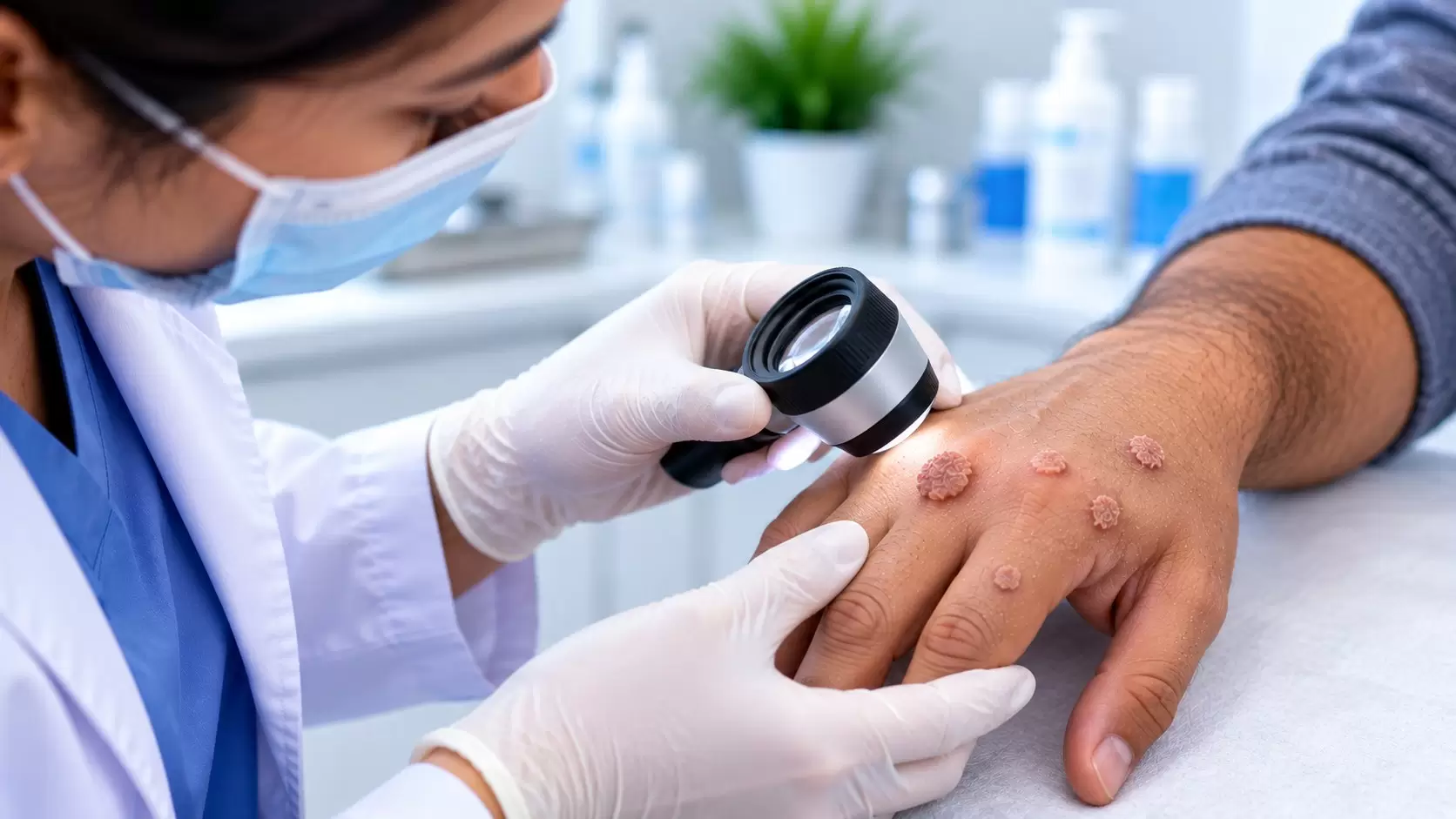
Warts caused by human papillomavirus can look different depending on where they occur. Common warts are usually rough and raised, plantar warts grow on the soles, flat warts are smoother and smaller, and periungual warts develop around the nails.
Why do warts look different?
Warts are caused by HPV infection, but their appearance is influenced by the virus type, body site, skin thickness, pressure and the person’s immune response. A wart on a finger can therefore look quite different from one on the sole of the foot.
For the underlying cause and transmission, read What Causes Warts?.
1. Common warts (verruca vulgaris)
Common warts are firm, raised papules with a rough or papillomatous surface. They frequently occur on the hands, fingers, knees and elbows, although they can develop elsewhere.
Tiny dark dots may sometimes be visible within a wart. These represent thrombosed capillaries rather than “roots.”
2. Plantar warts on the soles
Plantar warts develop on the soles of the feet. Because body weight pushes them inward, they may appear flatter than warts elsewhere and can become surrounded by thickened skin.
They can be painful while standing or walking, particularly when located on a weight-bearing area. Their appearance may overlap with a corn or callus, which is why persistent painful lesions sometimes need dermatologist assessment.
3. Mosaic warts
Mosaic warts are groups of plantar warts that cluster together into a larger plaque-like area. They can be more extensive than a single plantar wart and may be difficult to treat because multiple lesions are present.
4. Flat warts (verruca plana)
Flat warts are usually smaller, smoother and less raised than common warts. They may occur in larger numbers and often affect the face, backs of the hands or shins.
Shaving can contribute to their spread along areas of minor skin trauma.
5. Filiform warts
Filiform warts have narrow, finger-like or thread-like projections. They often develop around the face, eyelids, lips or neck.
Because of their location and shape, they can be repeatedly irritated during shaving, washing or grooming.
6. Periungual warts
Periungual warts occur around the fingernails or toenails. They can become thick, irregular and fissured, and larger lesions may distort the nail or affect the surrounding nail fold.
Nail biting and picking can damage the skin around the nail and may encourage spread.
What about genital warts?
Genital warts are also caused by HPV, but they involve anogenital skin and are clinically distinct from ordinary hand and foot warts. They require appropriate sexual-health assessment rather than self-treatment with products intended for common cutaneous warts.
For confidential evaluation of genital lesions, see STD Consultation in Chennai.
Wart or corn?
Plantar warts and corns can both produce thickened, painful areas on the foot. Dermatologists distinguish them by examining the surface pattern, skin lines, vascular dots and the relationship between pain and pressure.
Do different wart types need different treatment?
Treatment depends on the wart’s location, size, number, duration and symptoms as well as the patient’s age and health. Options can include topical keratolytic treatment, cryotherapy and selected procedural approaches.
Some sites require additional care. For example, periungual treatment must protect the nail apparatus, while plantar lesions may need management of overlying thick skin.
See Warts Treatment in Chennai for the clinic’s treatment overview.
When should a wart be examined?
Arrange assessment if you are uncertain that a lesion is a wart, it is changing rapidly, bleeding without clear trauma, unusually pigmented, painful, spreading extensively or repeatedly returning.
Frequently asked questions
What are the main types of warts?
Common types include common warts, plantar warts, mosaic warts, flat warts, filiform warts and periungual warts.
What type of wart grows on the foot?
A wart on the sole is called a plantar wart. Groups of clustered plantar warts are sometimes called mosaic warts.
What are the small flat warts on the face?
Flat warts are smooth, relatively flat papules that can occur in larger numbers on the face and other sites.
Can warts grow around fingernails?
Yes. Periungual warts grow around the nail folds and can sometimes affect nail growth when extensive.
Are the black dots in a wart roots?
No. The dark dots often visible in warts are small thrombosed blood vessels, not roots.
Can a corn look like a plantar wart?
Yes. Both can create thickened painful skin on the foot, and clinical examination may be needed when the diagnosis is uncertain.
This article follows current dermatologist-reviewed DermNet and American Academy of Dermatology guidance on cutaneous wart types and appearance.
Visit us in OMR
Not sure what type of wart you have? Get it checked.
Book a dermatologist consultation at Ram Skin Clinic in Thoraipakkam, Chennai.
#48, Second Floor, Flat E, Best Towers,Okkiampet, Thoraipakkam, OMR,
Chennai – 600097. Above Domino’s Pizza.