Raised Scar Differences
Keloid vs Hypertrophic Scar: What’s the Difference?
Both keloids and hypertrophic scars are raised scars caused by excess scar tissue, but their growth pattern and clinical behaviour are different.
Why are these scars often confused?
Keloids and hypertrophic scars both develop from an exaggerated wound-healing response and can look thick, firm and raised. They may also itch, feel tender or cause cosmetic concern.
The most useful clinical clue is whether the scar remains inside the original injury or grows beyond it.
Keloid vs hypertrophic scar: key differences
What does a keloid look like?
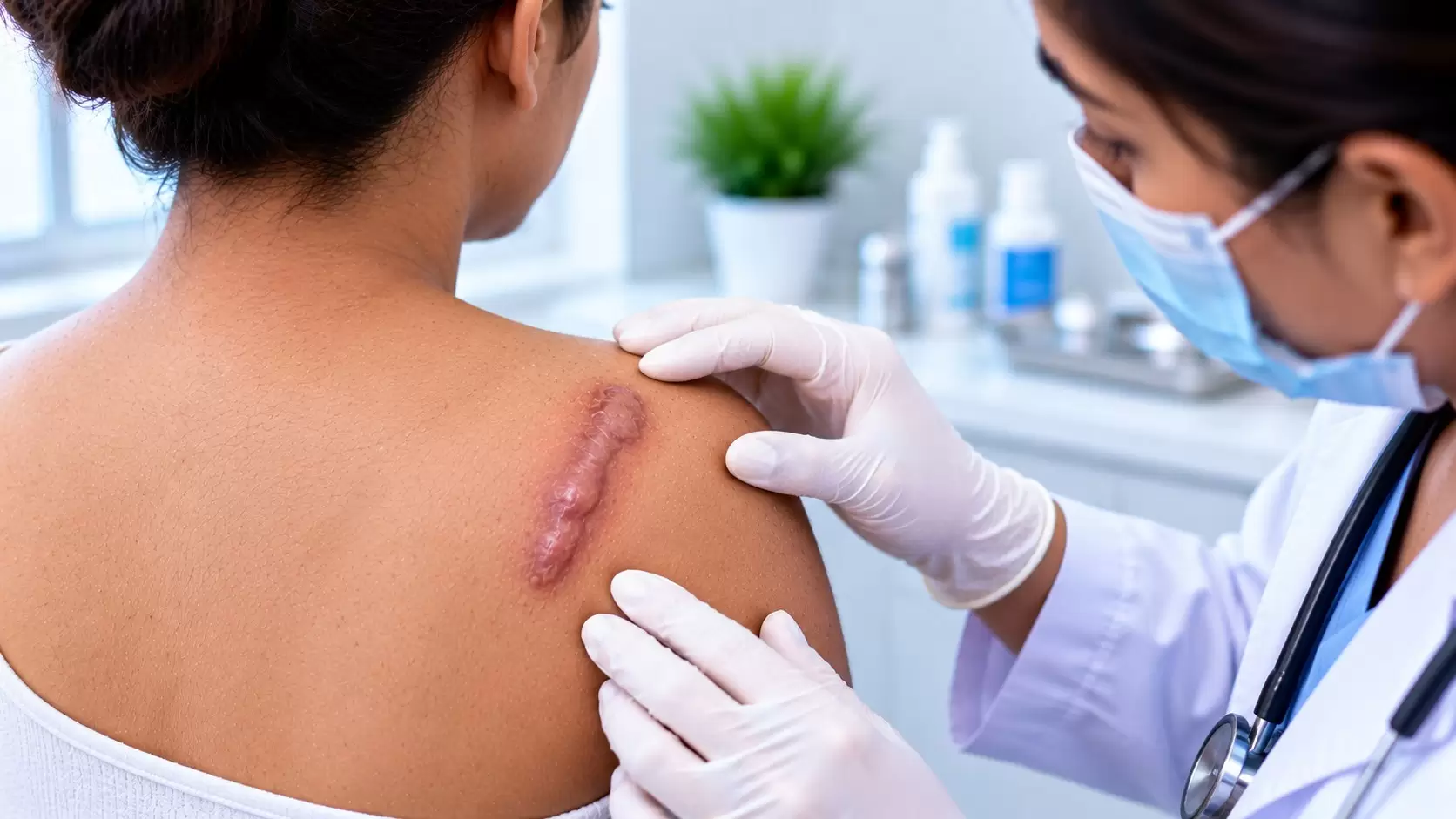
A keloid is a firm raised scar that grows beyond the limits of the original wound. Its surface can be smooth and shiny, and colour may range from pink or red to brown or darker than the surrounding skin.
Keloids can continue enlarging over months or years. Common sites include the earlobes, chest, shoulders, upper back, cheeks and jawline.
Learn more about triggers in What Causes Keloids?.
What does a hypertrophic scar look like?
A hypertrophic scar is also raised and firm, but it remains confined to the original wound. It commonly becomes noticeable relatively soon after injury and can initially look red or pink.
Unlike a keloid, a hypertrophic scar may gradually become flatter, softer and less noticeable as scar remodelling continues.
Do they develop after the same injuries?
Both can occur after surgery, burns, cuts, acne or other skin trauma. Hypertrophic scars are particularly associated with wounds under tension and deeper injuries such as burns.
Keloids depend strongly on individual susceptibility. They can arise after surprisingly small injuries such as ear piercing, acne lesions, injections or insect bites.
Can both scars itch or hurt?
Yes. Either type can cause itching, tenderness, pain or a tight sensation. Symptoms do not by themselves distinguish a keloid from a hypertrophic scar.
Scars crossing joints or areas of movement may also interfere with mobility, particularly when thick or contracted.
Why the distinction matters for treatment
Scar type influences treatment planning and expectations. Hypertrophic scars may improve naturally and can respond to measures such as silicone therapy, pressure, corticosteroid treatment or selected procedural approaches.
Keloids often require a combination strategy because they have a stronger tendency to recur. Options may include intralesional corticosteroids, cryotherapy, silicone, pressure therapy, laser-based approaches and carefully selected surgery combined with recurrence-prevention measures.
Can a scar change from hypertrophic to keloid?
These are considered distinct patterns of abnormal scarring rather than stages of one condition. A scar that remains within the original wound is hypertrophic; growth beyond those boundaries supports a keloid diagnosis.
When the original wound margins are difficult to identify, clinical history and serial photographs can help determine whether the scar has expanded.
How does a dermatologist tell the difference?
Diagnosis is usually clinical. The dermatologist considers the original injury, when the scar began to grow, whether it crossed the wound boundaries, body location, symptoms, previous scar history and family history.
A biopsy is not routinely required for a typical scar but may be considered when the appearance is unusual or another skin growth needs to be excluded.
When should a raised scar be checked?
Seek assessment if a scar continues to enlarge, becomes increasingly painful or itchy, restricts movement, repeatedly becomes irritated, or if you are unsure whether a raised growth is actually a scar.
Evaluation is also useful before elective surgery or piercing if you have previously developed keloids.
For individual assessment and treatment planning, visit Keloid Treatment in Chennai.
Frequently asked questions
What is the main difference between a keloid and a hypertrophic scar?
A keloid grows beyond the boundaries of the original wound, while a hypertrophic scar remains within the original wound margins.
Can hypertrophic scars flatten over time?
Yes. They may gradually flatten and become less prominent, whereas keloids are less likely to regress spontaneously.
Which is more likely to come back after treatment?
Keloids generally have a greater tendency to recur, particularly when removed surgically without additional preventive treatment.
Can both keloids and hypertrophic scars itch or hurt?
Yes. Both can be itchy, tender or painful, especially while active or under tension.
Can a dermatologist tell the difference without a biopsy?
Often yes. The history and growth pattern are usually sufficient. Biopsy may be considered if the diagnosis is uncertain.
Medical guidance checked against current American Academy of Dermatology and DermNet guidance.
Visit us in OMR
Not sure what type of raised scar you have? Get it assessed.
Book a dermatologist consultation at Ram Skin Clinic in Thoraipakkam, Chennai.
#48, Second Floor, Flat E, Best Towers,Okkiampet, Thoraipakkam, OMR,
Chennai – 600097. Above Domino’s Pizza.