Managing Atopic Dermatitis
Eczema Treatment Options
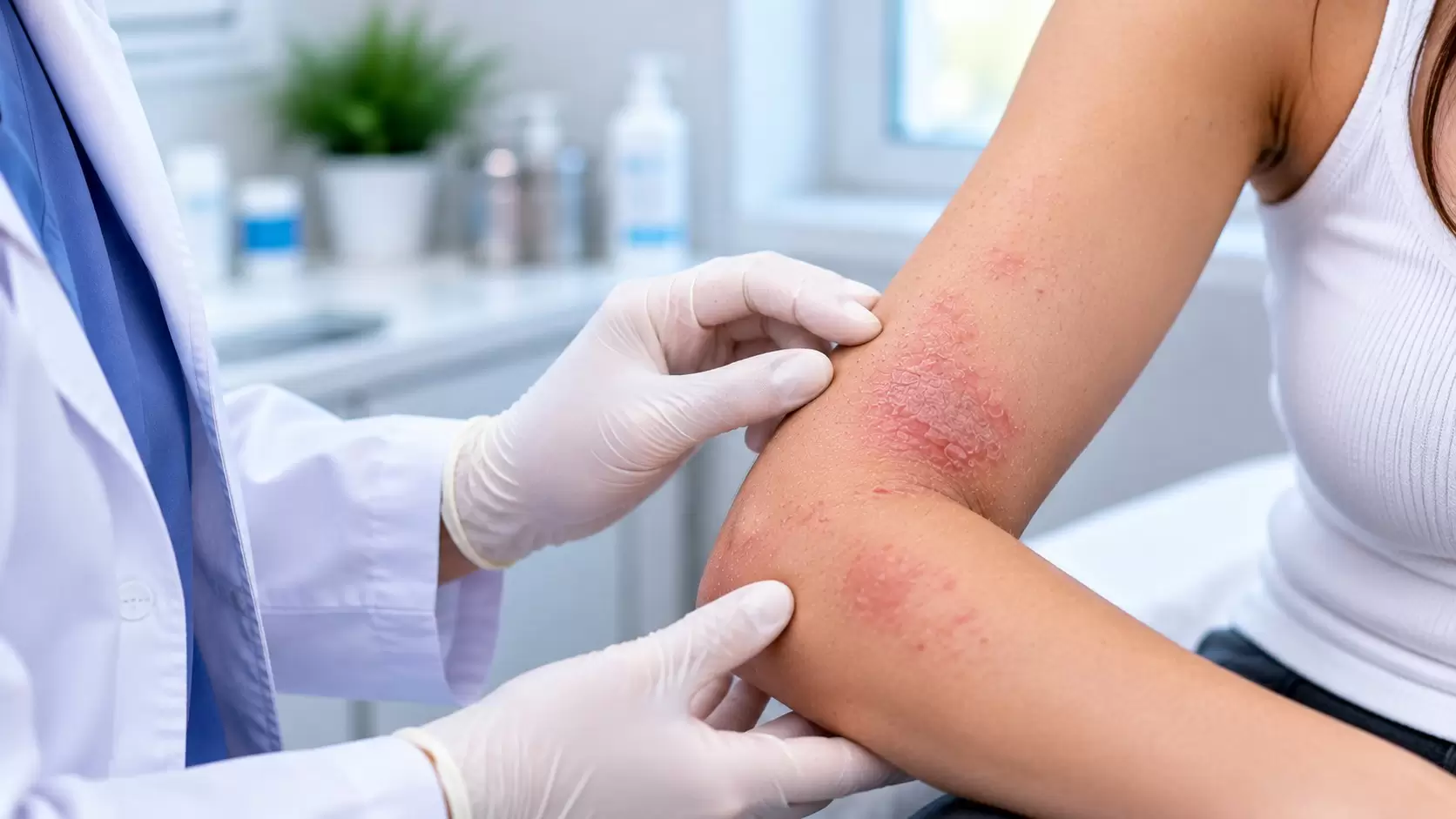
Eczema treatment is tailored to disease severity, age, body site, frequency of flares and response to previous therapy. Most plans combine daily skin-barrier care with medicines that control inflammation.
There is no single eczema treatment
Atopic dermatitis is a chronic inflammatory condition with periods of improvement and flare. Treatment therefore aims to control active inflammation and itch, restore the skin barrier, reduce future flares and manage complications such as infection.
The appropriate plan depends on how much skin is affected, the severity and location of eczema, the patient’s age and medical history, and how the disease has responded to previous treatment.
For an overview of the condition, see Eczema Causes, Symptoms & Types.
1. Moisturisers and skin-barrier care
Moisturisers or emollients are a foundation of atopic dermatitis management. They reduce dryness and help support the damaged skin barrier. The American Academy of Dermatology strongly recommends moisturisers for adults with atopic dermatitis, while NHS guidance advises frequent use even when eczema improves.
Moisturise regularly
Apply an appropriate fragrance-free emollient regularly and after bathing or washing, particularly when the skin feels dry.
Use gentle cleansing
Harsh soaps and fragranced washes can aggravate eczema-prone skin. A gentle cleanser or suitable emollient wash may be preferable.
Avoid overheating
Heat and sweating can intensify itching in some people. Comfortable temperatures and breathable clothing can help.
Know your triggers
Reduce relevant irritants or triggers without assuming that every flare is caused by allergy. See Eczema Triggers.
2. Topical corticosteroids
Topical corticosteroids are established first-line anti-inflammatory medicines for eczema flares. Different strengths and formulations are selected according to the severity, age and body site. Delicate areas such as the face and skin folds generally require particular care.
When prescribed and used correctly, topical corticosteroids can effectively reduce inflammation and itching. Problems are more likely with inappropriate potency, excessive duration or use on the wrong body site, which is why the treatment plan should specify where, how often and for how long to use them.
3. Non-steroid topical medicines
Dermatologists have several steroid-sparing topical options. Topical calcineurin inhibitors such as tacrolimus and pimecrolimus reduce inflammation and can be useful in selected patients, particularly at sensitive sites where repeated corticosteroid use may be undesirable.
Current AAD guidelines also include newer topical therapies for atopic dermatitis, including PDE-4 inhibitors, topical JAK inhibitors and aryl hydrocarbon receptor agonists. Availability, approved ages and indications differ by country, so the specific medicine should be selected by the treating clinician.
4. Wet-wrap therapy and dressings
Wet-wrap therapy may be used during significant flares under appropriate guidance. Moisturiser or prescribed topical medication is applied to the affected skin, followed by a damp layer and then a dry outer layer. This can improve hydration, reduce scratching and increase the effectiveness of topical treatment.
Because wraps can increase absorption of topical medicines, they should be used as directed, especially when corticosteroids are involved. They are generally avoided over infected eczema unless a clinician specifically advises otherwise.
5. Phototherapy for more extensive eczema
Phototherapy uses medically supervised ultraviolet light and may be considered when eczema is widespread or does not respond adequately to topical treatment. Narrowband UVB is one commonly used form.
Phototherapy is different from ordinary sun exposure or tanning beds. It uses controlled doses and requires repeated sessions under medical supervision. The AAD conditionally recommends phototherapy for appropriate patients with atopic dermatitis.
6. Biologics and targeted systemic medicines
Moderate-to-severe atopic dermatitis that remains uncontrolled despite appropriate topical treatment may require medicine that works throughout the body. Modern options include biologic therapies and oral JAK inhibitors, alongside selected conventional systemic immunosuppressive medicines.
AAD adult guidelines strongly recommend several systemic options, including biologic and JAK-targeted therapies, while conventional medicines such as ciclosporin, methotrexate, azathioprine and mycophenolate may be considered in selected cases. Choice depends on age, disease severity, other health conditions, pregnancy considerations, monitoring requirements and local availability.
7. Treating infected eczema
Not every weeping or crusted flare requires antibiotics, but eczema can develop bacterial, viral or fungal infection. Treatment depends on the type and severity of infection.
Rapidly worsening painful eczema with blisters, sores, fever or feeling unwell needs prompt assessment because eczema herpeticum is a potentially serious viral complication. See Is Eczema Contagious? for more about infection risk.
What about antihistamines, diets and natural remedies?
Antihistamines do not treat the underlying skin inflammation of atopic dermatitis and are not a routine solution for eczema itch, although selected sedating medicines may sometimes be used when sleep is severely disturbed.
Broad elimination diets should not be started simply because someone has eczema. Food allergy can coexist with atopic dermatitis, but most eczema is not caused by one food. Unnecessary restriction can create nutritional problems, especially in children.
“Natural” does not automatically mean safe. Herbal or unregulated products can irritate sensitive skin, trigger contact dermatitis or contain undisclosed active ingredients. Discuss complementary products with a clinician if eczema is persistent or severe.
How treatment changes with eczema severity
Mild eczema
Skin-barrier care and appropriately selected topical anti-inflammatory treatment may be sufficient for limited disease.
Frequent flares
A proactive maintenance strategy may be considered for repeatedly affected areas after the flare is controlled.
Moderate eczema
Stronger or additional topical therapies, wet wraps or specialist review may be needed when basic measures are insufficient.
Severe eczema
Phototherapy, biologics or other systemic therapies may be considered when disease is widespread or significantly affects sleep and quality of life.
When should you see a dermatologist?
Dermatologist assessment is appropriate when the diagnosis is uncertain, eczema is widespread or recurrent, sleep is regularly disrupted, infection is suspected, treatment causes side effects, or symptoms remain uncontrolled despite appropriate skin care and topical therapy.
For local consultation information, visit Eczema Treatment in Chennai.
Frequently asked questions
What is the first-line treatment for eczema?
Regular moisturisers and appropriate topical anti-inflammatory treatment are central to eczema management. Topical corticosteroids are established first-line medicines for active inflammation.
Are steroid creams safe for eczema?
Topical corticosteroids are effective and widely used. Safety depends on choosing the appropriate strength, body site, amount and duration and following medical instructions.
Are there non-steroid creams for eczema?
Yes. Options include topical calcineurin inhibitors and several newer non-steroid topical medicines. The appropriate choice depends on age, body site, severity and local availability.
Can severe eczema be treated without creams alone?
Yes. Phototherapy, biologic medicines, oral targeted therapies and selected conventional systemic medicines may be considered for moderate-to-severe disease that remains uncontrolled.
Do antibiotics treat eczema?
Antibiotics do not treat the underlying eczema. They are used when an appropriate bacterial infection requires treatment.
Can eczema be cured permanently?
There is currently no guaranteed permanent cure for atopic dermatitis, but modern treatment can control inflammation, reduce itching and flares, and improve quality of life.
For authoritative treatment guidance, see the American Academy of Dermatology clinical guideline, DermNet and NHS.
Visit us in OMR
Need an eczema treatment plan?
Book a dermatologist consultation at Ram Skin Clinic in Thoraipakkam, Chennai.
#48, Second Floor, Flat E, Best Towers,Okkiampet, Thoraipakkam, OMR,
Chennai – 600097. Above Domino’s Pizza.