
Understanding Eczema
Is Eczema Contagious?
No. Atopic eczema is an inflammatory skin condition and cannot be caught from or passed to another person through touching, hugging, sharing a home or ordinary day-to-day contact.
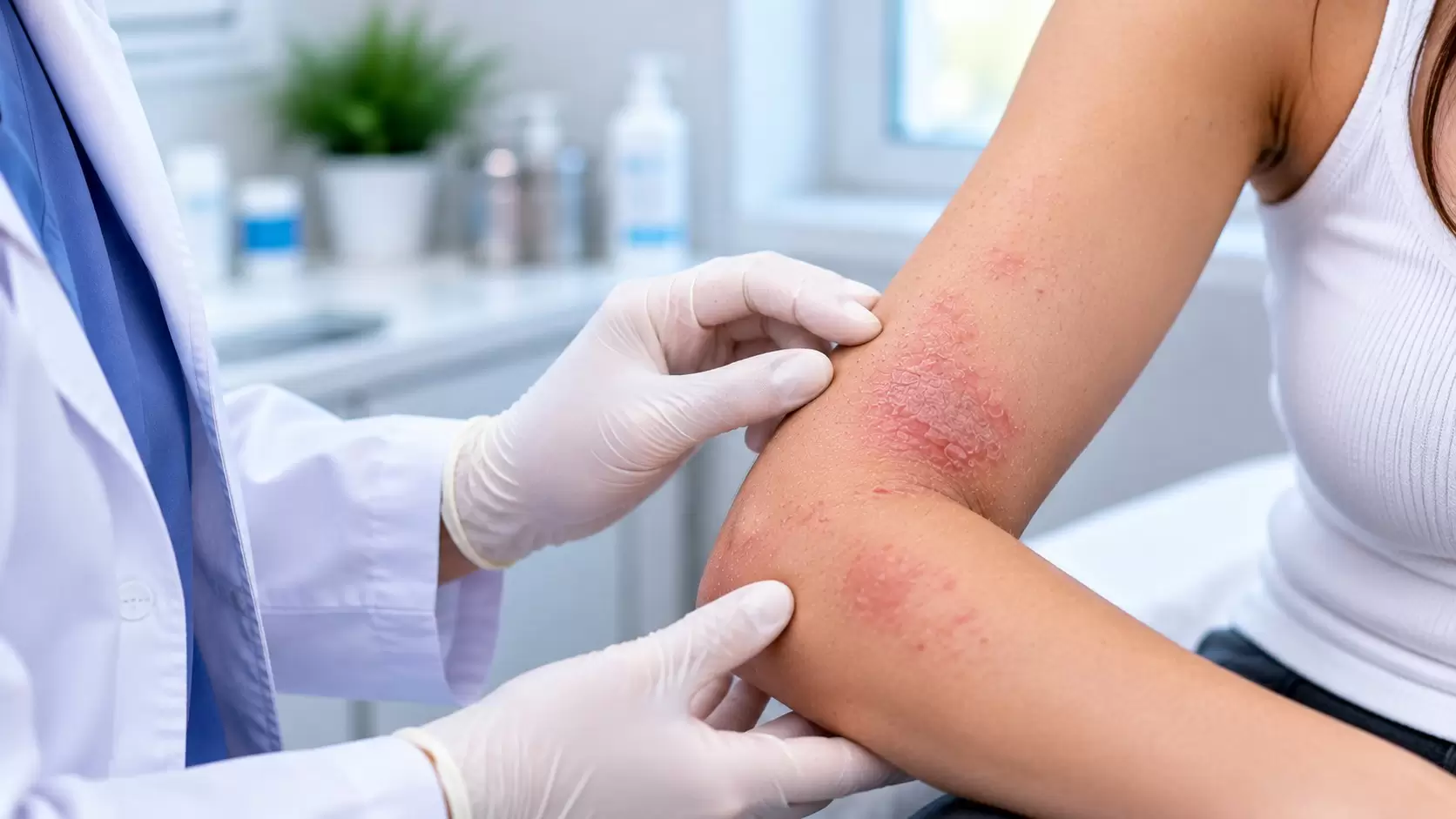
You cannot catch eczema
Atopic dermatitis develops through a combination of skin-barrier dysfunction, immune activity, genetics and environmental influences. It is not an infection and does not spread from one person to another.
That means ordinary contact with someone who has eczema does not give you eczema. Children with atopic dermatitis can attend school and participate in normal social activities based on the eczema itself.
For more background, read Eczema Causes, Symptoms & Types.
Why can eczema look infectious?
Active eczema can become red or discoloured, swollen, cracked, raw, crusted or weepy. These changes can make it look as though the condition should be contagious even when there is no infection.
Scratching can also create open areas and crusting. The appearance alone does not mean another person can “catch” the eczema.
Why people with eczema get more skin infections
Atopic dermatitis weakens the skin’s protective barrier. Dryness and scratching create cracks that make it easier for bacteria, viruses and other germs to enter. The American Academy of Dermatology notes that people with atopic dermatitis are more prone to skin infections.
Bacterial infection
Staphylococcal infection can cause yellow or honey-coloured crusting, pus-filled spots, pain, warmth or worsening inflammation.
Eczema herpeticum
Herpes simplex can cause a serious infection in eczema-prone skin, with clusters of painful blisters or sores and sometimes fever or feeling unwell.
Molluscum contagiosum
People with atopic dermatitis have an increased risk of this viral skin infection, which produces small bumps and can spread through contact.
Fungal infection
Fungal rashes can occur alongside eczema and may resemble dermatitis. Correct diagnosis matters because antifungal and eczema treatments are different.
Signs eczema may be infected
Contact a clinician if eczema becomes painful, warm, swollen, suddenly worse, starts leaking fluid, develops pus-filled spots, or forms yellow or golden crusts. Fever or feeling generally unwell increases the need for prompt assessment.
Read more about Skin Infection Treatment in Chennai.
Can you share towels, clothes or personal items?
Eczema itself is not transmitted through towels, clothing or bedding. However, when a contagious skin infection is present, hygiene precautions may be appropriate depending on the infection.
If a person with eczema develops a suspected bacterial, viral or fungal infection, follow the clinician’s advice on treatment and reducing transmission. Do not assume every crusted or weeping eczema patch is harmless.
Eczema versus contagious fungal infection
Ringworm is a fungal infection and can spread between people, while eczema is inflammatory and non-contagious. Because both can produce itchy, scaly patches, confusing them is common.
A ring-shaped rash does not automatically mean fungus; discoid eczema can also form round patches. If the diagnosis is uncertain, fungal skin scrapings can help. See Eczema vs Fungal Infection.
Can eczema run in families?
Yes—but inherited susceptibility is different from contagious spread. Atopic dermatitis is more common in people with a personal or family history of atopic conditions such as eczema, asthma or hay fever.
A parent and child can therefore both have eczema because of shared genetic susceptibility and environmental factors, not because one transmitted the eczema to the other.
Managing eczema without unnecessary isolation
There is no medical reason to avoid normal physical contact with someone solely because they have eczema. Supportive skin care, appropriate treatment and reducing personal triggers are more useful than social separation.
Regular moisturising and controlling inflammation also help maintain the skin barrier and may reduce complications. See Eczema Triggers for common factors that can worsen symptoms.
When should you see a dermatologist?
Arrange assessment if an eczema-like rash is persistent, recurrent or difficult to control, if the diagnosis is uncertain, or if you suspect infection. Treatment for an infection is different from treatment for the underlying eczema, and both may need attention.
For dermatologist assessment and management, visit Eczema Treatment in Chennai.
Frequently asked questions
Can eczema spread from person to person?
No. Atopic eczema is not contagious and cannot be passed from one person to another through normal contact.
Can I touch or hug someone with eczema?
Yes. Eczema itself is not infectious. Normal physical contact does not transmit atopic dermatitis.
Why does eczema sometimes look infected?
Inflamed eczema can be swollen, cracked, crusted or weepy. These changes can resemble infection, and eczema-damaged skin can also develop a genuine secondary infection.
Can infected eczema be contagious?
The eczema itself remains non-contagious, but some infections occurring in eczema-prone skin—such as herpes simplex, molluscum contagiosum or certain fungal infections—can spread.
Does eczema run in families?
Yes. Genetic susceptibility contributes to atopic dermatitis, but this is inherited risk rather than contagious transmission.
When should infected eczema be assessed urgently?
Seek prompt medical assessment for rapidly worsening painful eczema, blisters or sores, significant crusting or pus, fever, or feeling generally unwell.
For authoritative information, see the American Academy of Dermatology, DermNet and NHS.
Visit us in OMR
Concerned about eczema or infection?
Book a dermatologist consultation at Ram Skin Clinic in Thoraipakkam, Chennai.
#48, Second Floor, Flat E, Best Towers,Okkiampet, Thoraipakkam, OMR,
Chennai – 600097. Above Domino’s Pizza.