
Understanding Eczema
Eczema Causes, Symptoms & Types
Eczema is a group of inflammatory skin conditions that cause dry, itchy and inflamed skin. Atopic dermatitis is the most common type, but several different forms of eczema can produce similar-looking rashes.
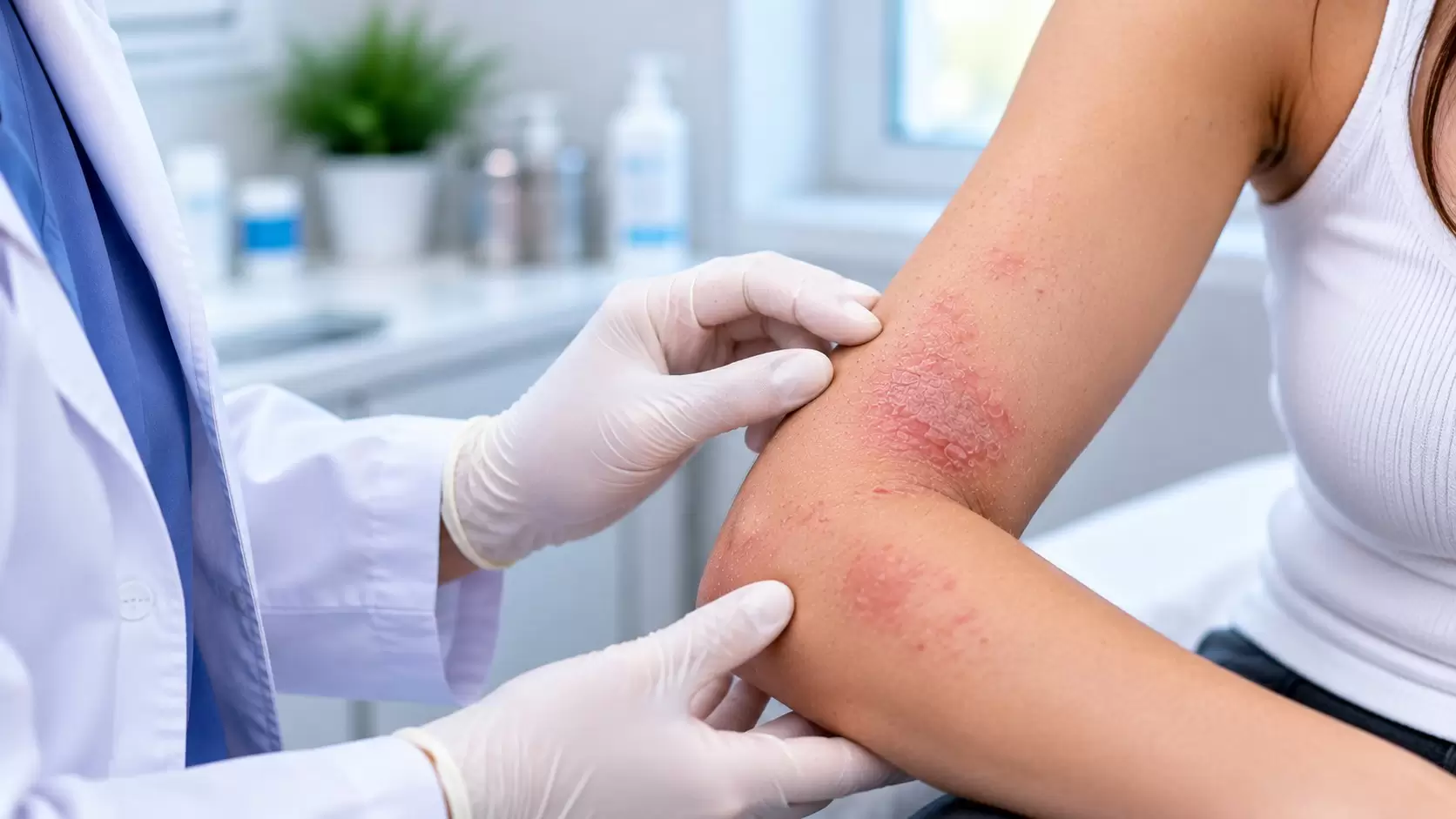
What is eczema?
Eczema is an umbrella term for several conditions that cause inflamed, itchy and often very dry skin. Atopic dermatitis, also called atopic eczema, is the most common type. Other forms include contact dermatitis, dyshidrotic eczema, hand eczema, nummular eczema, neurodermatitis and stasis dermatitis.
Atopic dermatitis can begin at any age but often starts in childhood. It is chronic and tends to alternate between periods when symptoms are relatively quiet and periods of worsening known as flares. It cannot be passed from one person to another. citeturn0search6
What causes atopic eczema?
There is no single cause. Current evidence points to a complex interaction between genetics, the immune system, the skin barrier and environmental exposures. In atopic dermatitis, an impaired skin barrier can lose moisture more easily and allow irritants, allergens and microbes to interact with the skin, contributing to inflammation. citeturn0search1turn0search5
Skin-barrier dysfunction
The outer skin barrier does not retain moisture or protect against environmental exposures as effectively, contributing to dryness and sensitivity.
Immune activity
Abnormal inflammatory immune responses are an important part of atopic dermatitis and contribute to itch, redness or discolouration and recurrent flares.
Genetic tendency
Atopic dermatitis is more common in people with a personal or family history of eczema, asthma or hay fever, although it can occur without that history.
Environmental factors
Climate, irritants, fragrances, detergents, some fabrics and other exposures can aggravate susceptible skin. These are often triggers rather than the fundamental cause.
Common eczema symptoms
Itching is a hallmark of atopic dermatitis and may begin before a visible rash. Skin can become dry, scaly, inflamed, cracked or thickened. During active flares, scratching can produce raw skin, fluid leakage or crusting. Long-standing scratching can cause thickened, leathery skin known as lichenification. citeturn0search2
Eczema does not look identical on every skin tone. Inflamed areas may appear red or pink on lighter skin and brown, purple, grey or darker than surrounding skin on darker skin tones. Areas can also become lighter or darker after inflammation settles. citeturn0search2turn0search7
Where does eczema appear?
The distribution often changes with age. Babies and young children commonly develop atopic dermatitis on the cheeks, forehead or scalp, and it can also affect the trunk and limbs. In older children, itchy patches commonly involve the elbows, knees, neck, wrists and ankles. Adults may develop very dry, irritated skin in several areas, including the hands, feet and around the eyes. citeturn0search2
Because location and appearance overlap with psoriasis and other rashes, persistent disease should be assessed rather than diagnosed from location alone. See Psoriasis vs Eczema for a detailed comparison.
Different types of eczema
Atopic dermatitis
The most common form. It causes chronic or recurrent dry, itchy and inflamed skin and often begins during childhood.
Contact dermatitis
Develops when skin reacts to an irritant or allergen. Identifying and avoiding the responsible exposure is an important part of management.
Dyshidrotic eczema
Characteristically causes intensely itchy small blisters, particularly on the hands, fingers or feet.
Hand eczema
Can cause dry, cracked, thickened or inflamed hands and may be influenced by repeated wet work, irritants, allergy or atopic tendency.
Nummular eczema
Produces round or coin-shaped itchy patches and can sometimes be confused with fungal infection or psoriasis.
Stasis dermatitis
Usually affects the lower legs and is associated with problems in venous circulation rather than the same mechanisms as atopic dermatitis.
The American Academy of Dermatology recognises several distinct eczema types, and the correct diagnosis matters because management differs. citeturn0search8
What can trigger an eczema flare?
People with atopic dermatitis have sensitive, reactive skin, and triggers vary from person to person. Common examples include fragranced skin-care products, harsh soaps or detergents, wool or rough clothing, temperature changes, sweating and stress. Some people cannot identify a specific trigger. citeturn0search3
A trigger is not necessarily the cause of eczema. Atopic dermatitis can exist because of underlying barrier and immune abnormalities, while a particular exposure may simply make an established condition flare.
Is eczema caused by allergy?
Atopic dermatitis is associated with an atopic tendency, and people with the condition are more likely to have asthma, hay fever or food allergy. However, the AAD notes that in most cases atopic dermatitis is not caused or triggered by one specific allergy. citeturn0search1
Unnecessary elimination diets can create nutritional problems, particularly in children. Suspected food allergy should therefore be assessed appropriately rather than assuming every eczema flare is food-related.
How is eczema diagnosed?
Diagnosis is usually clinical. A dermatologist examines the skin and asks about itch, dryness, when symptoms began, where the rash appears, family history and factors that improve or worsen it. A skin examination and medical history are often sufficient. Occasionally, a skin biopsy may be used when the diagnosis is uncertain or another condition needs to be excluded. citeturn0search3
Once diagnosed, treatment commonly combines skin-barrier care, moisturising, trigger management and anti-inflammatory medication, with additional options for more severe disease. For local treatment information, visit Eczema Treatment in Chennai.
When should you see a dermatologist?
Arrange assessment if you or your child has persistent eczema-like symptoms, the diagnosis is uncertain, itching is disrupting sleep, the rash is widespread or painful, or treatment is not controlling symptoms. citeturn0search7
Seek prompt medical advice if eczema suddenly worsens and becomes painful, warm, swollen, blistered, crusted, leaking fluid or associated with fever or feeling unwell. These can indicate infection or, less commonly, a serious complication such as eczema herpeticum. citeturn0search7
Frequently asked questions
Is eczema contagious?
No. Atopic dermatitis and the other common inflammatory forms of eczema are not passed from person to person.
What is the main symptom of eczema?
Itching is a hallmark of atopic dermatitis. Dryness, scaling, inflammation, cracking and thickening can also occur.
Is eczema the same as atopic dermatitis?
Eczema is a broader term for a group of conditions. Atopic dermatitis, also called atopic eczema, is the most common type.
Can adults develop eczema for the first time?
Yes. Atopic dermatitis most often begins in childhood but can start during puberty or adulthood.
Does eczema always mean you have an allergy?
No. Atopic dermatitis is associated with allergic conditions, but it is usually not caused by one specific allergy.
Can eczema be cured permanently?
Atopic dermatitis is a chronic condition and there is currently no guaranteed permanent cure. Appropriate treatment and skin care can control symptoms and reduce flares.
For authoritative patient information, see the American Academy of Dermatology, DermNet and NHS.
Visit us in OMR
Persistent itchy or inflamed skin?
Book a dermatologist consultation at Ram Skin Clinic in Thoraipakkam, Chennai.
#48, Second Floor, Flat E, Best Towers,Okkiampet, Thoraipakkam, OMR,
Chennai – 600097. Above Domino’s Pizza.