
Excessive Sweating Warning Signs
When to See a Doctor for Excessive Sweating
Excessive sweating is often primary hyperhidrosis, but a new or unusual sweating pattern can sometimes be caused by a medicine or another medical condition. The timing, distribution and associated symptoms help determine when assessment is needed.
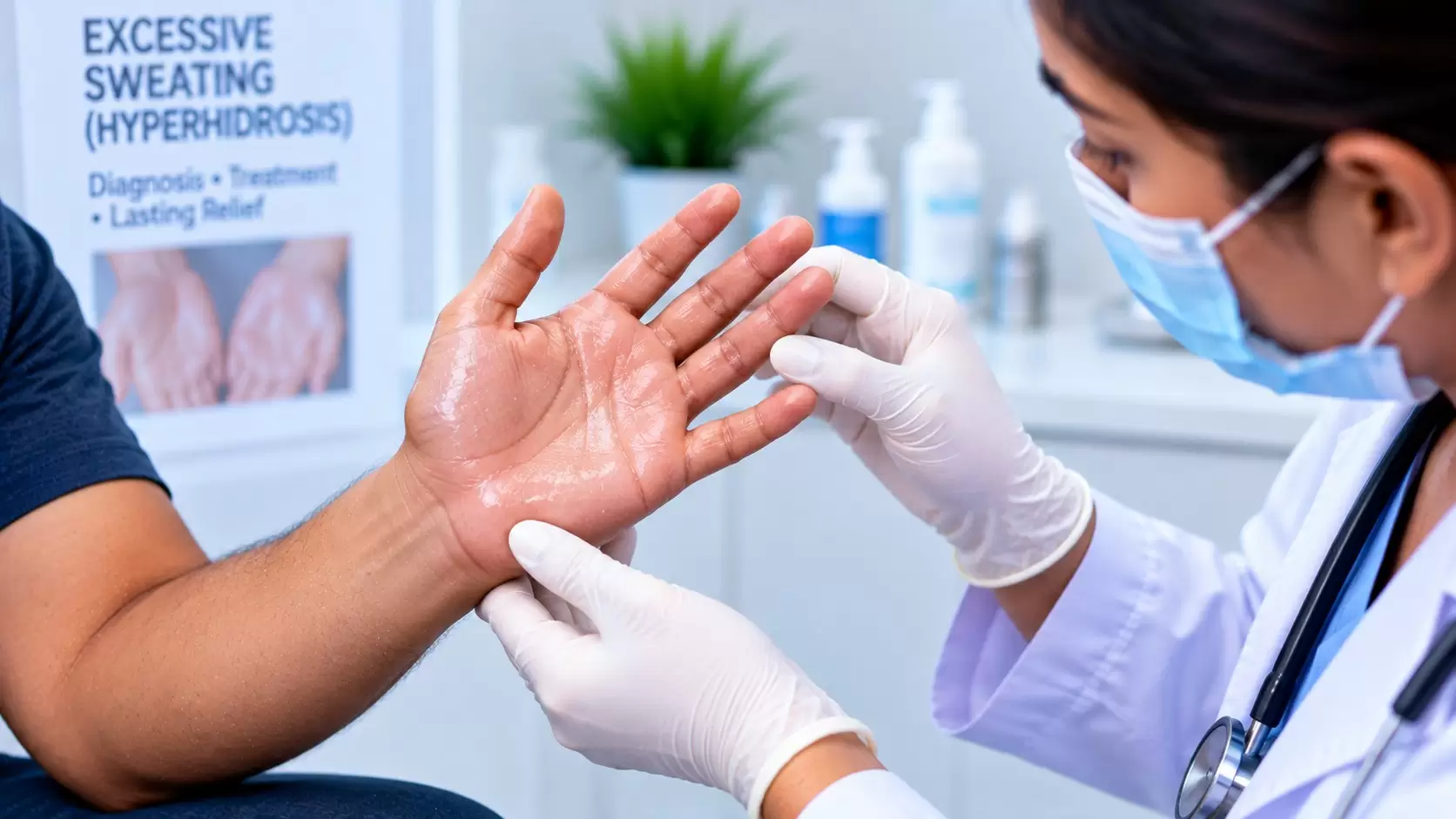
When sweating is more than a normal response to heat
Sweating during hot weather, exercise or fever is a normal cooling response. Hyperhidrosis causes sweating beyond what the body needs for temperature regulation.
A longstanding, symmetrical pattern affecting the palms, soles or underarms is often primary focal hyperhidrosis. A sudden change from your usual pattern deserves closer attention.
Signs excessive sweating should be assessed
Sudden onset
Sweating that appears abruptly—especially later in life—is less typical of primary focal hyperhidrosis.
Night sweating
Primary focal hyperhidrosis usually reduces during sleep. Recurrent drenching night sweating may point to a secondary cause.
Generalised sweating
Whole-body sweating rather than a stable focal pattern can be associated with medicines or systemic conditions.
Markedly one-sided sweating
A new asymmetric pattern can require assessment for neurological or other secondary causes.
1. Sweating starts suddenly
Primary focal hyperhidrosis commonly starts in childhood or adolescence and develops into a recognisable long-term pattern. New excessive sweating that begins abruptly later in life is more suggestive of secondary hyperhidrosis.
This does not mean a serious illness is necessarily present. It means the cause should be assessed rather than automatically labelled primary hyperhidrosis.
2. You are sweating heavily during sleep
Primary focal hyperhidrosis generally settles during sleep. Recurrent night sweats that soak sleepwear or bedding are therefore less typical of primary focal disease.
Night sweats have many possible explanations, including medicines, hormonal changes, infections and other medical conditions. The significance depends on associated symptoms and the overall clinical picture.
3. Sweating affects your whole body
Primary hyperhidrosis tends to affect focal areas such as the palms, soles, underarms or face. Generalised sweating over much of the body is more likely to prompt a review for secondary causes.
Possible contributors include medicines, endocrine or metabolic conditions, neurological disease, fever and other systemic illness. Read What Causes Excessive Sweating?.
4. One side sweats much more than the other
Primary focal hyperhidrosis is typically bilateral and relatively symmetrical. A new pattern where one side of the body, one hand or one foot sweats substantially more than the other is less typical.
Marked asymmetry can sometimes reflect a neurological problem or local nerve disturbance and should be medically assessed.
5. Sweating began after starting or changing a medicine
Drug-induced sweating is a recognised form of secondary hyperhidrosis. Antidepressants, opioids and several other medicine groups can increase sweating in some people.
6. Sweating occurs with other unexplained symptoms
Seek medical assessment when new excessive sweating occurs with unexplained fever, weight loss, tremor, palpitations or other persistent health changes. These symptoms can help direct investigation toward an underlying cause.
No single associated symptom identifies the diagnosis by itself, so the complete history and examination are important.
When sweating needs urgent attention
Sudden heavy sweating together with chest pain or pressure, severe shortness of breath, fainting, confusion or another severe acute symptom should not be treated as routine hyperhidrosis.
Seek urgent medical care because sweating can accompany serious acute illnesses when it appears with these symptoms.
When focal sweating still deserves treatment
You do not need warning signs to justify treatment. Primary hyperhidrosis can significantly affect work, school, clothing, electronics, handshakes, footwear and confidence.
If sweaty palms, soles or underarms regularly interfere with daily activities, a dermatologist can confirm the diagnosis and discuss treatment options.
What happens during a hyperhidrosis assessment?
The doctor will usually ask when symptoms began, which areas sweat, whether both sides are affected, whether sweating occurs during sleep, family history, triggers, medicines and the impact on daily life.
A typical primary focal pattern can often be diagnosed clinically. Blood tests or other investigations are selected when the history suggests secondary hyperhidrosis rather than being required for every patient.
Which doctor treats hyperhidrosis?
Dermatologists commonly diagnose and treat primary focal hyperhidrosis because sweat glands are part of the skin and several treatments are dermatology-based.
If the sweating pattern suggests an underlying systemic condition, the dermatologist or primary-care doctor may recommend additional medical evaluation or referral based on the suspected cause.
What treatments may be discussed?
Depending on the affected area and severity, options can include antiperspirants, prescription topical treatments, iontophoresis, botulinum toxin and selected oral medicines. Surgery is generally reserved for severe cases that have not responded adequately to less invasive approaches.
See Hyperhidrosis Treatment Options for a detailed comparison. For palms and soles, see Sweaty Hands and Feet; for underarms, see Excessive Underarm Sweating.
When is iontophoresis worth considering?
Iontophoresis is particularly useful for palmar and plantar hyperhidrosis. It uses a mild electrical current passed through water while the hands or feet are immersed.
If sweating mainly affects your palms or soles and antiperspirants have not provided enough control, ask whether Iontophoresis Treatment in Chennai is appropriate.
Prepare for your appointment
It can help to note when the sweating started, which body areas are affected, whether it occurs during sleep, known triggers, family history, all medicines and supplements, and any associated symptoms.
Also consider how often you change clothing, whether sweating interferes with work or devices and what treatments you have already tried. These details help establish severity and choose the next step.
Frequently asked questions
When should excessive sweating be checked by a doctor?
Medical assessment is appropriate when sweating begins suddenly, occurs during sleep, is generalized or markedly one-sided, follows a medication change, or is accompanied by other unexplained symptoms.
Are night sweats always serious?
No. Night sweats have many possible causes, but recurrent drenching night sweating is less typical of primary focal hyperhidrosis and should be assessed in context.
Can medicines cause excessive sweating?
Yes. Several medicines can cause secondary hyperhidrosis. Do not stop prescribed medication suddenly; discuss the timing and possible alternatives with the prescribing clinician.
When is sweating an emergency?
Sudden heavy sweating accompanied by chest pain or pressure, severe shortness of breath, fainting, confusion or other severe acute symptoms warrants urgent medical attention.
Should I see a dermatologist if sweating only affects my hands or underarms?
Yes, if focal sweating is excessive and interferes with work, clothing, devices, social situations or quality of life. Dermatologists diagnose and treat primary focal hyperhidrosis.
Visit us in OMR
Excessive sweating disrupting daily life? Get the cause and pattern assessed.
Book a dermatologist consultation at Ram Skin Clinic in Thoraipakkam, Chennai.
#48, Second Floor, Flat E, Best Towers,Okkiampet, Thoraipakkam, OMR,
Chennai – 600097. Above Domino’s Pizza.