
Axillary Hyperhidrosis
Excessive Underarm Sweating: Causes & Treatment Options
Sweating under the arms is normal in heat and during exercise. Axillary hyperhidrosis is different: the underarms produce more sweat than the body needs for cooling, sometimes soaking clothing even in comfortable temperatures.
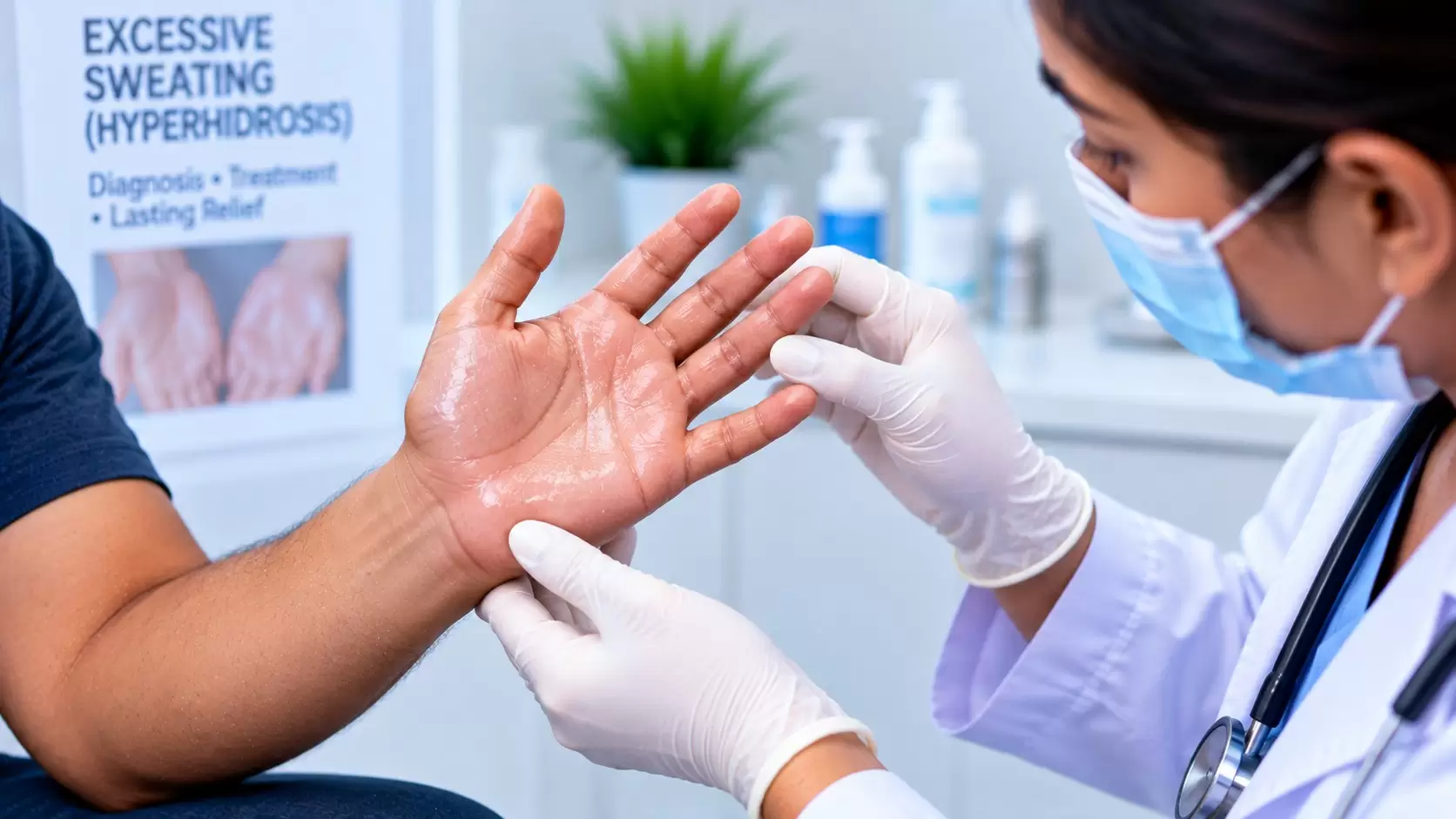
What is axillary hyperhidrosis?
Axillary hyperhidrosis means excessive sweating of the underarms. Primary focal hyperhidrosis commonly affects the underarms, palms, soles or face and scalp.
The sweating is greater than the body requires for temperature regulation and can occur while sitting, working indoors or in otherwise comfortable conditions.
Signs underarm sweating may be hyperhidrosis
Visible wet patches
Clothing becomes noticeably wet or soaked around the underarms even without strenuous activity.
Both underarms affected
Primary focal hyperhidrosis typically produces a relatively symmetrical pattern.
Daily-life interference
You may choose clothes around sweat marks, change shirts repeatedly or avoid social and professional situations.
Longstanding pattern
Primary disease often begins in childhood or adolescence and usually reduces during sleep.
Why do the underarms sweat excessively?
Primary hyperhidrosis is thought to result from overactive nerve signals that tell sweat glands to produce sweat even when additional cooling is unnecessary. The sweat glands themselves are not simply “dirty” or unhygienic.
Secondary hyperhidrosis has another cause, such as a medicine or medical condition. Read What Causes Excessive Sweating? for the distinction between primary and secondary disease.
Common triggers that can make underarm sweating worse
Heat, humidity, exercise and emotional stress can increase normal sweat production and amplify symptoms in people with hyperhidrosis. Spicy foods and individual triggers can also worsen sweating in some people.
These triggers do not necessarily cause primary hyperhidrosis. They can simply intensify an already over-responsive sweating pathway.
Deodorant vs antiperspirant: what is the difference?
Deodorants mainly reduce or mask odour. They do not necessarily reduce how much you sweat. Antiperspirants contain active ingredients—commonly aluminium salts—that temporarily block sweat ducts and reduce perspiration.
This distinction matters when the main problem is wetness rather than odour. A fragrance-only deodorant will not treat hyperhidrosis.
How to use antiperspirant more effectively
Antiperspirants generally work best when applied to completely dry skin, commonly at bedtime when sweat production is lower. The product can then form temporary plugs in the sweat ducts.
Applying strong antiperspirant to wet or freshly shaved skin can increase irritation. If a product causes persistent burning, rash or discoloration, a dermatologist can adjust the formulation or application schedule.
Treatment options for excessive underarm sweating
Antiperspirants
Over-the-counter clinical-strength or prescription aluminium-based antiperspirants are often a first treatment step.
Prescription topical medicines
Topical anticholinergic treatments can reduce nerve signalling that stimulates sweat production and are available in some settings.
Botulinum toxin
Small injections across the affected area temporarily block the nerve signal to sweat glands and can substantially reduce axillary sweating.
Device-based treatments
Selected energy-based procedures can reduce underarm sweat-gland activity. Availability, suitability, cost and possible adverse effects vary.
How botulinum toxin reduces underarm sweating
Botulinum toxin temporarily blocks the chemical signal from nerves that activates sweat glands. The American Academy of Dermatology notes that most patients notice less sweating within about 7 to 10 days after treatment.
The effect is temporary, so repeat treatment may be needed when sweating gradually returns. Pain, bruising, itching or temporary local muscle symptoms can occur.
What about iontophoresis for the underarms?
Iontophoresis is best established for sweaty hands and feet. Special electrodes can be used for the underarms, but the AAD notes that it tends to be less effective at this site.
For palmar or plantar sweating, see Iontophoresis Treatment in Chennai and Sweaty Hands and Feet.
Does shaving affect underarm sweating?
Removing underarm hair does not switch off eccrine sweat glands, so shaving is not a treatment for hyperhidrosis. It may change how moisture or odour feels, but it does not address the excessive nerve-driven sweat production.
Avoid applying strong antiperspirant immediately after shaving if it irritates the skin.
Can excessive sweating cause body odour?
Fresh eccrine sweat is largely odourless. Odour develops when skin bacteria interact with secretions and moisture in areas such as the underarms.
Someone can therefore have excessive sweating without severe odour, or troublesome odour without hyperhidrosis. Treatment should target the actual problem—sweat, odour or both.
Practical ways to manage underarm wetness
Choose breathable or moisture-managing clothing, change damp garments when practical and identify personal triggers. Dark colours, patterns or sweat-resistant undershirts can make wet patches less noticeable while treatment takes effect.
These strategies improve comfort but do not replace medical treatment when sweating is severe enough to disrupt daily life.
When could underarm sweating have a secondary cause?
A new pattern beginning suddenly later in life, sweating that occurs substantially during sleep, widespread sweating beyond the underarms or symptoms following a medication change can point away from typical primary focal hyperhidrosis.
Fever, unexplained weight loss, tremor, palpitations or other new symptoms should also be medically assessed. Read Hyperhidrosis vs Normal Sweating.
When should you see a dermatologist?
Consider assessment when underarm sweating regularly soaks clothing, causes repeated clothing changes, affects work or social situations, or remains troublesome despite appropriate antiperspirant use.
A dermatologist can confirm whether the pattern is primary axillary hyperhidrosis, look for secondary causes when appropriate and discuss treatment based on severity and your preferences.
For diagnosis and treatment, visit Hyperhidrosis Treatment in Chennai.
Frequently asked questions
Why do my underarms sweat so much?
Excessive underarm sweating can be primary focal hyperhidrosis, where nerve signals stimulate sweat glands more than needed for cooling. Medicines and medical conditions can also cause secondary excessive sweating.
What is the difference between deodorant and antiperspirant?
Deodorant mainly reduces or masks odour. Antiperspirant contains ingredients such as aluminium salts that reduce sweat production by temporarily blocking sweat ducts.
How should antiperspirant be used for hyperhidrosis?
Antiperspirants generally work best when applied to completely dry skin, often at bedtime. Stronger or prescription formulations should be used according to a clinician’s instructions.
Can botulinum toxin treat underarm sweating?
Yes. Botulinum toxin injections are an established treatment for axillary hyperhidrosis and temporarily reduce sweating by blocking nerve signals to sweat glands.
When should excessive underarm sweating be checked?
Assessment is appropriate when sweating interferes with daily life or when it begins suddenly, occurs substantially during sleep, is markedly one-sided or is accompanied by other unexplained symptoms.
Visit us in OMR
Underarm sweating soaking through clothes? Treatment can reduce it.
Book a dermatologist consultation at Ram Skin Clinic in Thoraipakkam, Chennai.
#48, Second Floor, Flat E, Best Towers,Okkiampet, Thoraipakkam, OMR,
Chennai – 600097. Above Domino’s Pizza.