
Palmar & Plantar Hyperhidrosis
Sweaty Hands and Feet: Causes & Treatment Options
Hands and feet naturally sweat, but persistently wet palms or soles can be a form of focal hyperhidrosis. The problem may interfere with writing, phones, tools, handshakes, footwear and everyday comfort.
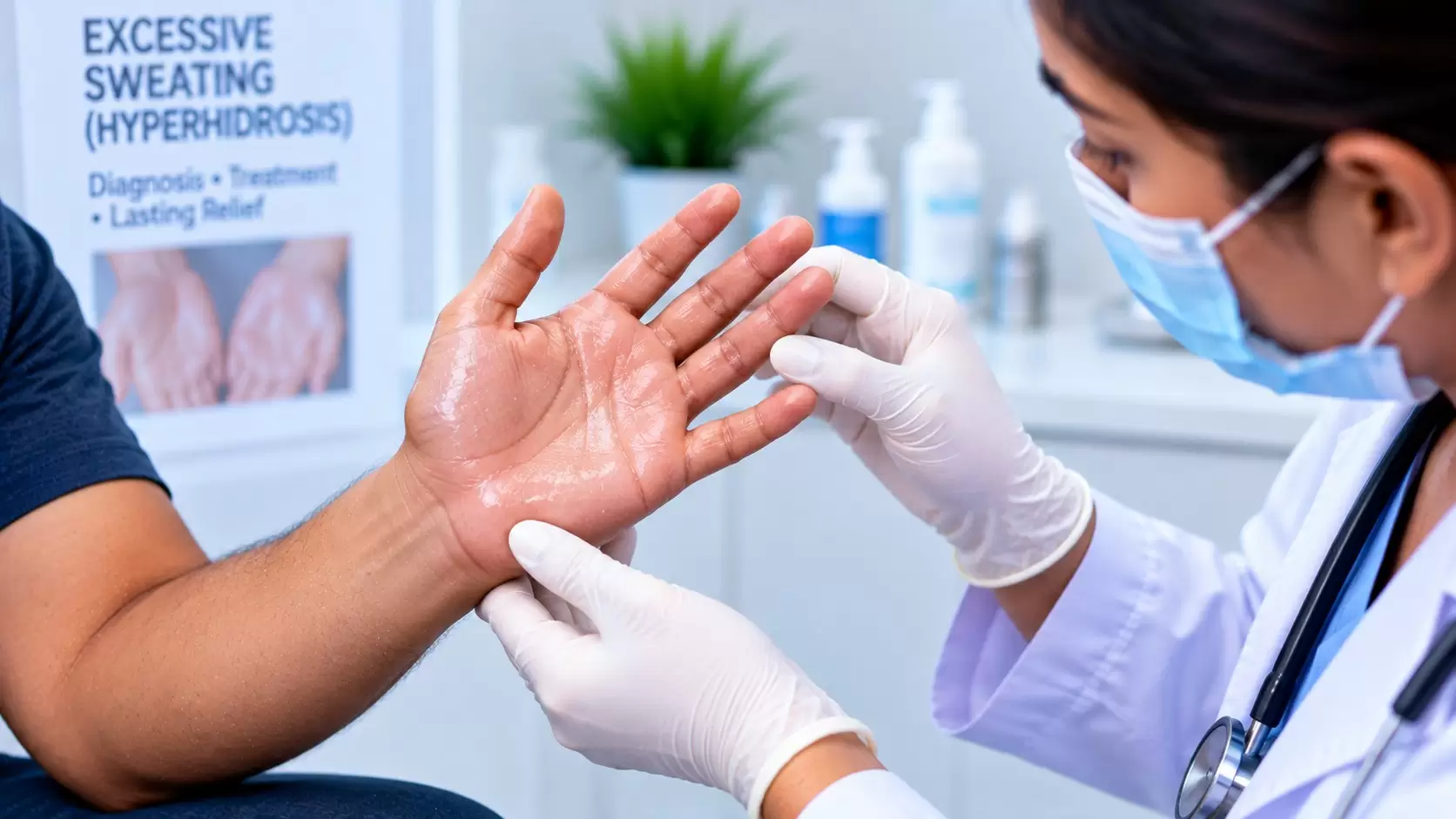
Why do hands and feet sweat?
Eccrine sweat glands are distributed across the skin and are especially numerous on the palms and soles. They normally help with temperature regulation and can also respond strongly to emotional stimuli.
In primary focal hyperhidrosis, nerve signalling to these sweat glands is overactive. Sweating can therefore occur even when the body does not need additional cooling.
What is palmar and plantar hyperhidrosis?
Palmar hyperhidrosis
Excessive sweating of the palms. Hands may feel persistently damp or become visibly wet enough to affect grip, paper, electronics and social contact.
Plantar hyperhidrosis
Excessive sweating of the soles. Socks and footwear may remain damp, creating discomfort, odour and skin maceration.
Signs the sweating may be hyperhidrosis
Primary focal hyperhidrosis commonly begins in childhood or adolescence, affects both sides relatively symmetrically and recurs over a long period. A family history is common in some patients.
Another useful clue is sleep: primary focal sweating generally reduces or stops during sleep. Read Hyperhidrosis vs Normal Sweating for a broader comparison.
What triggers sweaty palms and soles?
Heat & humidity
Warm weather can increase normal sweating and amplify symptoms in someone who already has hyperhidrosis.
Stress & anticipation
Emotional stress can strongly activate palmar and plantar sweating, sometimes creating a cycle of worry and further sweating.
Exercise
Physical activity appropriately increases sweat production, but people with hyperhidrosis may notice a disproportionate response.
Spicy foods and other triggers
Some people notice predictable worsening with spicy foods or other personal triggers, although these do not cause the underlying disorder.
Can anxiety cause sweaty hands?
Anxiety can certainly trigger palmar sweating, even in people without hyperhidrosis. In someone with primary palmar hyperhidrosis, emotional stress can make the response much stronger.
However, persistent hyperhidrosis should not be dismissed as “just anxiety.” The sweating itself can create embarrassment, avoidance and anticipatory stress.
When could sweaty hands and feet have a secondary cause?
Primary hyperhidrosis is common, but sweating caused by a medical condition or medicine is classified as secondary hyperhidrosis. Secondary sweating is more likely when symptoms start suddenly, begin later in life, occur during sleep, are generalised or are markedly asymmetric.
Associated fever, unexplained weight loss, palpitations, tremor or other new symptoms can also change the assessment. Learn more in What Causes Excessive Sweating?.
How sweaty palms can affect daily life
Palmar hyperhidrosis can make paper damp, reduce grip on tools, interfere with touchscreens and keyboards and make handwriting difficult. Some people avoid handshakes or physical contact because of embarrassment.
These practical and social effects are clinically important. Treatment decisions are based not only on visible sweat but also on how much symptoms interfere with everyday activities.
How excessive foot sweating can affect the skin
Constant moisture softens the outer layer of skin, a process called maceration. Damp socks and enclosed footwear can also increase friction and odour.
Persistently moist feet can create conditions that favour some fungal and bacterial skin problems. Keeping footwear dry and rotating shoes can therefore be part of practical management.
How are sweaty hands and feet diagnosed?
A dermatologist usually diagnoses primary focal hyperhidrosis from the history and examination. Important details include age at onset, which areas are affected, whether both sides are involved, night symptoms, family history, medicines and the effect on daily life.
Laboratory tests are not automatically required for a typical primary pattern. They may be selected when symptoms suggest a secondary cause.
Treatment options for sweaty hands and feet
Antiperspirants
Clinical-strength or prescription antiperspirants containing aluminium salts can reduce sweating by temporarily blocking sweat ducts.
Iontophoresis
Hands or feet are placed in shallow water while a mild electrical current is passed through it. Repeated sessions can reduce palmar and plantar sweating.
Prescription medicines
Oral anticholinergic medicines may be considered in selected patients, but potential side effects mean treatment should be clinician-directed.
Other procedures
Botulinum toxin injections and, rarely, surgical approaches may be considered for severe symptoms depending on the affected site and response to other treatments.
How iontophoresis helps sweaty hands and feet
Iontophoresis is particularly suited to palms and soles because these areas can be placed directly into treatment trays. A mild electrical current passes through tap water and temporarily reduces sweat-gland activity.
Treatment is usually performed repeatedly at first, followed by maintenance sessions according to response. Read Iontophoresis Treatment in Chennai and How Iontophoresis Works for Excessive Sweating.
Practical care between treatments
For the feet, choose breathable footwear when practical, change damp socks and allow shoes to dry fully before wearing them again. Rotating footwear can reduce persistent moisture.
For the hands, dry them before handling electronics or paperwork and protect irritated or cracked skin with an appropriate moisturiser. Avoid excessive washing solely to remove sweat, because repeated soap exposure can irritate the skin barrier.
When should you see a dermatologist?
Assessment is appropriate when sweaty hands or feet interfere with work, school, hobbies, social contact or footwear; when over-the-counter antiperspirants are inadequate; or when you want to discuss iontophoresis or other treatment options.
Seek medical assessment for sudden onset, night sweating, marked one-sided sweating or symptoms accompanied by unexplained fever, weight loss, palpitations or other new health changes.
For diagnosis and treatment, visit Hyperhidrosis Treatment in Chennai.
Frequently asked questions
Why do my hands and feet sweat so much?
Excessive symmetrical sweating of the palms and soles is often primary focal hyperhidrosis, in which nerve signals stimulate sweat glands more than needed for cooling. Secondary causes should be considered when the pattern is unusual or begins suddenly.
Can sweaty hands and feet be caused by anxiety?
Stress and anxiety can trigger or worsen palmar and plantar sweating, but persistent hyperhidrosis is not simply an anxiety disorder.
Does iontophoresis help sweaty hands and feet?
Iontophoresis is an established treatment option for palmar and plantar hyperhidrosis. Hands or feet are placed in water while a mild electrical current is passed through it over repeated treatment sessions.
Can excessive foot sweating cause skin problems?
Persistently wet feet can contribute to maceration, odour and an environment that favours some bacterial and fungal skin problems.
When should sweaty hands or feet be medically assessed?
Assessment is appropriate when sweating interferes with daily life or when it begins suddenly, is markedly one-sided, occurs during sleep or is accompanied by other unexplained symptoms.
Visit us in OMR
Sweaty palms or feet affecting daily life? There are treatment options.
Book a dermatologist consultation at Ram Skin Clinic in Thoraipakkam, Chennai.
#48, Second Floor, Flat E, Best Towers,Okkiampet, Thoraipakkam, OMR,
Chennai – 600097. Above Domino’s Pizza.