
Iontophoresis & Hyperhidrosis
How Does Iontophoresis Work for Excessive Sweating?
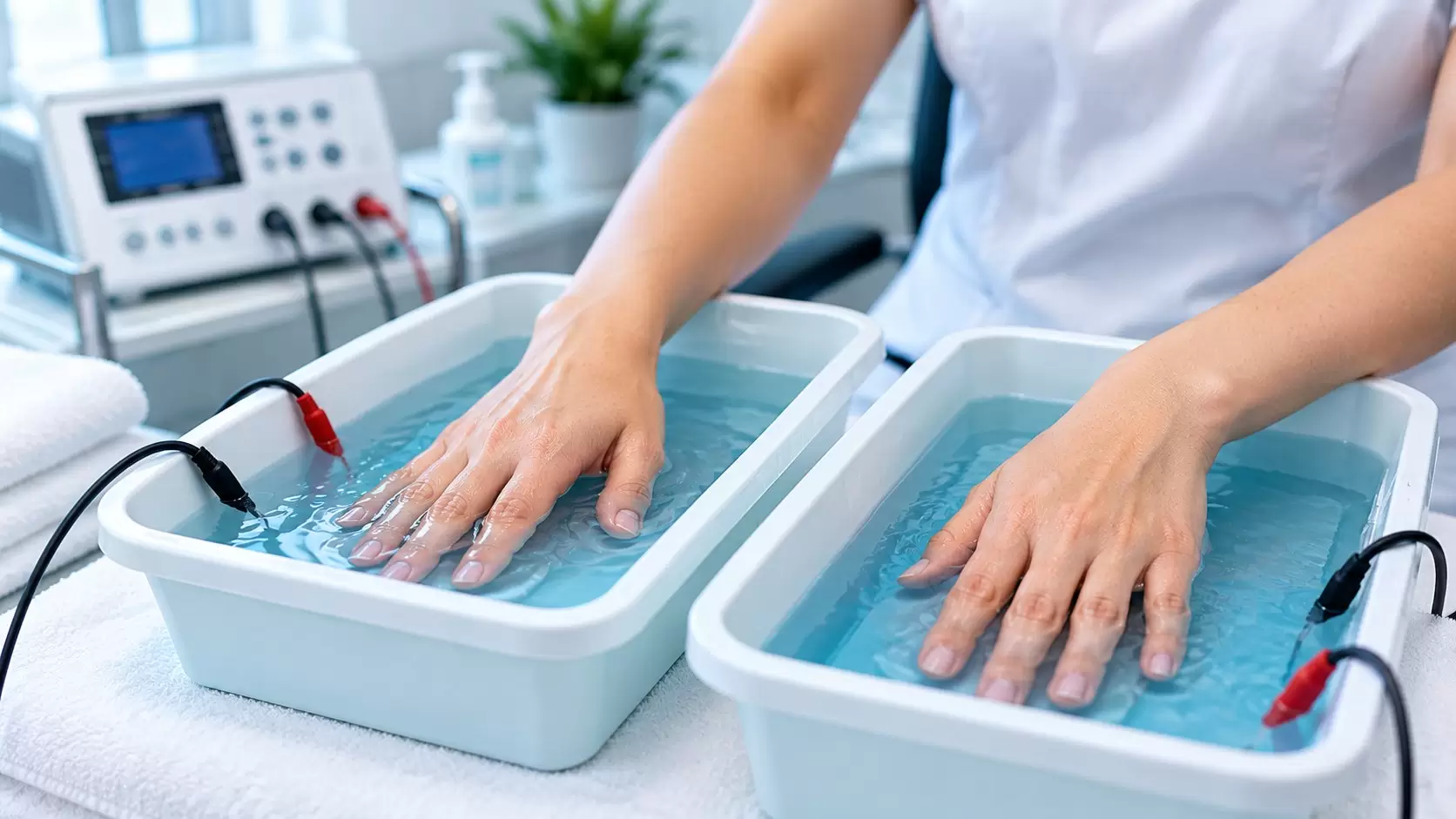
Iontophoresis uses a gentle electrical current passed through water and the skin to reduce excessive sweating, especially in the palms and soles. The exact biological mechanism is not completely understood, but repeated treatment can temporarily reduce sweat production in the treated area.
Understanding the treatment
Why does iontophoresis reduce sweating?
Excessive sweating, or hyperhidrosis, can occur when sweat production is greater than the body needs for temperature control. In primary focal hyperhidrosis, areas such as the palms and soles are commonly affected. Iontophoresis treatment is one option dermatologists may use when sweating is localised to these areas.
The precise mechanism by which tap-water iontophoresis reduces sweating remains uncertain. Proposed explanations include temporary functional changes within sweat ducts or sweat glands, alterations in the electrical environment of the skin, and effects on the signalling involved in sweat production. The important practical point is that the effect is reversible rather than permanent, which explains why maintenance treatment is usually required.
Step by step
What happens during iontophoresis?
1. Water contact
The hands or feet are placed in shallow trays containing tap water. The water acts as the medium through which the electrical current reaches the skin.
2. Gentle current
A low electrical current is passed through the water. A tingling sensation may be felt, but treatment intensity should be adjusted according to the device instructions and clinical guidance.
3. Repeated sessions
Sessions are repeated during an initial treatment phase until sweating is adequately reduced. Maintenance sessions are then used to help sustain the benefit.
Hands and feet
Why is iontophoresis commonly used for palms and soles?
The palms and soles are particularly suitable for traditional tap-water iontophoresis because they can be comfortably placed in treatment trays. The American Academy of Dermatology describes iontophoresis machines as a treatment for excessive sweating of the hands and feet. Treatment of the underarms is possible with specialised electrodes or pads, although effectiveness and technique can differ.
For people whose sweaty palms interfere with writing, computer use, driving or handshakes—or whose excessive foot sweating affects footwear and comfort—reducing sweat output can have a meaningful practical benefit. Learn more about the broader condition on our Hyperhidrosis Treatment in Chennai page.
Treatment schedule
Why are multiple sessions needed?
Iontophoresis is not generally a one-session treatment. The American Academy of Dermatology notes that initial treatments may be performed daily or every few days until a noticeable reduction in sweating develops. Once satisfactory control is achieved, sessions can usually be spaced farther apart for maintenance.
The exact frequency should be individualised. Device instructions also vary, so patients should follow the schedule recommended by their dermatologist and the manufacturer rather than assuming that one protocol applies to every machine.
For an overview of the therapy itself, see What Is Iontophoresis?
Safety
What can you feel during treatment?
A mild tingling or prickling sensation can occur during iontophoresis. Temporary skin irritation, dryness or discomfort may also occur. Incorrect use or excessive current can cause a mild burn, which is one reason correct technique and device instructions matter.
Iontophoresis is not appropriate for everyone. Medical guidance is important for people with certain implanted electrical or metal devices, some heart conditions, seizure disorders, pregnancy, or wounds in the treatment area. A dermatologist can also determine whether excessive sweating may be secondary to another medical condition or medication before recommending treatment.
Authoritative patient information is available from the American Academy of Dermatology, DermNet and MedlinePlus.
Common questions
Iontophoresis FAQ
Does iontophoresis permanently stop sweating?
No. Its sweat-reducing effect is generally temporary, so maintenance sessions are commonly required after the initial treatment phase.
How quickly does iontophoresis work?
Response varies. The AAD notes that noticeable reduction often occurs after a series of treatments rather than after a single session.
Does iontophoresis work best for hands and feet?
Traditional tap-water iontophoresis is particularly established for palmar and plantar hyperhidrosis. Other areas may require different electrodes or approaches.
Why is tap water used?
Tap water provides the medium through which the electrical current passes to the skin. Mineral content can affect conductivity, and device-specific instructions should be followed.
Should excessive sweating be assessed before treatment?
Yes. A dermatologist can distinguish primary focal hyperhidrosis from sweating caused by medication or another medical condition and recommend an appropriate treatment plan.
Visit us in OMR
Let’s talk about
your skin concerns.
Book a consultation at Ram Skin Clinic in Thoraipakkam, Chennai.
#48, Second Floor, Flat E, Best Towers,Okkiampet, Thoraipakkam, OMR,
Chennai – 600097. Above Domino’s Pizza.