
Dermatology Procedures · Hyperhidrosis Guide
What Is Iontophoresis?
Iontophoresis is a non-surgical treatment commonly used to reduce excessive sweating, particularly on the palms and soles.
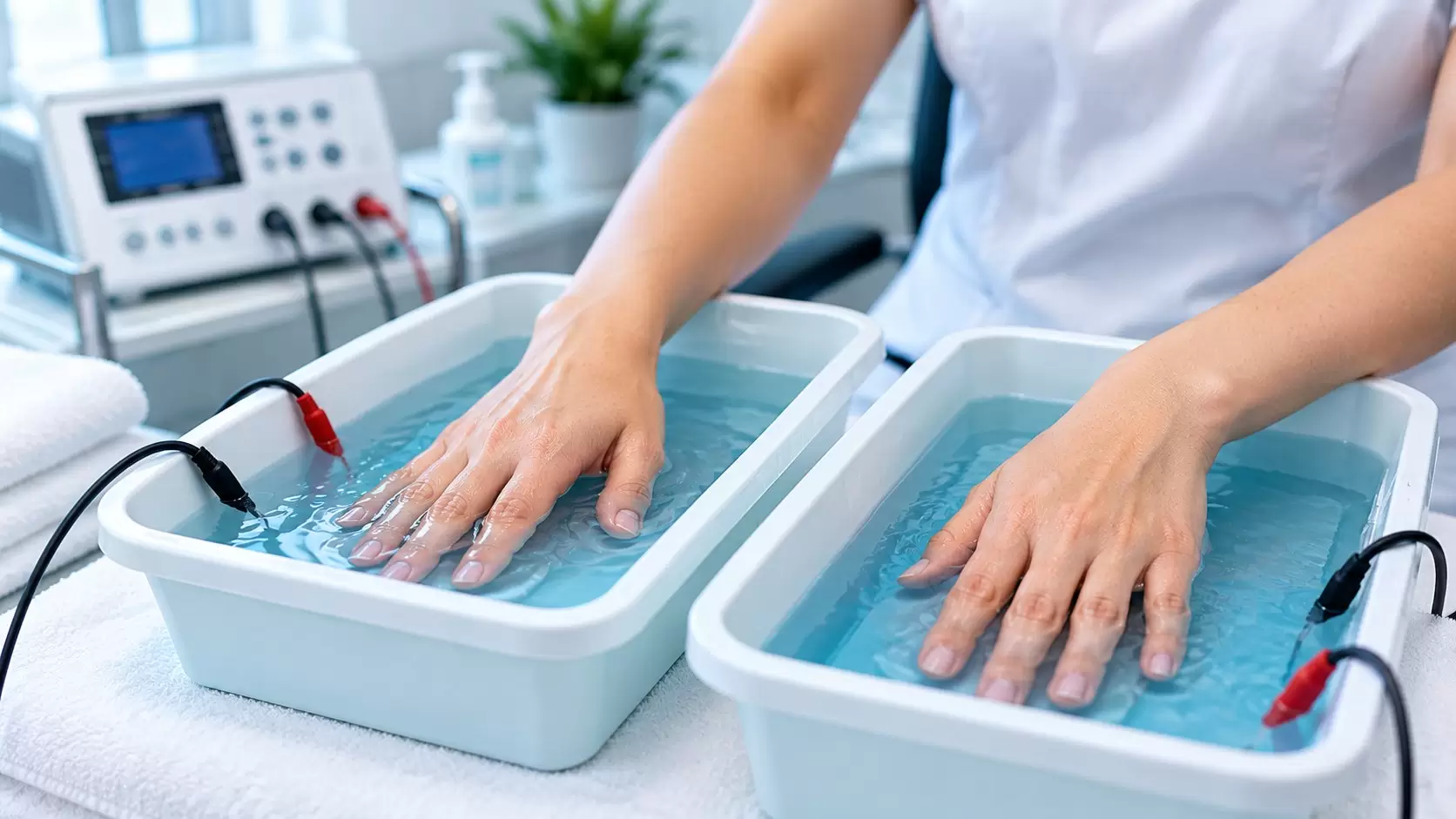
During treatment, the hands or feet are placed in shallow trays of tap water while a controlled electrical current passes through the water and across the skin surface. For patients with troublesome sweating, a dermatologist can determine whether this treatment is appropriate and how it fits into an overall management plan.
Understanding the Treatment
How Does Iontophoresis Work?
Iontophoresis uses a mild electrical current delivered through water. The precise mechanism by which it reduces sweating is not fully understood, but it can decrease sweat production in the treated area. It is especially established for palmar and plantar hyperhidrosis — excessive sweating affecting the hands and feet.
If excessive sweating is affecting daily activities, it is useful to first establish whether the problem is primary hyperhidrosis or whether another condition or medication could be contributing. Read more about hyperhidrosis treatment in Chennai.
Common Treatment Areas
Where Is Iontophoresis Used?
Palms
Palmar hyperhidrosis can make writing, using electronic devices, handling papers and shaking hands difficult. Iontophoresis is commonly used for excessive sweating of the hands.
Soles
Plantar hyperhidrosis can contribute to persistently damp footwear and discomfort. The feet can be treated in water trays using the same principle.
Underarms
Special electrodes may sometimes be used for axillary sweating, although iontophoresis tends to be less effective for the underarms than for hands and feet.
During a Session
What Does Treatment Involve?
For hand or foot treatment, the affected areas are placed in trays containing tap water. A device supplies a controlled electrical current across the skin. Treatment protocols vary according to the device, the treatment area and the patient’s response.
According to the American Academy of Dermatology, initial treatments for hand and foot hyperhidrosis commonly last around 20 to 30 minutes and may be performed daily or every few days until sweating is noticeably reduced. Maintenance treatment can then be spaced out according to response.
For an individual plan, see our main Iontophoresis Treatment in Chennai page or consult Dr. Anuj Singh at Ram Skin Clinic.
Safety & Expectations
Does Iontophoresis Have Side Effects?
Many patients tolerate treatment well, but temporary tingling, mild burning or discomfort and skin irritation can occur. Moisturising the skin can help with dryness or irritation. Incorrect use of an iontophoresis device can cause a mild burn, which is one reason appropriate instruction is important.
Treatment Planning
Is Iontophoresis Right for You?
Excessive sweating can have several causes, and there is no single treatment that suits every patient. A dermatology assessment can help identify the pattern of sweating, exclude relevant secondary causes and compare options such as prescription antiperspirants, iontophoresis, botulinum toxin or medication when appropriate.
For patients in OMR and surrounding areas, Ram Skin Clinic offers assessment and treatment planning for excessive sweating. You can also learn more about our skin clinic in OMR, Chennai.
Authoritative references
For further patient information, see the American Academy of Dermatology: Hyperhidrosis diagnosis and treatment and DermNet: Iontophoresis.
Frequently Asked Questions
Iontophoresis FAQs
What is iontophoresis used for?
Its main dermatological use is to reduce focal excessive sweating, particularly hyperhidrosis of the palms and soles.
Is iontophoresis permanent?
No. It is generally a control treatment rather than a permanent cure, and maintenance sessions may be needed to keep sweating reduced.
Does iontophoresis hurt?
Patients may notice tingling or mild discomfort. Skin irritation can occur. Treatment settings and technique should be adjusted appropriately.
How many sessions are needed?
The schedule varies. Initial sessions are repeated until sweating is reduced, followed by maintenance treatment at intervals based on the individual’s response.
Who should avoid iontophoresis?
Contraindications can include pregnancy, a pacemaker or certain heart conditions, metal implants and a history of seizures. Your dermatologist should review your medical history before treatment.
Ram Skin Clinic · Thoraipakkam
Concerned About Excessive Sweating?
Consult Dr. Anuj Singh at Ram Skin Clinic for an assessment and an individual treatment plan for hyperhidrosis, including whether iontophoresis may be suitable for you.
Ram Skin ClinicThoraipakkam, OMR, Chennai