
When Sweating Becomes Excessive
Hyperhidrosis vs Normal Sweating: How to Tell the Difference
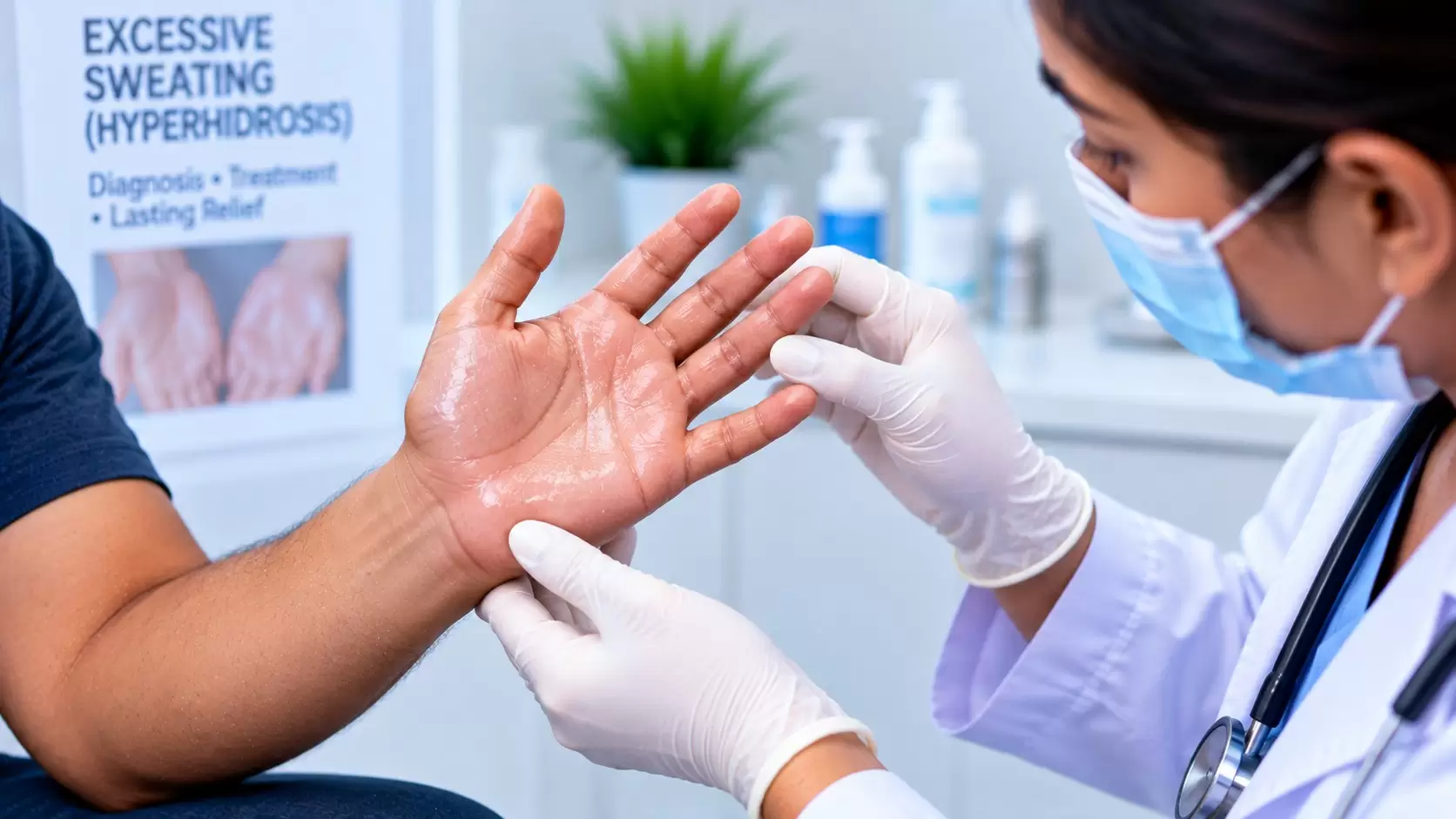
Everyone sweats, especially in Chennai’s heat, during exercise or when the body needs to cool down. Hyperhidrosis is different: sweating is excessive for the situation and can occur even when cooling is not needed.
Why do we normally sweat?
Sweating is a normal physiological response that helps cool the body as sweat evaporates from the skin. Heat, physical activity and fever can appropriately increase sweat production.
Emotional stress can also activate sweating, particularly on the palms, soles, underarms and face. Sweating by itself therefore does not mean that someone has hyperhidrosis.
Normal sweating vs hyperhidrosis: quick comparison
Normal sweating
Usually matches the body’s need for cooling and increases with heat, exercise or fever. It generally improves when the trigger ends.
Hyperhidrosis
Sweating is excessive for the circumstances, may occur without a cooling need and can interfere substantially with daily life.
Primary focal pattern
Often affects both palms, both soles, both underarms or the face, begins relatively young and usually settles during sleep.
Secondary pattern
May be more generalised, begin later or suddenly, occur during sleep, or be linked to a medicine or medical condition.
How much sweating is too much?
There is no single volume of sweat that separates normal from abnormal in everyday clinical practice. Dermatologists focus on whether sweating is excessive for the circumstances, its pattern and how much it affects daily activities.
For example, palms that repeatedly become wet enough to affect writing or device use in a cool environment are more suggestive of hyperhidrosis than sweating after vigorous exercise outdoors.
Signs your sweating may be hyperhidrosis
It happens without enough heat or exercise
Sweating occurs when the body does not appear to need additional cooling.
It affects both sides
Primary focal hyperhidrosis often produces a symmetrical pattern such as both palms or both underarms.
It disrupts everyday activities
Clothing, paperwork, keyboards, phones, footwear, handshakes or tools become difficult to manage.
It has persisted for months
A recurring long-term pattern, particularly beginning in childhood or adolescence, supports primary focal hyperhidrosis.
Does sweating in Chennai’s heat mean hyperhidrosis?
No. Chennai’s warm, humid climate can naturally increase sweating because evaporation is less efficient in humid air and the body continues producing sweat to regulate temperature.
The more useful question is whether you sweat much more than expected for the environment, continue sweating in air-conditioned or cool conditions, or have focal sweating that interferes with normal activities.
What areas are commonly affected by primary hyperhidrosis?
Primary focal hyperhidrosis commonly affects the palms, soles, underarms and face or scalp. More than one area can be involved.
The pattern is typically bilateral and relatively symmetrical. If one hand, one foot or one side of the body suddenly begins sweating much more than the other, secondary neurological or other causes should be considered.
Does hyperhidrosis happen during sleep?
Primary focal hyperhidrosis usually reduces or stops during sleep. This is one of the clinical clues that helps distinguish it from some forms of secondary sweating.
New, substantial night sweating—especially if it soaks sleepwear or bedding—should not simply be labelled primary hyperhidrosis. Medicines, hormonal changes, infection and other medical conditions may need consideration.
Can stress cause normal sweating and hyperhidrosis?
Yes. Stress and anxiety can trigger normal emotional sweating, and they can also amplify primary hyperhidrosis. The distinction is not whether stress ever triggers sweating, but whether the overall amount and pattern are excessive.
Hyperhidrosis can itself create anticipatory anxiety—for example, worrying about a handshake because the palms may sweat—which can create a cycle of worsening symptoms.
Primary vs secondary hyperhidrosis: why the distinction matters
Primary hyperhidrosis is thought to involve excessive sympathetic nerve signalling to otherwise normal sweat glands. Secondary hyperhidrosis has an identifiable underlying cause, such as a medicine or medical condition.
Read What Causes Excessive Sweating? for a detailed explanation of primary and secondary causes.
When sweating may suggest a secondary cause
Features that are less typical of primary focal hyperhidrosis include sudden onset later in life, generalised whole-body sweating, significant night sweating, a markedly asymmetric pattern and symptoms beginning after a medication change.
Associated fever, unexplained weight loss, tremor, palpitations or other new symptoms can also influence the investigation.
How doctors assess excessive sweating
Diagnosis begins with the history: age when symptoms started, affected body areas, symmetry, night symptoms, triggers, medicines, family history and effect on daily life.
Primary focal hyperhidrosis can often be diagnosed clinically. Tests are generally targeted when the history suggests a secondary cause rather than ordered routinely for everyone.
Does hyperhidrosis need treatment?
Treatment is reasonable when sweating causes practical, occupational, social or emotional problems. Options depend on the body area and severity and can include stronger antiperspirants, iontophoresis, prescription medicines and other dermatologist-directed therapies.
For excessive sweating of the palms and soles, iontophoresis is a commonly used treatment option. It uses a mild electrical current delivered through water to reduce sweating over a course of sessions.
When should excessive sweating be checked?
Arrange an assessment if sweating is interfering with daily life, if you are unsure whether it is normal, or if over-the-counter measures have not helped.
Seek medical assessment for sweating that begins suddenly, is generalised, happens substantially during sleep, affects one side much more than the other, or occurs with fever, unexplained weight loss, palpitations, chest symptoms or other new health changes.
For diagnosis and treatment, visit Hyperhidrosis Treatment in Chennai.
Frequently asked questions
How do I know if my sweating is normal or hyperhidrosis?
Normal sweating generally matches heat, exercise or another cooling need. Hyperhidrosis causes sweating beyond what is needed for temperature control and often interferes with daily activities.
Is sweating a lot in hot weather hyperhidrosis?
Not necessarily. Heavy sweating during heat or exercise can be a normal cooling response. Hyperhidrosis is more likely when sweating is excessive for the situation or occurs without a clear cooling need.
Does primary hyperhidrosis happen during sleep?
Primary focal hyperhidrosis usually reduces or stops during sleep. New or substantial night sweating is less typical and may need assessment for a secondary cause.
Can hyperhidrosis affect only the hands or feet?
Yes. Primary focal hyperhidrosis commonly affects both palms, both soles, both underarms or the face and scalp.
When should excessive sweating be checked by a doctor?
Seek assessment for sudden-onset, generalized, one-sided or night sweating, or sweating accompanied by fever, unexplained weight loss, palpitations, chest symptoms or other new health changes.
Visit us in OMR
Not sure whether your sweating is excessive? Get the pattern assessed.
Book a dermatologist consultation at Ram Skin Clinic in Thoraipakkam, Chennai.
#48, Second Floor, Flat E, Best Towers,Okkiampet, Thoraipakkam, OMR,
Chennai – 600097. Above Domino’s Pizza.