
Reducing Excessive Sweating
Hyperhidrosis Treatment Options: What Can Reduce Excessive Sweating?
Hyperhidrosis can affect the palms, soles, underarms, face or several body areas. There is no single treatment that is best for everyone—the right approach depends on the site, severity, cause and how much sweating interferes with daily life.
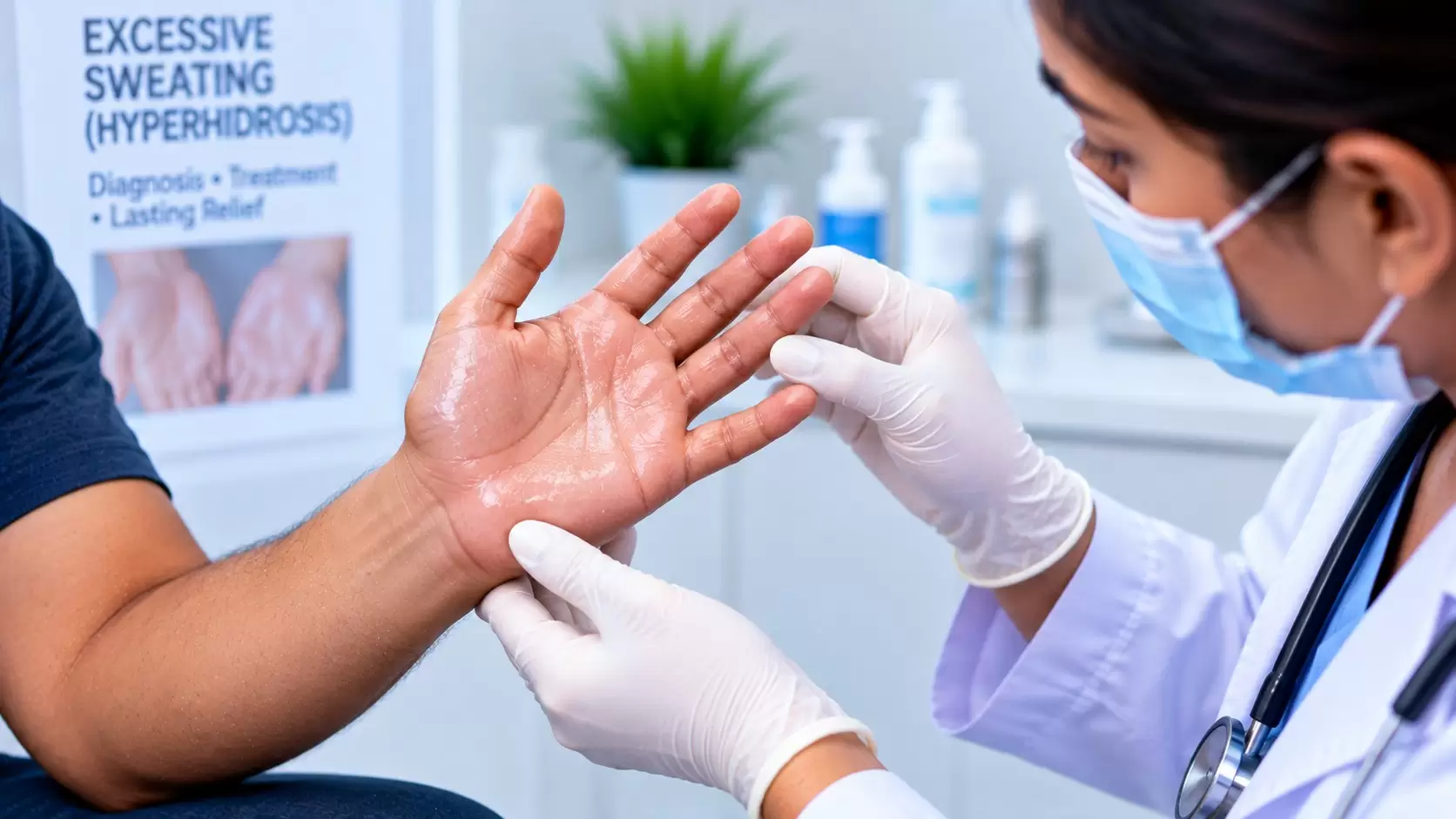
Start by identifying the type of hyperhidrosis
Effective treatment begins with deciding whether sweating is primary hyperhidrosis or secondary to a medicine or medical condition. Secondary hyperhidrosis may improve when the underlying cause is addressed.
Primary focal hyperhidrosis usually requires treatment that directly reduces sweat production. Read What Causes Excessive Sweating? for the differences.
Hyperhidrosis treatment options at a glance
Antiperspirants
Often the first step for mild to moderate focal sweating. Aluminium-based ingredients temporarily reduce sweat flow.
Iontophoresis
Particularly useful for sweaty palms and soles. Repeated sessions pass a mild electrical current through water.
Botulinum toxin
Temporarily blocks nerve signals to sweat glands and is well established for excessive underarm sweating.
Prescription medicines
Topical or oral anticholinergic medicines may be considered according to the sweating site, severity and previous response.
1. Antiperspirants
Antiperspirants are different from deodorants. Deodorants mainly control odour, while antiperspirants reduce sweat by temporarily blocking sweat ducts. Dermatologists often begin hyperhidrosis treatment with an antiperspirant.
Stronger formulations may be needed when ordinary over-the-counter products are inadequate. They are generally applied to completely dry skin, commonly at bedtime, to improve effectiveness and reduce irritation.
2. Prescription topical medicines
Topical anticholinergic medicines reduce the nerve signal that stimulates sweat glands. Certain prescription wipes or gels are used for primary underarm hyperhidrosis in some countries and age groups.
Because these are medicines rather than cosmetic deodorants, suitability and possible effects such as dry mouth, eye symptoms or local irritation should be discussed with a clinician.
3. Iontophoresis for sweaty hands and feet
Iontophoresis is an established treatment for palmar and plantar hyperhidrosis. The hands or feet are placed in trays of tap water while a mild electrical current passes through the water and skin surface.
Treatment is repeated frequently at first until sweating improves, followed by maintenance sessions. Mild tingling, irritation or dryness can occur. The technique is less effective for the underarms than for hands and feet.
See Iontophoresis Treatment in Chennai and Sweaty Hands and Feet.
4. Botulinum toxin injections
Botulinum toxin temporarily blocks the nerve signal that activates sweat glands. It is an established treatment for axillary hyperhidrosis and can also be used at selected other focal sites.
Results are temporary, so treatment may need to be repeated when sweating returns. Possible effects include injection-site pain, bruising and temporary local muscle weakness depending on the treatment area.
For underarm-specific information, read Excessive Underarm Sweating.
5. Oral medicines
Oral anticholinergic medicines can reduce sweating throughout the body and may be considered when hyperhidrosis affects several sites or when local treatments are insufficient.
Potential side effects include dry mouth, constipation, blurred vision, drowsiness and difficulty emptying the bladder. Because reduced sweating can also impair the body’s ability to cool itself, these medicines require particular caution in hot environments.
6. Device-based underarm treatments
Some energy-based treatments target sweat glands in the underarms. Microwave thermolysis, for example, uses heat to destroy sweat glands and can provide longer-lasting reduction in axillary sweating.
Availability, cost, suitability and adverse effects vary, so these procedures are considered after discussing established alternatives and individual treatment goals.
7. Treating secondary hyperhidrosis
When a medicine is suspected, the prescribing clinician may consider whether a dose adjustment or alternative is appropriate. Do not stop a prescribed medicine suddenly because sweating may be only one part of the risk-benefit decision.
When another medical condition is driving the sweating, treating that condition is an important part of management. Additional sweat-reducing treatment may still be needed in some cases.
8. Surgery for severe hyperhidrosis
Surgical treatment is not usually the starting point. Procedures include removal of underarm sweat glands and endoscopic thoracic sympathectomy, which interrupts sympathetic nerve signals to selected areas.
Sympathectomy can reduce sweating in the treated area but may cause compensatory sweating elsewhere on the body. Because this can be substantial, surgery is generally reserved for carefully selected people with severe symptoms that have not responded to other options.
Which treatment is used for which area?
Hands
Antiperspirants and iontophoresis are common options. Botulinum toxin or other therapies may be considered for persistent severe symptoms.
Feet
Iontophoresis is particularly suited to plantar sweating. Antiperspirants and practical moisture management can also help.
Underarms
Antiperspirants, prescription topical medicines and botulinum toxin are established approaches, with device-based treatments available in selected settings.
Multiple body areas
A combination of local treatments and, when appropriate, systemic medicine may be considered after excluding secondary causes.
How quickly does treatment work?
The timeline depends on the treatment. Antiperspirants may require consistent use over several days or weeks. Iontophoresis is usually performed as a course of repeated sessions before moving to maintenance treatment.
Botulinum toxin commonly begins reducing sweating within days, while surgical and sweat-gland-destroying procedures have different recovery and response profiles. Your dermatologist can set realistic expectations for the option being considered.
Will hyperhidrosis treatment permanently stop sweating?
Many treatments control rather than permanently cure hyperhidrosis. Antiperspirants, iontophoresis, medicines and botulinum toxin generally require continued or repeated treatment.
Permanent destruction or surgical interruption of sweat pathways is possible with selected procedures, but greater permanence can also bring greater risk. The goal is not to eliminate all sweating—it is to reduce excessive sweating enough that it no longer disrupts normal life.
How a dermatologist chooses the right treatment
The treatment plan considers which areas sweat, severity, age at onset, whether symptoms occur during sleep, medicines, health conditions, previous treatments and personal preferences.
For many people, treatment is stepped: start with a lower-risk option, assess response and move to another or combine treatments when necessary.
For diagnosis and an individual treatment plan, visit Hyperhidrosis Treatment in Chennai.
Frequently asked questions
What is usually the first treatment for hyperhidrosis?
Treatment often begins with an antiperspirant applied to dry skin. The choice then depends on the body area, severity, response and whether the sweating is primary or secondary.
What treatment works well for sweaty hands and feet?
Iontophoresis is an established option for palmar and plantar hyperhidrosis. Repeated sessions pass a mild electrical current through water to reduce sweating.
Can botulinum toxin reduce excessive sweating?
Yes. Botulinum toxin injections temporarily reduce sweating by blocking nerve signals to sweat glands and are used particularly for underarm sweating and selected other focal sites.
Are oral medicines used for hyperhidrosis?
Oral anticholinergic medicines may be considered when sweating affects several areas or other treatments are inadequate, but side effects and heat-related risks require clinician supervision.
Is surgery a first-line treatment for hyperhidrosis?
No. Surgery is generally reserved for severe hyperhidrosis that has not responded adequately to less invasive treatments because complications can include compensatory sweating.
Visit us in OMR
Excessive sweating affecting daily life? Find the treatment that fits the pattern.
Book a dermatologist consultation at Ram Skin Clinic in Thoraipakkam, Chennai.
#48, Second Floor, Flat E, Best Towers,Okkiampet, Thoraipakkam, OMR,
Chennai – 600097. Above Domino’s Pizza.