
When Xerosis Needs Medical Review
When to See a Dermatologist for Dry Skin
Most mild dry skin improves with gentle cleansing and regular moisturising. Dermatology assessment becomes important when dryness persists despite good skin care, becomes painful or intensely itchy, cracks or bleeds, develops a rash, or shows signs of infection.
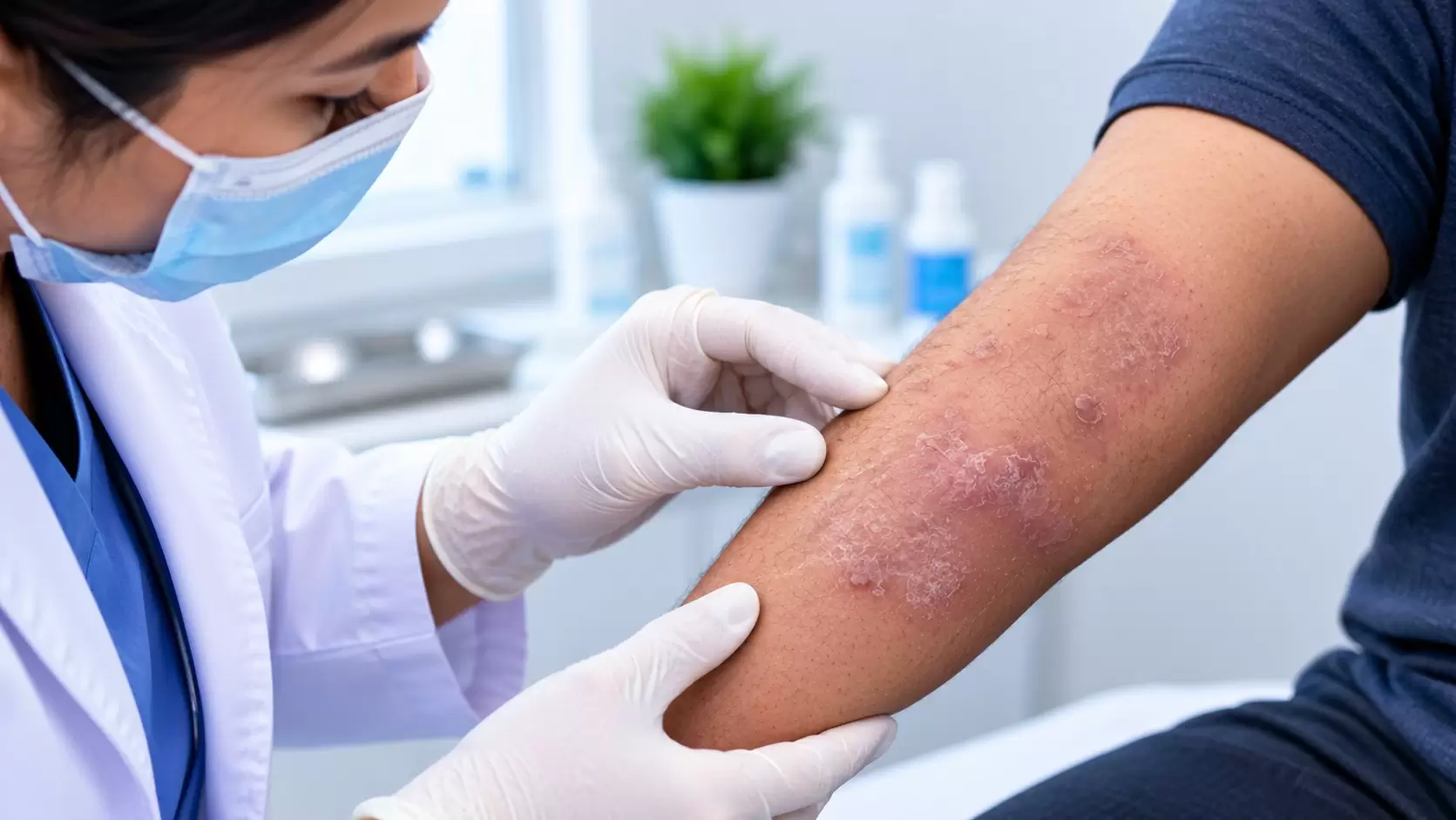
1. Dry skin is not improving with self-care
The American Academy of Dermatology advises seeing a dermatologist when excessively dry skin continues after following recommended dry-skin measures. Many uncomplicated cases improve with short warm showers, gentle cleansing and frequent use of a fragrance-free cream or ointment, but persistent xerosis may have another cause.
Before assuming that moisturiser has failed, review how you are using it. Applying a cream or ointment while skin is still damp and reapplying throughout the day can improve effectiveness.
See Dry Skin Even After Moisturising? for common reasons dryness persists.
2. The skin is painful, cracked or bleeding
As severely dry skin loses moisture it can shrink and fissure. AAD describes deep cracks that can bleed, along with raw skin that may sting or burn. At this stage the problem is more than cosmetic discomfort.
Cracks also weaken the protective barrier and make it easier for germs to enter. A dermatologist can identify why the barrier is failing and recommend a more intensive treatment plan.
3. Itching is affecting sleep or daily life
Excessively dry skin can itch persistently enough to interfere with concentration, work and sleep. Repeated scratching can further damage the barrier and may eventually produce thickened, chronically itchy areas.
4. Moisturiser causes burning or stinging
AAD specifically advises telling your dermatologist if products applied to excessively dry skin cause burning, stinging or irritation. Severely cracked skin can sting, but persistent reactions may also suggest irritation, contact dermatitis or an unsuitable formulation.
A dermatologist can help simplify the routine and select a moisturiser with ingredients and texture appropriate for the degree of xerosis.
5. There is a persistent rash
Ordinary xerosis mainly causes roughness, scaling, tightness and sometimes itch. When there is persistent inflammation, recurrent patches, marked itch or a rash that repeatedly flares, another skin condition may be responsible.
Atopic dermatitis
Eczema commonly causes dry skin together with inflammation and prominent itching. Compare the features in Dry Skin vs Eczema.
Psoriasis
Psoriasis can produce dry, thickened and scaly plaques and requires a different treatment strategy.
Ichthyosis
Some inherited and acquired forms of ichthyosis cause persistent scaling and marked xerosis.
Contact dermatitis
Repeated exposure to irritants or an allergic contact reaction can create dry, inflamed and cracked skin.
6. Dryness started suddenly or is unexplained
Dry skin can be related to age, environment and everyday exposures, but DermNet and AAD also describe associations with medical conditions and medicines. Diabetes, thyroid disease, chronic kidney disease and dialysis are among recognised contributors to excessive dryness.
Certain medicines and treatments can also contribute, including diuretics, retinoids and some cancer therapies. Dry skin alone does not diagnose any of these conditions, but unexplained or widespread xerosis may justify a broader medical history and assessment.
7. Your work repeatedly damages your skin
Frequent handwashing, wet work, detergents, solvents, cement and other occupational exposures can repeatedly strip the skin barrier. AAD notes that healthcare workers, cleaners, hairdressers, cooks and other people with frequent wet hands are at higher risk of excessive dryness.
If protective measures and frequent moisturising are not enough, a dermatologist can assess whether irritant or allergic contact dermatitis has developed and help create a practical skin-protection plan for work.
8. You see signs of infection
Excessively dry skin can develop breaks that allow bacteria or viruses to enter. AAD lists yellow crusts, pus or other fluid, swelling and skin discolouration among signs of infection.
What happens at a dermatology appointment?
A dermatologist can often diagnose xerosis and many related skin conditions by examining the skin. The consultation may include questions about when the dryness started, what makes it worse, bathing and cleansing habits, work exposures, moisturisers already tried, medications and medical history.
DermNet notes that additional testing is sometimes appropriate when a specific disorder is suspected. In selected cases, this can include tests for an underlying condition or occasionally a skin biopsy.
How a dermatologist may treat severe dryness
Treatment depends on the cause. AAD describes dermatologist-directed moisturisers containing ingredients such as urea, ceramides, lactic acid or glycerol, with prescription moisturisers needed in some cases.
If eczema, psoriasis, ichthyosis or another condition is causing the xerosis, treating that condition is necessary as well. Occupational and environmental contributors may require a barrier-protection plan rather than simply using more moisturiser.
For the foundational routine, see Skin Care Routine for Dry Skin.
Frequently asked questions
How long should I try moisturiser before seeing a dermatologist?
AAD notes that effective self-care often produces improvement within about two weeks. If dryness persists or worsens despite appropriate care, arrange dermatology assessment.
Is cracked and bleeding dry skin serious?
Deep fissures can be painful and weaken the skin barrier, increasing the risk of infection. Repeated cracking or bleeding should be assessed.
Can dry skin be a sign of another medical condition?
Yes. Excessive dryness can occur with conditions including atopic dermatitis, psoriasis, thyroid disease, diabetes and kidney disease, although dry skin alone does not diagnose these conditions.
When does dry skin need urgent medical attention?
Prompt assessment is important if there are signs of infection such as increasing pain, warmth, swelling, yellow crusting, pus or fluid leakage, spreading redness or discolouration, fever or feeling unwell.
Why does my moisturiser sting?
Very dry or cracked skin can sting when products are applied. Fragrance, active ingredients or contact dermatitis can also cause irritation, so persistent stinging should be discussed with a dermatologist.
Can a dermatologist prescribe treatment for dry skin?
Yes. Depending on the cause, treatment may include a targeted moisturiser, prescription topical treatment, management of an underlying skin condition and changes to occupational or skin-care exposures.
For authoritative information, see the American Academy of Dermatology and DermNet.
Visit us in OMR
Persistent dry skin needs answers.
Book a dermatologist consultation at Ram Skin Clinic in Thoraipakkam, Chennai.
#48, Second Floor, Flat E, Best Towers,Okkiampet, Thoraipakkam, OMR,
Chennai – 600097. Above Domino’s Pizza.