
Understanding the Difference
Dry Skin vs Eczema
Dry skin and eczema can both feel rough, flaky and itchy, but they are not the same thing. Ordinary dry skin mainly reflects loss of moisture, while eczema is an inflammatory skin condition in which dryness is often one part of a broader pattern.
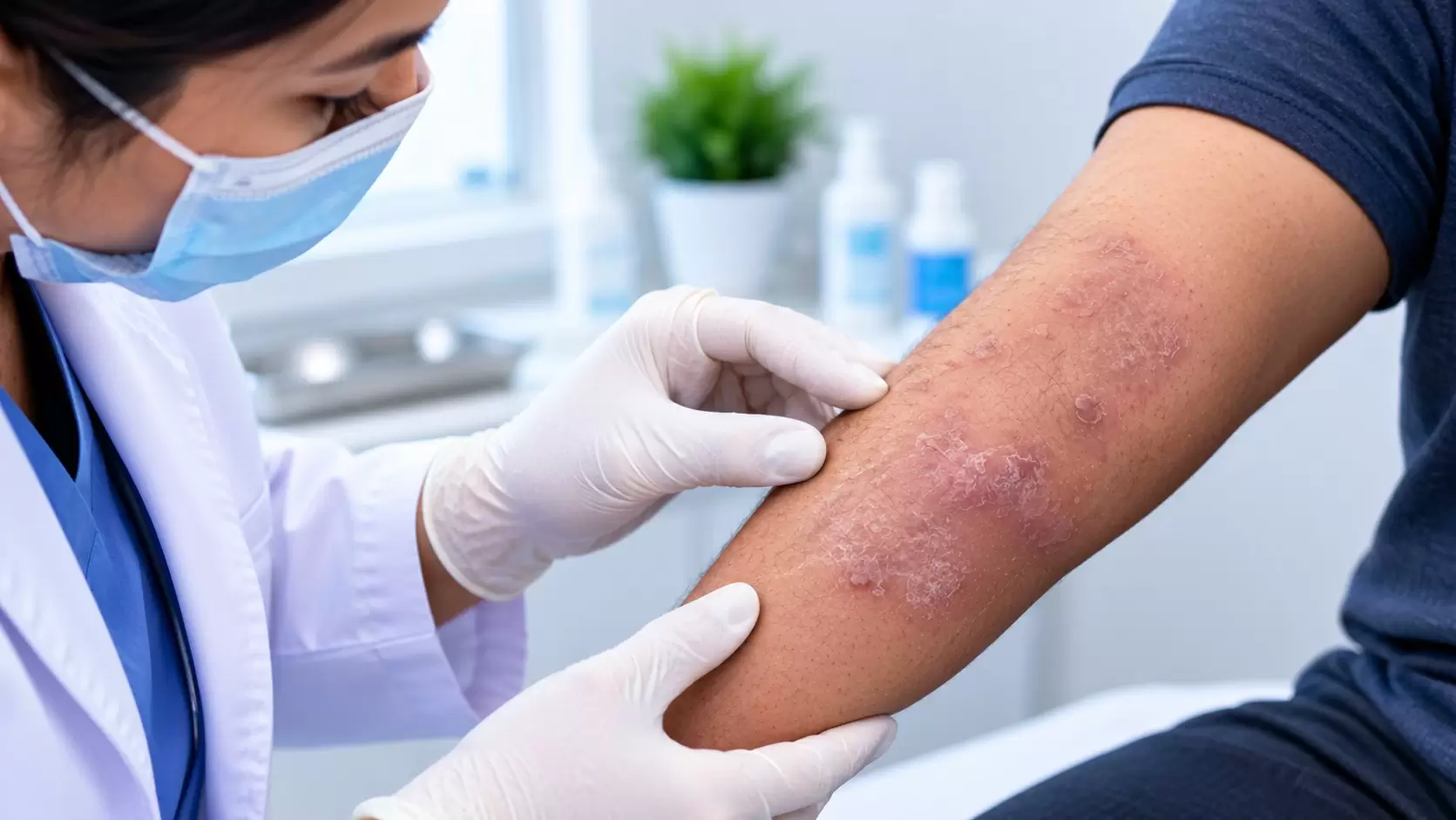
Dry skin and eczema can overlap
Dry skin, or xerosis, occurs when the outer skin layer lacks enough moisture. It may feel tight, rough or flaky and can develop cracks when severe. Everyday factors such as hot showers, harsh cleansers, low humidity, ageing and frequent washing can contribute.
Atopic dermatitis is a chronic inflammatory form of eczema. It commonly causes excessively dry skin, but also tends to produce significant itch and recurrent inflammation. The American Academy of Dermatology describes atopic dermatitis as a condition involving an impaired skin barrier that allows excess moisture to escape and irritants to enter.
Read Causes of Extremely Dry Skin for the common causes of xerosis.
Dry skin vs eczema: key differences
| Feature | Dry skin / xerosis | Eczema / atopic dermatitis |
|---|---|---|
| Main problem | Loss of moisture from the outer skin layer | Inflammatory skin disease with impaired barrier function |
| Itching | May itch, especially when very dry | Itch is often a major or dominant symptom |
| Visible rash | Often mainly rough, flaky or cracked | Inflamed rash or discolouration is common |
| Course | May settle when environmental or skin-care causes are corrected | Often waxes and wanes with recurring flares |
| Moisturiser | May be enough for uncomplicated dryness | Essential, but active eczema often also needs anti-inflammatory treatment |
| Other changes | Scaling, roughness, fissures | Can become raw, swollen, weepy, crusted, thickened or lichenified |
Clues that dryness may actually be eczema
Intense or persistent itch
Atopic dermatitis is often described as an “itch that rashes.” Scratching can create raw areas and worsen inflammation.
Recurring inflamed patches
Eczema commonly improves and then flares again, sometimes in the same characteristic areas.
Weeping or crusting
Active eczema can blister, ooze or crust. Yellow or golden crusting can also indicate secondary infection.
Thickened skin
Repeated rubbing and scratching over time can make eczema-affected skin thicker, leathery and persistently itchy.
Where eczema tends to appear
Atopic dermatitis can occur anywhere, but distribution often varies with age. Babies commonly develop eczema on the face, cheeks or scalp. Older children frequently have involvement around the elbow and knee creases. Adults may develop eczema on the hands, face, neck, around the eyes and flexural areas.
Ordinary xerosis can also occur widely, but DermNet notes that dry skin commonly affects the shins. Distribution alone cannot confirm a diagnosis, so the overall pattern matters.
Does dry skin turn into eczema?
Dry skin and eczema are related but not interchangeable. Severe xerosis can become itchy and inflamed, and DermNet notes that dry areas may develop forms of dermatitis such as asteatotic eczema. Atopic dermatitis, however, is a specific chronic inflammatory condition with genetic, immune and barrier components.
Why moisturiser helps both
Moisturisers reduce water loss and support the outer skin barrier. For uncomplicated dry skin, a fragrance-free cream or ointment plus gentler bathing habits may be enough to restore comfort.
Moisturiser is also a cornerstone of eczema care. AAD guidance recommends keeping atopic dermatitis skin moisturised, but an active flare may additionally require topical corticosteroids or another prescribed anti-inflammatory medicine.
See our Skin Care Routine for Eczema for practical barrier-care guidance.
When moisturiser alone is not enough
If the skin remains itchy, inflamed or recurrently rash-like despite consistent moisturising and gentle skin care, it is worth having the diagnosis reviewed. AAD guidance notes that persistent excessively dry skin can reflect an underlying condition such as atopic dermatitis, psoriasis or another medical problem.
For confirmed eczema, treatment may include topical anti-inflammatory medicines and, in more significant disease, additional dermatologist-directed options. Read Eczema Treatment Options.
Could it be something other than eczema?
Yes. Psoriasis, fungal infection, allergic or irritant contact dermatitis, ichthyosis and other conditions can produce dry or scaly skin. Ringworm in particular can be confused with round eczema patches.
Persistent or atypical rashes should not be treated indefinitely based on appearance alone. See Eczema vs Fungal Infection and Eczema vs Psoriasis.
When should you see a dermatologist?
Arrange assessment when dryness or rash persists despite appropriate moisturising, repeatedly returns, becomes intensely itchy, affects sleep, develops inflammation or significant cracking, or when you are uncertain whether the problem is dry skin, eczema or another condition.
Seek prompt medical advice if affected skin becomes increasingly painful, warm or swollen, develops pus or significant crusting, rapidly worsens, or is accompanied by fever or feeling unwell.
For local assessment, visit Dry Skin Treatment in Chennai or Eczema Treatment in Chennai.
Frequently asked questions
How can I tell dry skin from eczema?
Simple dry skin is often mainly rough, flaky or tight and may improve with moisturiser and gentle skin care. Eczema more often causes prominent itch, inflammation, recurring flares and sometimes raw, weeping, crusted or thickened skin.
Can very dry skin itch without eczema?
Yes. Xerosis itself can cause significant itching, particularly when dryness is severe.
Does eczema always look red?
No. Eczema appearance varies with skin tone. Inflamed areas can look red or pink, but may also appear purple, grey, brown, darker or lighter than surrounding skin.
Can dry skin become eczema?
Severe dry skin can become inflamed and develop forms of dermatitis such as asteatotic eczema. Atopic dermatitis is a specific chronic inflammatory condition and is not simply ordinary dry skin that has progressed.
Is moisturiser enough to treat eczema?
Moisturiser is essential for eczema-prone skin, but active inflammation often needs appropriate anti-inflammatory treatment as well.
When should persistent dry skin be checked?
See a dermatologist if dryness persists or worsens despite good skin care, becomes painful or intensely itchy, develops a recurrent rash, or you are unsure of the diagnosis.
For authoritative information, see the American Academy of Dermatology dry-skin guidance, AAD atopic dermatitis guidance, DermNet and NHS.
Visit us in OMR
Not sure if it’s dry skin or eczema?
Book a dermatologist consultation at Ram Skin Clinic in Thoraipakkam, Chennai.
#48, Second Floor, Flat E, Best Towers,Okkiampet, Thoraipakkam, OMR,
Chennai – 600097. Above Domino’s Pizza.